
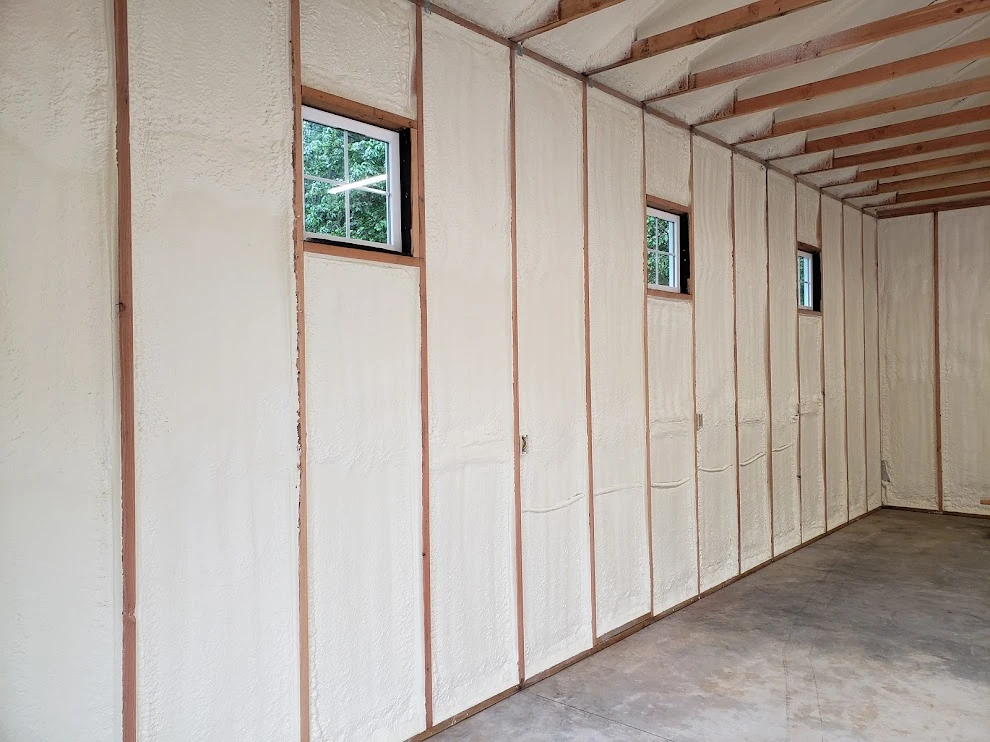
Spray foam insulation is one of the most effective solutions for sealing air leaks and improving energy efficiency in Vancouver-area homes and buildings. When applied, spray foam expands rapidly to fill every crack, gap, and void in your building envelope, creating a continuous air barrier that traditional insulation materials simply cannot achieve. This expansion process, combined with spray foam’s superior R-value and adhesion properties, makes it particularly well-suited for the Pacific Northwest climate where moisture control and consistent temperatures are major concerns for property owners. Whether you are sealing a drafty attic, insulating a crawl space, or addressing air leaks throughout an existing home, spray foam delivers a long-term solution that reduces energy costs, improves indoor comfort, and minimizes moisture infiltration.
The science behind spray foam insulation centers on its chemical composition and the expansion process that occurs during application. Two liquid components, isocyanate and polyol resin, are mixed on-site and sprayed onto surfaces where they react and expand. This chemical reaction causes the material to foam and cure within seconds, filling every cavity it contacts.
When our technicians apply spray foam, the material begins expanding immediately upon contact with air. During installation, spray foam expands up to 100 times its liquid volume to fill gaps, cracks, and irregular spaces that other insulation materials cannot reach. This expansion is what allows the insulation to tightly seal every crack, crevice, and gap in a building structure, creating a continuous air barrier that stops unwanted airflow.
The expansion process creates two critical spray foam benefits for your Vancouver property. First, it fills voids and gaps that would otherwise allow conditioned air to escape and outside air to enter. Second, once cured, the foam creates a rigid structure that maintains its shape and seal regardless of temperature fluctuations or building settlement.
Choosing between open-cell and closed-cell spray foam depends on your specific application, budget, and performance requirements. Both types expand to create effective air barriers, but they differ significantly in density, R-value, and moisture management properties.
Closed-cell spray foam is denser and more rigid, offering an R-value of approximately 6.5 to 7 per inch. This type creates an excellent moisture barrier and is ideal for below-grade applications, exterior walls, and areas where structural reinforcement is beneficial. Closed-cell foam is also preferred for Vancouver’s climate because it resists moisture intrusion, which is particularly important given the region’s rainy weather patterns.
Open-cell spray foam expands more dramatically, typically reaching 3.5 to 3.8 per inch of R-value. It is lighter and more flexible after curing, making it suitable for interior applications like attics and inside wall cavities. Open-cell foam allows some moisture vapor to pass through, which can be advantageous in certain assemblies but may require additional moisture control considerations in humid conditions.
| Foam Type | R-Value per Inch | Expansion Ratio | Moisture Resistance | Best Applications |
|---|---|---|---|---|
| Open-Cell | 3.5 to 3.8 | Up to 100x | Low | Interior walls, attics, sound damping |
| Closed-Cell | 6.5 to 7 | 30 to 50x | High | Exterior walls, crawl spaces, below-grade |
Effective air sealing addresses the building envelope’s continuous air barrier, which must be uninterrupted throughout the entire structure. Air leaks typically occur where building materials meet, around penetrations for wiring and plumbing, and in areas with multiple layers of construction.
Our application process begins with a thorough assessment of your property to identify air leakage points and areas of concern. The U.S. Department of Energy recommends sealing air leaks before adding insulation because air leaks reduce insulation effectiveness and can introduce moisture into wall cavities.
During application, our technicians spray foam into wall cavities, around rim joists, along foundation sill plates, and into any gaps where conditioned air might escape. The foam adheres to every surface it touches, creating a permanent seal that prevents both air and moisture infiltration in a single application. This comprehensive approach is particularly valuable for older Vancouver, WA homes, which often have numerous air leakage points accumulated over decades of construction.
Spray foam insulation in the attic and crawl space fills the cracks and crevices to block air movement into and out of the home. These areas are typically the most significant sources of energy loss in Pacific Northwest homes, making them priority targets for spray foam application.
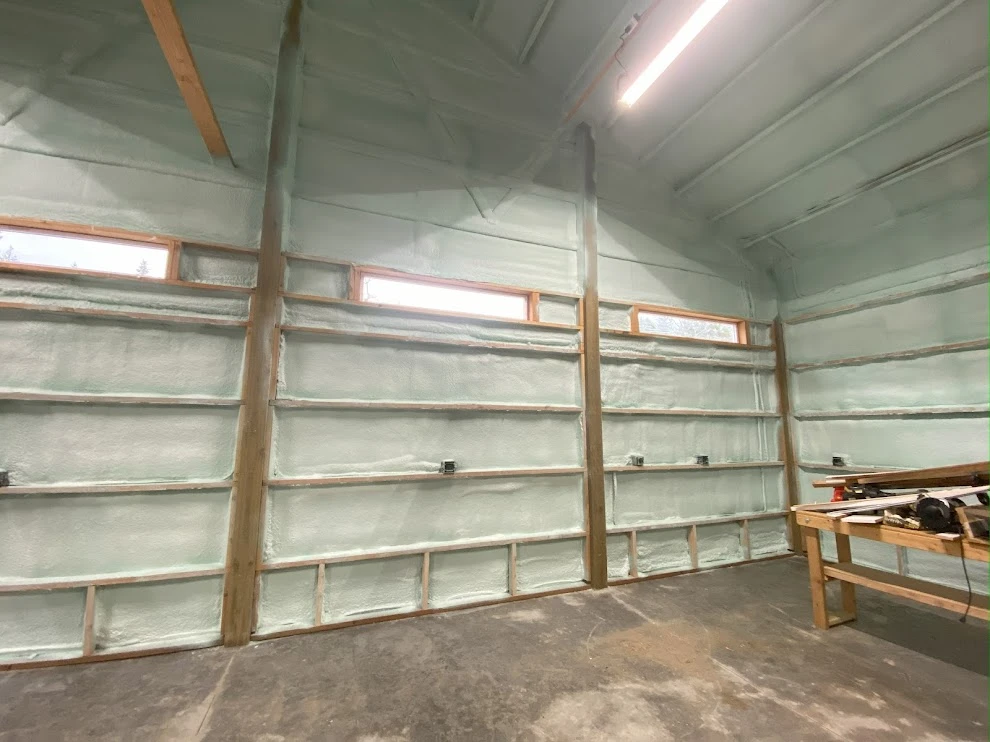
The energy savings from spray foam air sealing are substantial and measurable. According to the EPA, sealing air leaks combined with proper insulation can improve home comfort and reduce energy costs. Effective air sealing, combined with the right amount of insulation, can make your home more comfortable and cut heating and cooling costs by up to 20 percent.
For Vancouver-area homeowners specifically, these savings are amplified by the region’s heating-dominated climate. Closed-cell spray foam has been shown to provide energy savings of 50 percent or more compared to under-insulated or improperly sealed homes. Additionally, with spray foam, HVAC sizing can be reduced as much as 35 percent without loss of efficiency and comfort because the building requires less heating and cooling capacity.
These efficiency gains translate directly into lower monthly utility bills and improved indoor comfort year-round. Homeowners notice fewer drafts, more consistent temperatures between rooms, and reduced workload on heating and cooling equipment.
Understanding where air leaks occur helps property owners prioritize sealing efforts and understand the scope of improvement possible with spray foam. The most common leakage points in Vancouver home insulation include:
Top of the building envelope: Attic hatches, recessed lighting fixtures, plumbing vent stacks, and the gaps where interior walls meet the ceiling all represent pathways for conditioned air to escape into unconditioned attic space.
Wall assemblies: Electrical outlets and switches, window frames, door frames, and the gaps between framing members and sheathing create numerous small pathways for air movement.
Foundation connections: The rim joist area where floor framing meets foundation walls is a major source of air leakage. Gaps here allow cold outside air to enter crawl spaces and basements.
Penetrations and utilities: Any opening through the building envelope for wiring, plumbing, ductwork, or gas lines represents a potential air leak that spray foam can seal completely.
Recognizing an effective air sealing strategy helps property owners evaluate whether their investment will deliver lasting results. Look for these indicators of quality work:
A thorough pre-application assessment that identifies all major air leakage points rather than treating only obvious areas. The best approach includes diagnostic testing or visual inspection to map the complete building envelope.
Complete coverage of rim joists, band joists, and sill plate areas, which are often overlooked but represent significant leakage points. These areas should be addressed as part of any comprehensive air sealing plan.
Proper foam application with appropriate density and coverage depth for the specific climate zone and building type. Our technicians understand the correct thickness requirements for different applications in the Vancouver area.
Long-term warranties that cover both material performance and installation quality. Spray foam should maintain its seal for the life of the building when properly installed.
No shortcuts on preparation or cleanup that could compromise the final seal. Quality installations require careful masking of adjacent surfaces and thorough cure time before finishing.
Spray foam insulation provides benefits that extend well beyond initial energy savings. Unlike traditional insulation materials that can settle, clump, or degrade over time, spray foam maintains its properties and performance for decades.
The material outlasts traditional insulation methods, eliminating the need for frequent replacements or top-offs. Its superior air sealing capability means consistent performance year after year without the degradation that affects other insulation types.
For Vancouver property owners, spray foam also provides moisture resistance that protects structural components from rot, mold, and decay. This moisture control is particularly valuable in the Pacific Northwest, where humidity levels and rainfall can challenge building durability.
Our experienced team at Spray-On Foam & Coatings understands the specific challenges of sealing air leaks in Vancouver-area homes and buildings. We bring years of expertise in spray foam application, ensuring proper expansion and complete coverage throughout your building envelope.
Whether you need to seal an attic, insulate a crawl space, or address air leaks throughout an existing property, our professionals deliver solutions tailored to your property’s construction and your comfort goals. We use high-quality materials and proven application techniques that create lasting air barriers.
Ready to improve your home’s energy efficiency and comfort? Contact our team today to discuss your project. You can reach us at (360) 667-1993 or email [email protected]. We offer detailed assessments to identify your air sealing needs and provide accurate quotes for your project.
Request a Free Quote or Schedule an Assessment to discover how spray foam expansion can eliminate your air leaks and reduce energy costs.
Spray foam begins expanding immediately upon contact with air and typically reaches its full expansion within 5 to 10 seconds. The foam cures to a tack-free state within 30 seconds to 1 minute, but most installations require 24 hours before being fully cured and ready for any covering or finishing work.
When properly applied by trained technicians, spray foam will not damage your walls. Our team controls the expansion rate and applies appropriate depth in stages where needed. The material is soft enough to compress slightly without causing structural issues, and it adheres to surfaces without applying outward pressure that could bow or warp framing.
Yes, closed-cell spray foam is an excellent choice for crawl space applications because it provides both insulation and a moisture barrier. It resists water vapor transmission, which helps keep the crawl space dry and protects floor framing from moisture-related damage.
Once fully cured, spray foam is inert and safe for residential occupancy. The curing process converts the chemical components into a stable plastic that does not off-gas harmful compounds. Our technicians follow all manufacturer guidelines for cure times before homeowners reoccupy treated areas.
Savings vary based on your home’s current condition, heating system efficiency, and local utility rates. However, homeowners typically see 20 to 50 percent reductions in heating and cooling costs after proper spray foam air sealing. The EPA estimates that sealing air leaks and adding insulation can cut total energy costs by approximately 11 percent, with spray foam typically exceeding that figure.