

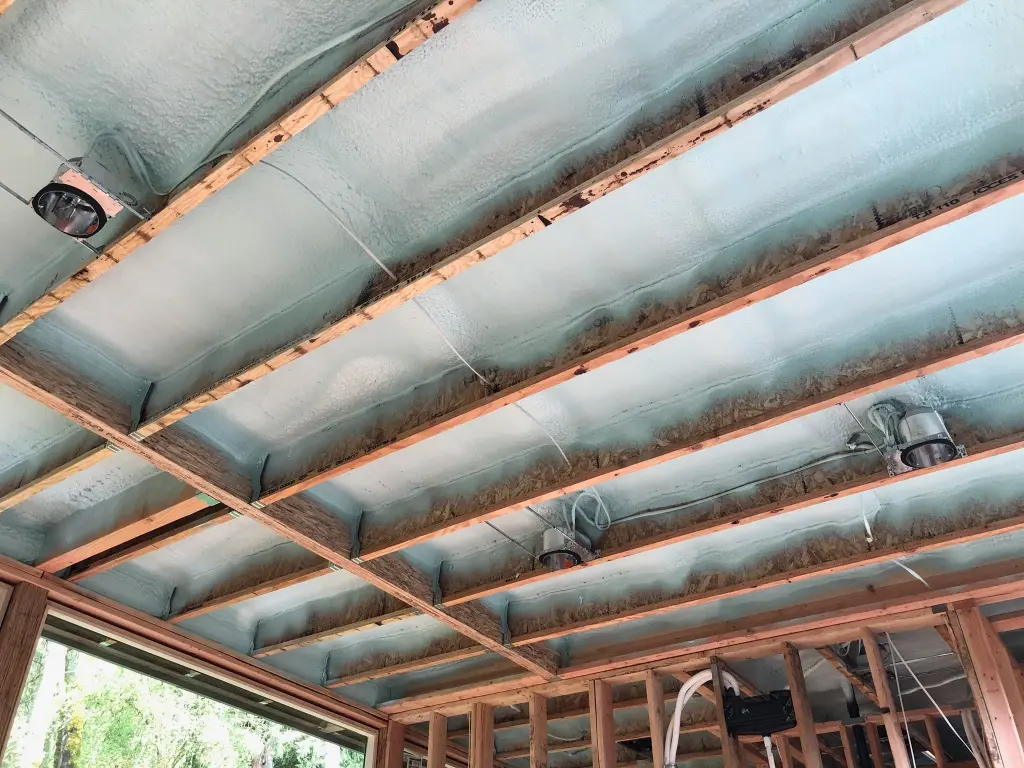
Battle Ground homeowners face a unique challenge when it comes to keeping their homes comfortable year-round. The Pacific Northwest climate brings wet winters, mild summers, and frequent temperature swings that can drain energy from even well-built homes. If your heating bills feel too high, your attic feels drafty, or you have noticed moisture problems in your crawlspace, spray foam insulation offers a proven solution. Unlike traditional fiberglass or cellulose, spray foam creates an airtight seal that stops air leakage, resists moisture, and delivers measurable savings on your utility bills. For Battle Ground properties specifically, this spray foam insulation guide address the exact problems that wet winters and inconsistent temperatures create.
Homes in the Battle Ground area deal with conditions that demand more than standard insulation can provide. Wet soil, high humidity, and the occasional freezing temperatures create moisture challenges that fiberglass and cellulose simply cannot handle effectively. Traditional insulation materials allow air to flow through them, meaning your HVAC system works harder to maintain comfortable temperatures. According to the Department of Energy, air leakage through gaps and cracks represents the largest source of energy waste in most homes.
The problem becomes more pronounced in older Battle Ground properties, where construction techniques may not have prioritized air sealing. Crawlspaces often lack proper moisture barriers, attics experience wind washing through ventilation gaps, and rim joists around foundations create thermal bridges that constantly drain heat. These are exactly the areas where spray foam insulation performs best, providing solutions that traditional materials cannot match.
Spray foam insulation is applied as a liquid that expands up to 100 times its original volume within seconds, filling every gap, crack, and cavity it touches. This expansion creates a seamless insulation layer that adheres directly to building materials, eliminating the air pockets and gaps that plague other insulation types.
Two primary types of spray foam serve different functions in residential applications. Open-cell spray foam is lighter and more flexible, with a sponge-like structure that allows some air and moisture vapor to pass through. Closed-cell spray foam is dense and rigid, with sealed cells that block air, water vapor, and heat transfer simultaneously.
Building science research confirms that spray foam is unique among insulation materials because it addresses all four functions of the building envelope: water control, air control, vapor control, and thermal control. Most traditional insulation materials only manage thermal control effectively. This comprehensive performance is why spray foam consistently outperforms other insulation types in head-to-head comparisons.
The financial case for spray foam insulation rests on measurable utility bill reductions. Homeowners who install spray foam typically see energy savings of 30 to 50 percent compared to homes with traditional insulation. These savings translate directly to lower monthly heating and cooling costs.
Calculating return on investment depends on several factors, including home size, current insulation levels, and local utility rates. Most homeowners achieve full ROI within 3 to 7 years, after which the savings continue for the life of the home. Spray foam insulation does not settle, degrade, or lose performance over time, unlike fiberglass batts that can slip from framing or cellulose that compresses.
Homes with spray foam also experience reduced HVAC runtime, extending equipment life and delaying expensive replacement. Sealed homes show more consistent indoor temperatures, eliminating cold spots near exterior walls and reducing drafts that make rooms feel uncomfortable despite thermostat settings.
Battle Ground homeowners understand the ongoing threat of moisture and mold in their homes. The wet climate creates conditions where water vapor can enter wall cavities, attics, and crawlspaces, leading to wood rot, mold growth, and structural damage over time.
Closed-cell spray foam provides exceptional moisture resistance by acting as both an air barrier and a vapor retarder. When applied to the interior of foundation walls or rim joists, it prevents moist outdoor air from reaching cold surfaces where condensation forms. This is particularly valuable in crawlspaces, where open dirt floors and vented designs historically create persistent moisture problems.
In attics, spray foam eliminates the condensation issues that occur when warm, moist air from the living space rises through gaps in the ceiling plane. Traditional vented attics require careful air sealing at the ceiling level, a detail that is difficult to achieve with conventional materials. Spray foam creates a complete, continuous air seal that prevents moisture from entering the attic space entirely.
Selecting the right spray foam type depends on where it will be applied and what performance goals you want to achieve. Understanding the strengths of each type helps you make informed decisions about your insulation strategy.
| Foam Type | R-Value Per Inch | Best Applications | Key Characteristics |
|---|---|---|---|
| Open-Cell | R-3.6 | Interior walls, attics, sound control | Flexible, vapor-permeable, cost-effective |
| Closed-Cell | R-6.5 to R-7 | Foundations, exterior walls, structural support | Rigid, vapor-retarding, moisture-proof |
For Battle Ground homes, closed-cell spray foam is typically recommended for below-grade applications such as basement walls and crawlspace foundations, where moisture resistance is critical. It also performs well in exterior wall applications where added structural strength provides wind resistance.
Open-cell spray foam works well in interior attic applications and inside wall cavities, where its flexibility accommodates normal building movement without cracking. It also provides superior sound attenuation, making it a good choice for interior walls between living spaces and garages.
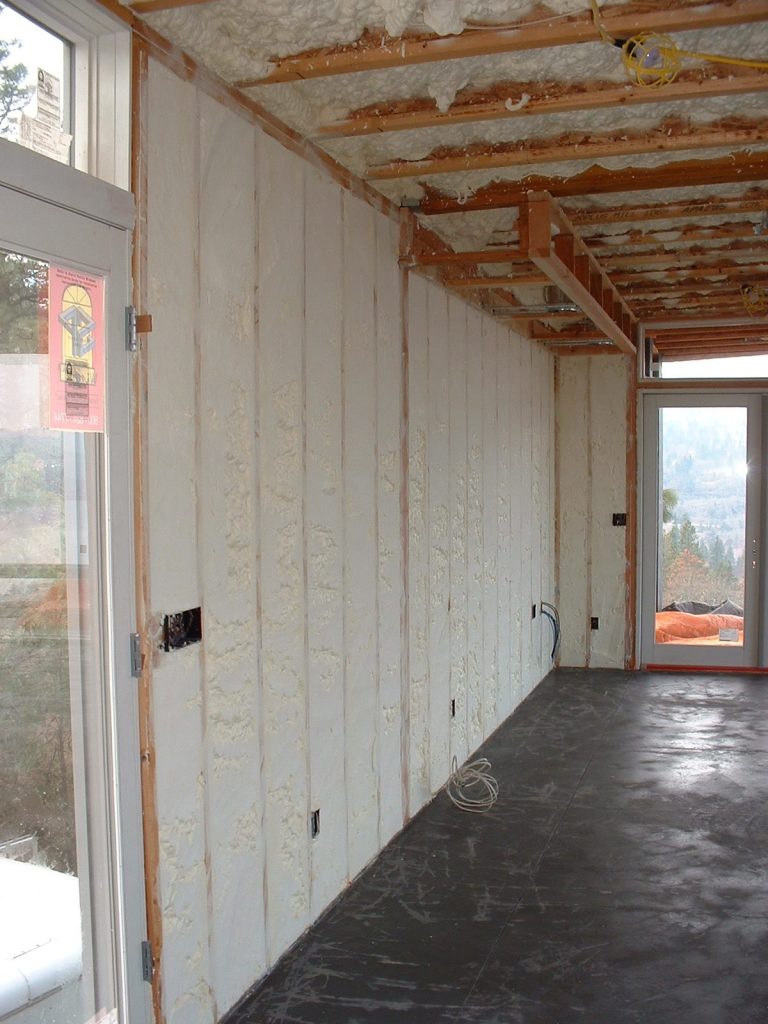
Spray foam insulation delivers benefits across every area of your Battle Ground home where it is applied. Each application zone faces different challenges and requires appropriate foam selection.
Attics and Roofs: Spray foam applied directly to the underside of roof decking creates an unvented attic space that is completely sealed from outdoor conditions. This approach eliminates attic ventilation requirements, prevents heat loss through the ceiling plane, and creates a conditioned storage space. In cold climates, closed-cell foam is required at a minimum thickness to prevent condensation on the roof sheathing.
Wall Cavities: Spray foam fills wall cavities completely without settling or leaving gaps around wiring and plumbing penetrations. Both open-cell and closed-cell options work in wall applications, with closed-cell preferred in climate zones that experience prolonged cold temperatures.
Crawlspaces and Basements: Foundation applications of closed-cell spray foam provide the moisture resistance necessary for below-grade spaces. Applied to interior foundation walls and under slab floors, closed-cell foam prevents water vapor from entering living spaces while providing continuous thermal performance.
Rim Joists: The area where floor framing meets foundation walls creates a thermal bridge that conducts heat out of your home continuously. Spray foam applied to rim joists eliminates this bridge completely, stopping energy waste at one of the most vulnerable points in the building envelope.
Working with an experienced spray foam contractor ensures that your insulation performs as expected for decades. Look for contractors who conduct thorough pre-installation assessments of your home, identify all air leakage pathways, and explain which foam types they recommend for each application area.
Quality contractors provide detailed proposals that address all areas of your home, not just the attic. They should explain moisture management strategies, ventilation requirements, and how spray foam interacts with your existing HVAC system. Be wary of contractors who offer one-size-fits-all solutions or quote prices without understanding your home’s specific needs.
Professional installation also means proper preparation and cleanup. Your contractor should protect living spaces from overspray, ensure adequate ventilation during application, and verify that the foam cures properly before you occupy the treated areas. Post-installation inspection should confirm complete coverage with no gaps or voids in the insulation layer.
Spray foam insulation offers Battle Ground homeowners a comprehensive solution for energy waste, moisture problems, and uncomfortable living spaces. Our experienced team at Spray-On Foam & Coatings understands the specific challenges that Pacific Northwest homes face, and we bring proven installation techniques to every project. We provide detailed home assessments, expert recommendations, and professional installation that delivers measurable results on your utility bills.
Request a Free Quote or Schedule an Assessment. Contact us at [email protected] or call (360) 667-1993 to request a quote and learn how we can improve your home’s comfort and efficiency. You can also schedule a consultation to discuss your specific needs and receive a customized insulation plan for your Battle Ground property.
Will spray foam insulation stop working over time?
Unlike fiberglass or cellulose, spray foam does not settle, compress, or degrade under normal conditions. Closed-cell spray foam maintains its R-value and air-sealing performance for the life of the building when properly installed.
Is spray foam safe for my home’s indoor air quality?
Modern spray foam products have low VOC emissions once fully cured. Our professionals follow manufacturer guidelines for cure times and ventilation, ensuring indoor air quality remains safe throughout the installation process.
How thick should spray foam insulation be applied?
Thickness requirements depend on climate zone and building code specifications. Our team applies foam to meet or exceed International Residential Code requirements for your specific application and location.
Can spray foam help with existing moisture problems in my crawlspace?
Yes, closed-cell spray foam applied to foundation walls and rim joists creates a moisture barrier that prevents ground moisture from entering your crawlspace. However, existing water intrusion issues should be addressed before insulation installation.
Does spray foam insulation require maintenance after installation?
Spray foam insulation does not require ongoing maintenance. Once installed, it performs continuously without adjustment, cleaning, or replacement for the life of your home.