
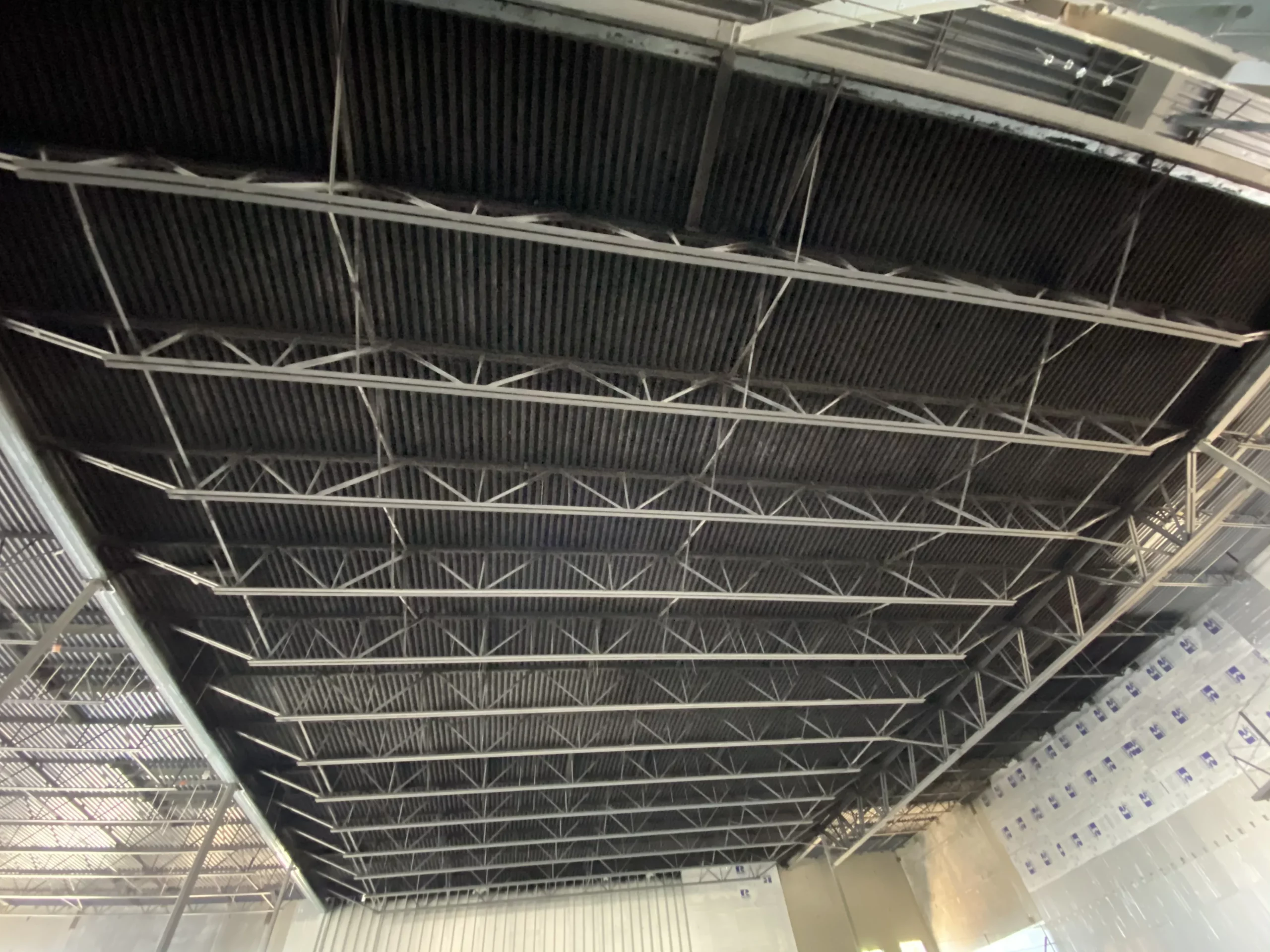
Commercial insulation in Battle Ground, WA lowers energy costs by slowing heat loss through your roof, walls, and floors, and by stopping the air leaks that push your heating and cooling system into overtime. In Battle Ground’s wet, chilly winters, a well-insulated building holds heat longer, so your HVAC burns less fuel and monthly bills drop. Pairing insulation with air sealing multiplies the savings.
Heat always moves toward cold, and a commercial building offers plenty of exits. Commercial building heat loss usually starts at the top, where roofs and metal decking radiate warmth into the night air. Uninsulated walls, loading doors, and older windows keep the flow going all day, while concrete slabs pull heat down into damp ground. Gaps around pipes, ducts, and wire penetrations add more leakage.
Many older Battle Ground buildings, including converted shops and structures, started life with little or no insulation. Even newer spaces underperform when batts settle, get soaked, or are installed thin in hard-to-reach spots. You pay for that shortfall every month.
Heating is the single biggest energy expense for commercial buildings in this country. The U.S. Energy Information Administration reports that space heating accounted for about 32% of energy use in U.S. commercial buildings in 2018. When your envelope holds heat instead of leaking it, that share shrinks on your own utility bill.
The logic behind commercial energy savings is simple physics. Insulation raises the R-value of your roof, walls, and floors, so less heat moves through each hour. Heaters and heat pumps cycle less, wear slower, and hold steady temperatures without constant adjustment. Fewer runtime hours also mean fewer service calls.
Air leaks undercut even good insulation, so we pair foam, batts, or boards with sealing around joints, doors, and penetrations. The Insulation Institute treats air sealing as a core strategy for reducing air leakage in buildings. A sealed building also stays drier, which matters through months of northwest rain.
Anyone who quotes a fixed percentage without walking your building is guessing. Structures with bare metal walls or empty cavities usually see the biggest percentage drops. Offices with decent batts may gain more from targeting specific weak spots, like an uninsulated roof deck.
Budgeting for energy-efficient commercial insulation starts with an energy check, not a price list. We look at building age, current insulation levels, operating hours, and which fuel heats your space. That shows where each dollar of insulation buys the most savings, and it keeps you from paying for coverage you don’t need.
Different assemblies call for different materials, so we match the product to the structure rather than pushing one option everywhere. For a closer look at commercial insulation solutions for different building types, explore our guide to commercial insulation applications and installation.
| Material | R-Value Per Inch | Best For | Moisture Resistance |
|---|---|---|---|
| Closed-cell spray foam | 6.0 to 7.0 | Roofs, walls, metal buildings | Excellent |
| Rigid foam board | 4.0 to 6.5 | Foundations, exterior walls | Excellent |
| Blown-in cellulose | 3.2 to 3.8 | Attics, open cavities | Moderate |
| Mineral wool | 3.0 to 3.3 | Fire-rated walls, sound control | Good |
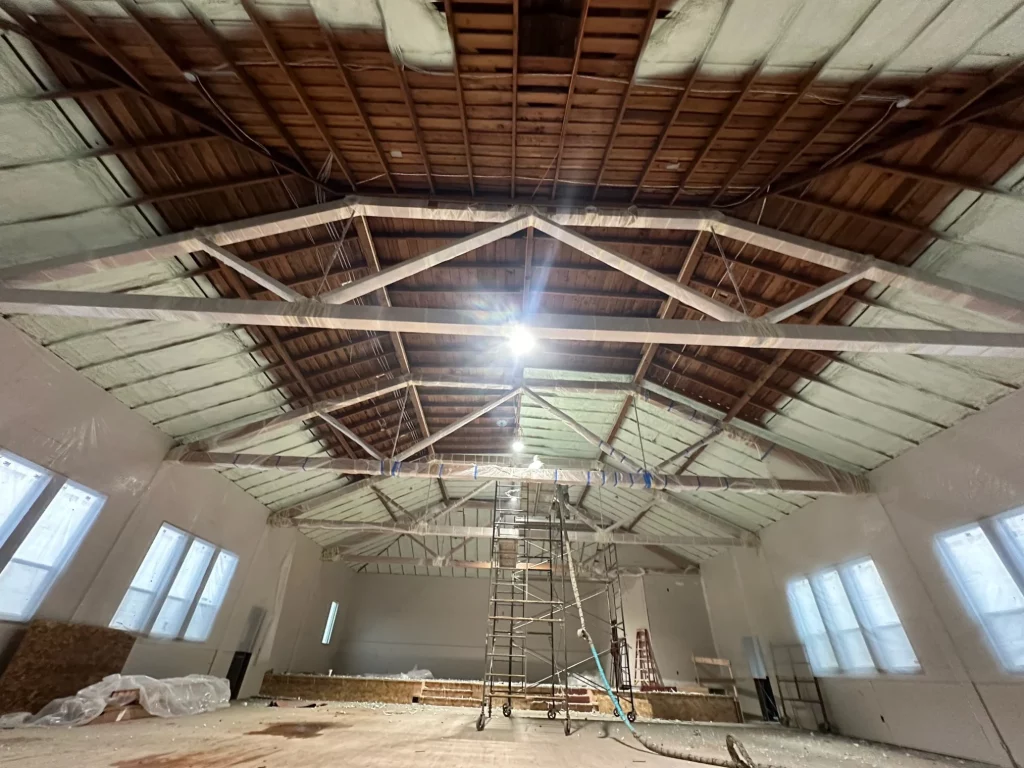
Closed-cell spray foam earns its place in our wet climate because it insulates and blocks moisture at once. On a metal shop or warehouse roof, it seals seams that batts never reach. Batts and blown-in products still do solid work in attics and cavities where budget matters most.
Clark County sits in a marine climate: long stretches of rain, winter temperatures mostly in the 30s and 40s, and summers that rarely stay hot. Heating dominates the utility bill here, so upgrades that hold winter heat pay off more than cooling tweaks. Wet conditions also rule out materials that trap moisture inside wall cavities.
Washington runs its own energy code instead of copying the national model outright. The Washington State Building Code Council maintains the state-written Washington State Energy Code, which sets the insulation levels commercial construction must meet. Rules for existing buildings can differ from new builds, so we plan each retrofit against current code targets.
Walk your building on a cold morning, and the weak spots usually announce themselves. Watch for these warnings.
We install the commercial insulation Battle Ground WA businesses count on, from offices and warehouses to metal shops and agricultural buildings. Spray-On Foam & Coatings has spent decades working on Clark County structures, so we plan every job around what local weather does to a building envelope.
Call (360) 667-1993 or email [email protected] to request your free quote. We will walk your building, show you where heat is escaping, and put clear pricing in front of you before any work begins. No obligation, no pressure.
Most projects finish within a few days, depending on building size, access, and materials. Occupied spaces can take longer because we work in zones to keep your operations running.
Yes. We stage the work by area and schedule around your hours, so most tenants and staff barely notice the crew on site.
It does. Materials like spray foam and mineral wool absorb sound, which quiets echo in shops, offices, and shared workspaces.
Closed-cell foam insulates cold surfaces and seals out moisture, removing the chilled spots where condensation forms on metal decking and walls.
Quality installed insulation typically lasts for decades. Recheck the attic and roof after any leak, roof repair, or renovation that disturbs the material.