
Commercial building insulation is the layer of material in your walls, roof, and floors that slows heat transfer, cuts HVAC run time, and keeps tenants comfortable. The main types are fiberglass batts, blown-in loose fill, mineral wool, spray foam, and rigid foam board. The right choice depends on your building type, climate, code requirements, and budget.
Heat always moves toward cold. In summer it pushes in through the roof, and in winter it leaks out through walls, gaps, and loading doors. Insulation slows that movement, so your HVAC runs shorter cycles. The payoff shows up in two places: lower utility bills and steadier temperatures from the first floor to the top.
A good envelope also manages air and moisture. Openings around penetrations, roof decks, and big doors let conditioned air escape and humid outside air creep in. That mix drives condensation, mold risk, and uneven comfort, so we pair insulation with air sealing wherever the job allows.
Under-insulated buildings announce themselves. Ceilings radiate heat on summer afternoons, floors near exterior walls stay cold, metal panels sweat, and rooftop units never seem to shut off. If those symptoms sound familiar, the envelope is the first place to look.
Every catalog of commercial insulation types boils down to five basic families: batts, loose fill, mineral wool, spray foam, and rigid board. Each fits a different structure, climate, and budget. The table below is the honest starting point.
| Material | Typical R-Value Per Inch | Best For | Watch Out For |
|---|---|---|---|
| Fiberglass batts | about R-3 to R-3.8 | Open wall and ceiling cavities, drop ceilings | Loses performance when wet or compressed |
| Blown-in loose fill | about R-2.5 to R-3.8 | Attic floors, drill-and-fill wall retrofits | Needs even coverage to avoid gaps |
| Mineral wool | about R-3 to R-4 | Fire-rated assemblies, noisy interiors, mechanical rooms | Heavier and costlier than fiberglass |
| Open-cell spray foam | about R-3.5 to R-4 | Irregular cavities, roof decks, sound control | Stays vapor-open, so the assembly needs a moisture plan |
| Closed-cell spray foam | about R-6 to R-7 | Metal buildings, flat roofs, moisture-prone areas | Highest material cost on the list |
| Rigid foam board | about R-4 to R-6.5 | Continuous exterior insulation, flat roofs, below grade | Most assemblies need a code-approved covering over it |
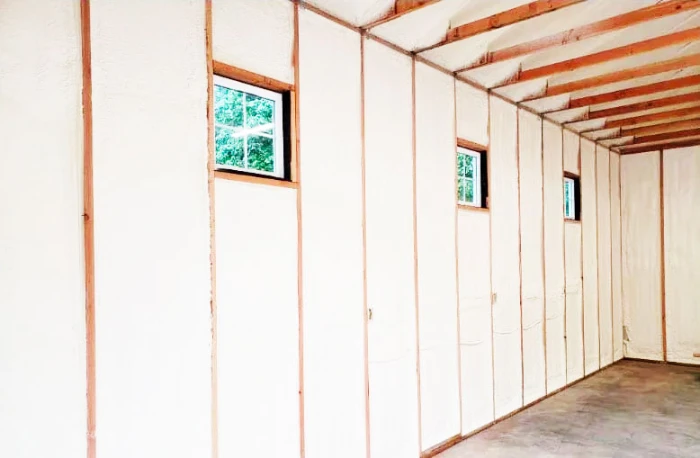
Spray foam is the only material that insulates and air seals in one pass. Closed-cell adds stiffness and shrugs off water, which is why it dominates metal building and flat roof work. Open-cell is lighter and cheaper per inch, so the assembly design decides where it belongs.
Rigid board, especially polyiso, is the standard on low-slope roofs and as continuous insulation on the outside of framing. Wrapping the exterior cuts thermal bridging through steel studs, a weak spot that cavity batts alone cannot fix.
Installation quality decides most of the outcome. A mid-priced product fitted carefully beats a premium product installed carelessly, every time.
There is no single best material, only the right match for the area being treated, the structure behind it, and the moisture around it.
A site walk settles the question quickly. Existing conditions, leaks, and access usually narrow the field to one or two options.
The commercial insulation benefits owners notice first show up on the utility bill, but the rest of the list matters just as much to tenants and staff.
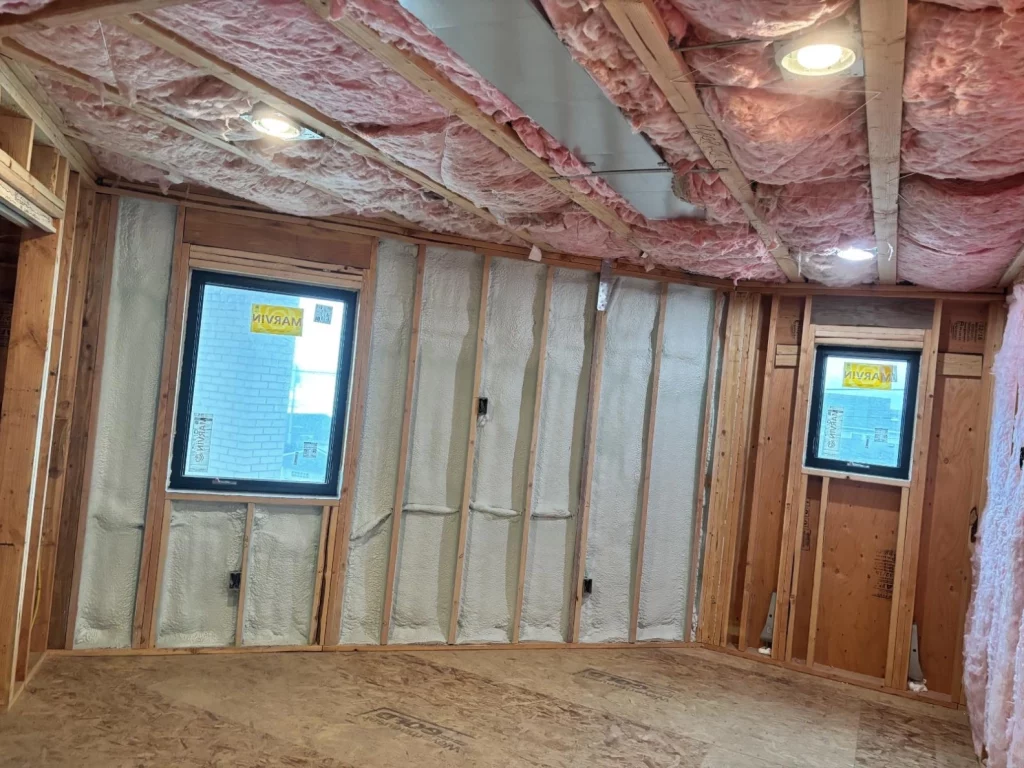
A commercial insulation installation goes smoothly when the sequence is clear and your building stays usable. Our crew follows the same steps on every job, from small office retrofits to full warehouse envelopes.
Occupied buildings get scheduled around your hours, and spray foam jobs include a cure window before the space reopens. We explain that timeline up front so nobody is surprised on move-in day.
Pricing starts with four basics: square footage, thickness, material, and access. It helps to remember that insulation is the cheapest entry point to energy-efficient commercial buildings, because the upgrade pays itself back through lower bills year after year.
We quote after measuring the actual space, never from a rule of thumb, and every estimate is itemized so you can see where the money goes.
If your building runs hot in summer, cold in winter, or the HVAC never gets a break, the envelope is the place to start. Spray-On Foam & Coatings offers a free quote for commercial projects of any size. Call us at (360) 667-1993 or email [email protected], and we will walk the building, measure the real numbers, and put a clear plan in writing.
Open-cell foam is lighter, expands more, and stays vapor-open, while closed-cell foam is denser, stiffer, water-resistant, and carries a higher R-value per inch. Closed-cell suits metal buildings and roofs, and open-cell suits sound control and irregular cavities.
Yes. Drill-and-fill blown-in material goes into closed wall cavities through small holes that get patched afterward, so demolition stays off the job.
Insulation that is installed properly and kept dry typically lasts for the life of the building. It only needs replacing when moisture, pests, or physical damage ruin it.
It reduces the risk by warming the panel surface and controlling vapor, but persistent condensation usually points to a ventilation problem that insulation alone cannot fix.
Work areas get cleared of people and other trades during application and while the foam cures. Once cured, the space returns to normal use on the re-entry schedule given before work starts.