

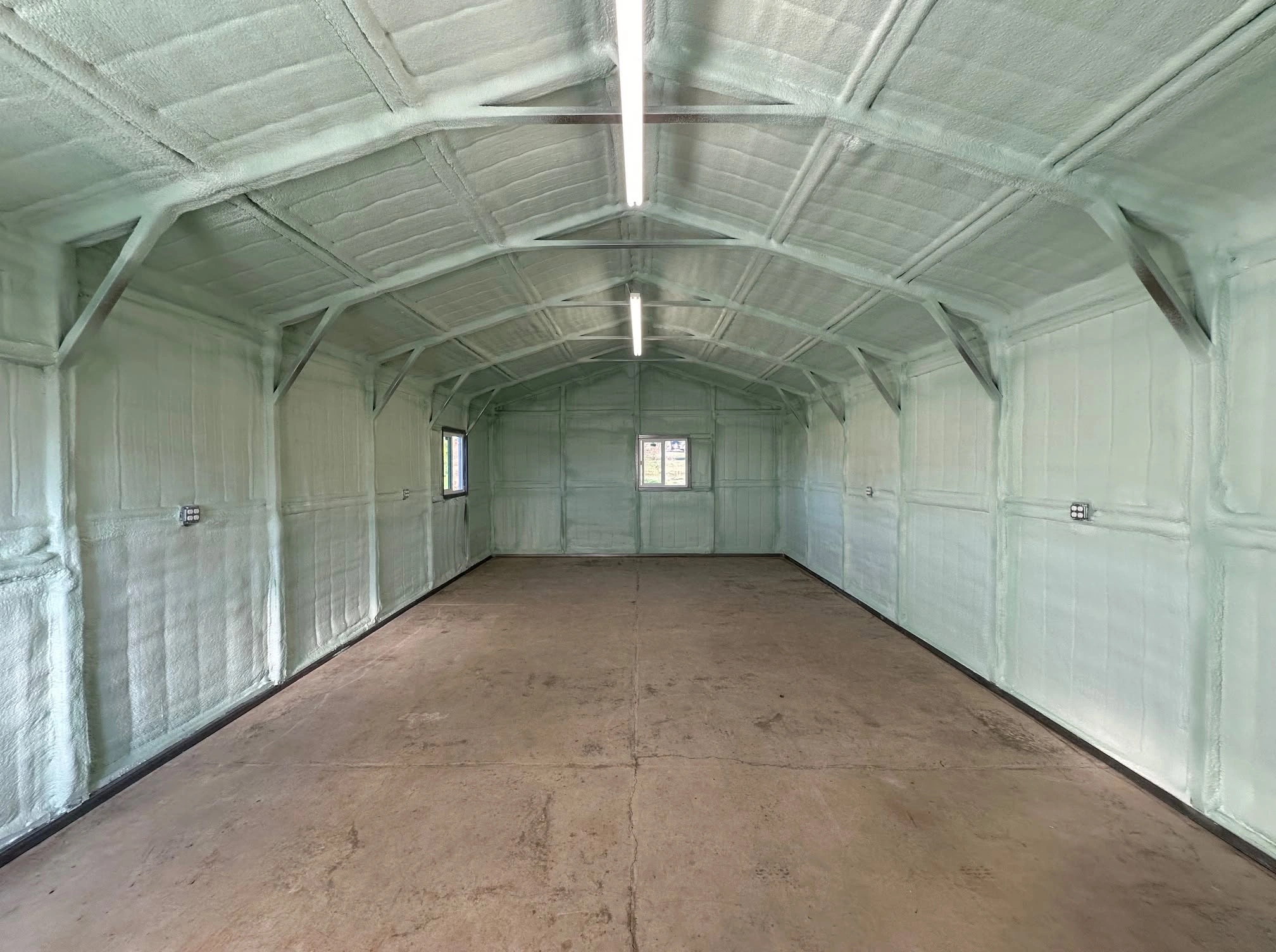
The core benefits of closed-cell spray foam rely on a single product performing three critical tasks: thermal insulation, comprehensive air sealing, and high-performance moisture control. Formulated to adhere seamlessly, this material bonds straight to the masonry, structural steel, and wood framing found throughout closed-cell insulation for commercial buildings for maximum long-term building envelope efficiency.
Rain sits over Portland most of the year, the heating season runs long, and humidity finds every gap in an aging envelope. When warm indoor air meets a cold wall, moisture condenses inside the assembly, where nobody sees it until drywall stains or steel decking starts to rust.
Any Portland commercial insulation plan has to treat moisture control as part of the job, not an afterthought. Wet batts stop insulating, damp masonry moves heat faster, and hidden mold turns into a tenant-complaint magnet.
Closed-cell spray foam starts as a two-part liquid and cures into rigid plastic foam packed with closed cells. Applied as a liquid, it fills odd gaps, wraps studs and purlins, and stays put without fasteners or netting.
That’s the working case for closed-cell insulation for commercial buildings: a single pass delivers the insulation, the air barrier, and, at the thicknesses usually specified, strong vapor control. Here’s what that means in practice:
The commercial insulation benefits worth counting are the ones a controller can see: smaller heating bills, fewer condensation calls, and equipment that isn’t running flat out all winter.
Air leakage comes first. The ENERGY STAR Seal and Insulate program puts the combined savings from sealing leaks and adding insulation at up to 10% of annual energy bills for a typical home, and a leaky warehouse has a lot more envelope for the same physics to work on. Foam handles commercial building air sealing and insulation in one pass, so the two jobs never get split, which is exactly where batt-and-vapor-wall assemblies fall apart.
Condensation comes second. Foam on a metal roof deck or the inside face of a tilt-up wall keeps cold surfaces away from moist indoor air, which helps cut winter drips over inventory and electrical gear. Steadier temperatures can also shorten HVAC run cycles, though the savings depend on the building, and we won’t quote a percentage we can’t back up.
Wherever space is tight, moisture is heavy, or the substrate is irregular, this material earns its keep. The strongest fits we quote around Portland:
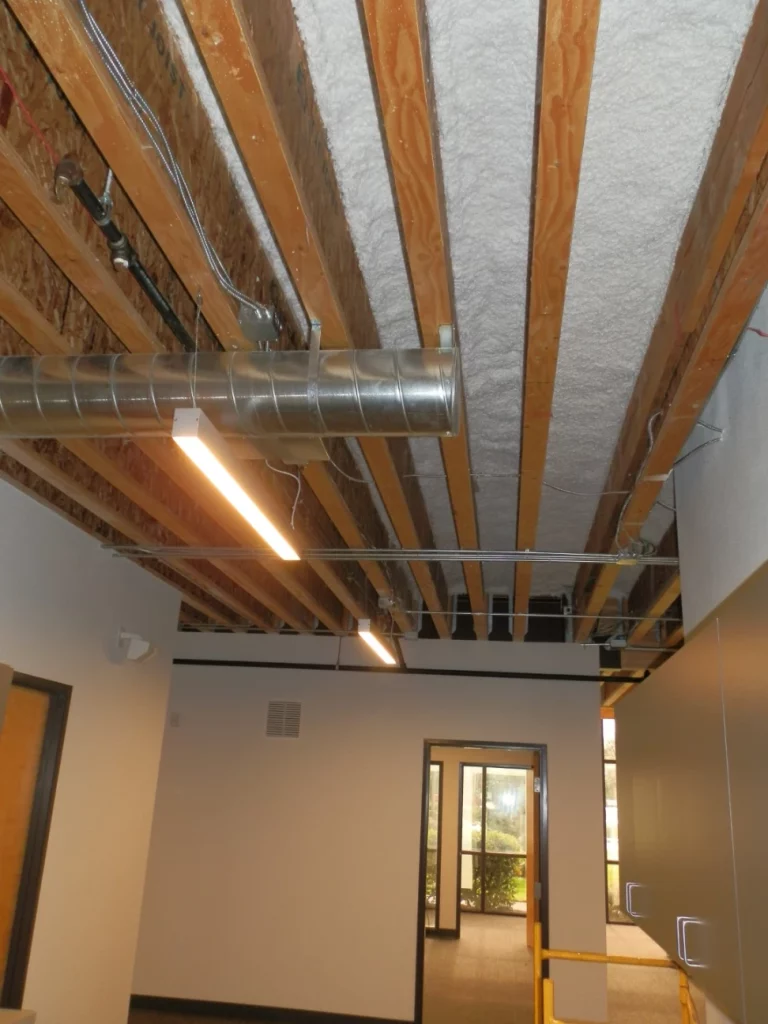
Closed-cell foam earns its price, and the price is real. It usually runs higher per square foot than batts or open-cell foam, and the final number swings with thickness, prep work, and masking.
A few practical points:
On top of that, commercial work in Oregon runs through the Oregon Building Codes Division, which administers the state building code, including the commercial structures and energy efficiency programs, so the assembly we spray has to hit code values, not just look thick enough.
If your building runs cold, drips every winter, or burns through the heating budget, the envelope is the first place to look. Send us the address and the problem, and we’ll walk the building, check the assembly, and price the job straight.
Call (360) 667-1993 or email [email protected] for a free quote. Our crew documents thickness and R-value on every job, so you know exactly what went into your walls.
Usually, where the building has shallow cavities, condensation, or heavy air leakage. When walls are deep and dry, cheaper materials can do the work, and we’ll say so during the quote.
Sometimes, if the old material is dry, sound, and code-compliant. Wet, damaged, or compressed batts usually come out first so the foam bonds to solid substrate.
No. Foam is not a roofing membrane, so active leaks get repaired before spraying, otherwise the foam can hide the water and delay the repair.
It depends on the assembly and the values Oregon’s energy code sets for that building type, so we calculate required thickness per assembly during the quote.
Most medium-density products are engineered to hold their properties for decades when installed to spec. Installation quality and moisture control decide the outcome more than age does.