
If you have ever walked into a building that felt uncomfortable despite running the HVAC constantly, you already understand why insulation matters so much. Air leaks and poor thermal resistance can waste enormous amounts of energy and make indoor spaces feel drafty, humid, or inconsistently heated and cooled. Spray foam insulation stands out as one of the most effective solutions for creating an airtight, energy-efficient envelope around any structure. This guide covers everything you need to know to make informed decisions about spray foam insulation for your home or commercial property, from understanding the basic science to navigating installation, costs, and long-term benefits.
This comprehensive resource walks you through the complete picture of spray foam insulation. You will learn about the two primary types of spray foam and their distinct characteristics, understand how R-values work and why they matter for your specific climate zone, discover how professional installation works step by step, explore the financial benefits, including energy savings and return on investment, and review important safety considerations and building code compliance requirements. Whether you are a homeowner looking to upgrade your residence, a business owner evaluating commercial insulation options, or a contractor seeking to deepen your expertise, this guide provides the information you need.
Spray polyurethane foam, commonly known as spray foam, is a two-component liquid insulation material that expands and hardens when applied to surfaces. Our team has seen firsthand how this material transforms buildings that previously struggled with temperature control and energy inefficiency.
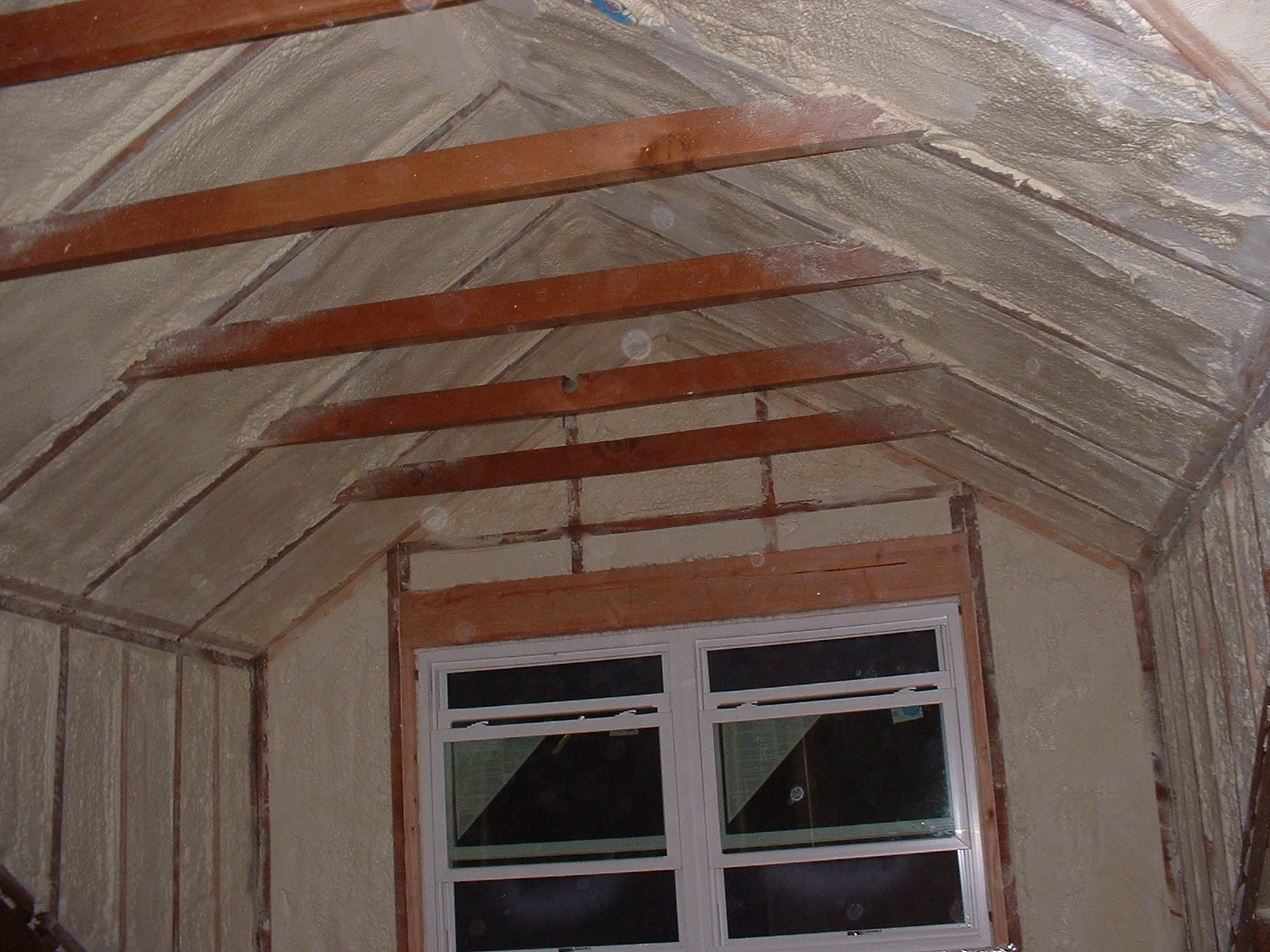
The science behind spray foam involves mixing polyol resins with isocyanate compounds at the point of application. When these chemicals combine, they react to create foam that expands to fill gaps, cracks, and cavities. This expanding action allows spray foam to create a continuous air barrier that traditional insulation materials simply cannot match. The foam cures within seconds to form a rigid, seamless layer of insulation that bonds directly to the surrounding surfaces.
Expert Tip: One of the most valuable properties of spray foam is its ability to seal air leaks while providing thermal resistance in a single application. This dual functionality often makes it more cost-effective than installing traditional insulation plus separate air sealing materials.
Buildings lose energy through multiple mechanisms, but air infiltration ranks among the most significant. The U.S. Environmental Protection Agency’s Energy Star program estimates that as much as 40% of a building’s energy is lost due to air infiltration. Spray foam addresses this problem directly by creating an impermeable seal that stops air from moving through walls, ceilings, and floors.
Beyond energy efficiency, spray foam insulation contributes to indoor comfort, moisture control, and structural strength. Buildings insulated with spray foam tend to have more consistent temperatures throughout, fewer drafts near exterior walls, and reduced moisture infiltration that can lead to mold growth and structural damage over time.
Understanding the difference between open-cell and closed-cell spray foam is essential for selecting the right product for your project.
Open-cell spray foam has a lighter structure with cells that are not completely closed. This makes the foam softer and less dense than its closed-cell counterpart. Open-cell foam typically provides an R-value of approximately R-3.6 per inch, which means you need greater thickness to achieve the same thermal resistance as closed-cell foam.
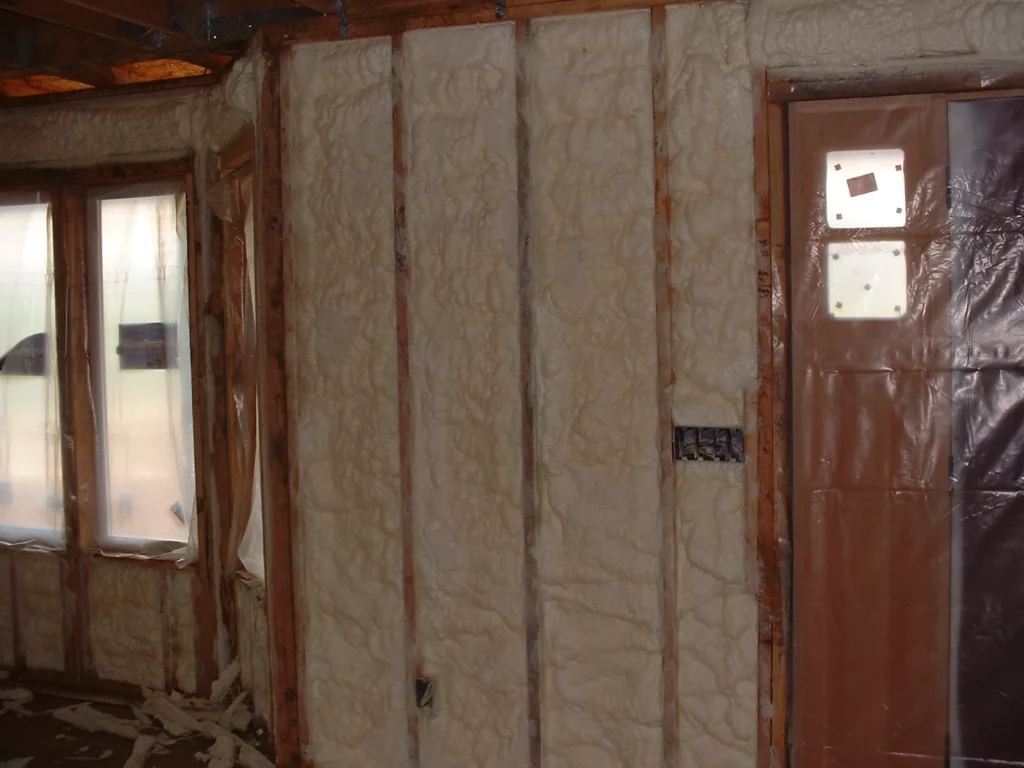
The advantages of open-cell spray foam include lower material cost per board foot, excellent sound absorption qualities, and effective insulation performance in interior wall cavities. The lighter density makes it easier to work with in certain applications, and it expands more fully to fill irregular cavities.
However, open-cell foam is not a vapor barrier and should not be used in applications where moisture resistance is critical. It can absorb water if exposed to moisture, which could lead to issues over time. Open-cell foam also requires more thickness to achieve recommended R-values, which may not fit in all wall cavities.
Closed-cell spray foam features tightly packed cells that are completely sealed, giving the material a higher density and superior structural properties. This type delivers an R-value ranging from R-5.6 to R-8.0 per inch, depending on the specific formulation and density. According to data from Sprayman, closed-cell foam achieves R-11 to R-16 with just 2 inches of application, compared to R-7.2 for the same thickness of open-cell foam.
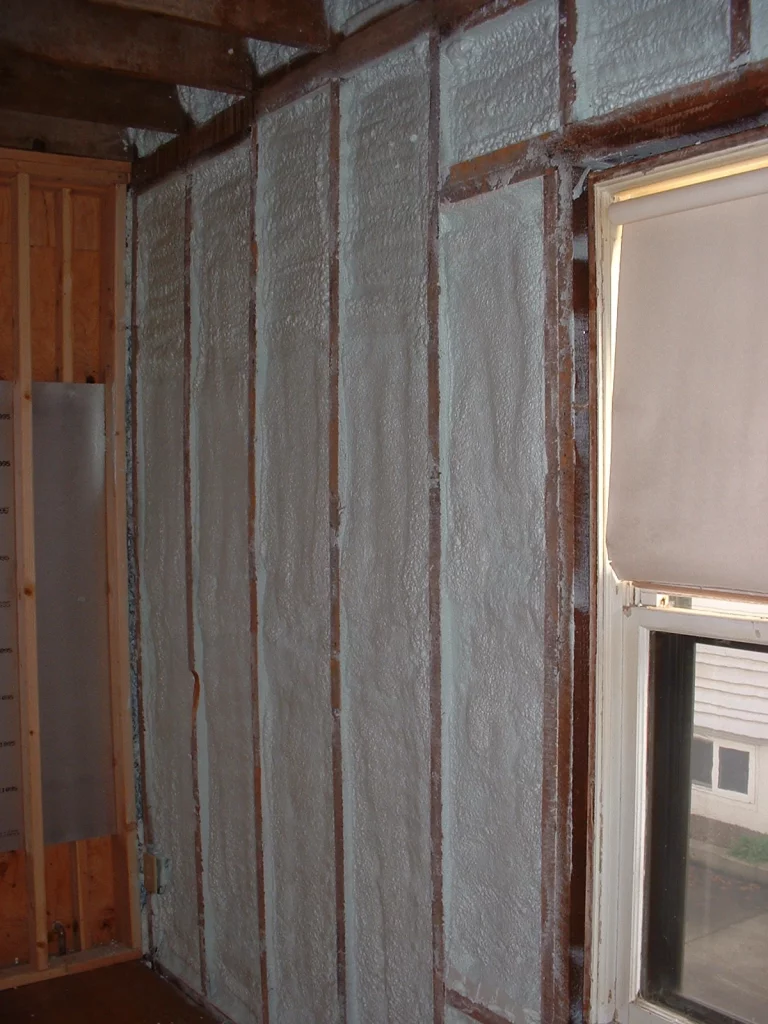
The benefits of closed-cell spray foam extend beyond thermal performance. Its dense structure adds structural strength to walls and roofs, making it particularly valuable in hurricane-prone or high-wind areas. Closed-cell foam also acts as a vapor barrier, preventing moisture from penetrating into wall cavities. This makes it ideal for basements, crawl spaces, exterior sheathing applications, and cold climates where condensation can be a concern.
The primary consideration with closed-cell foam is its higher upfront cost. However, the superior R-value per inch means you often need less material to achieve code-compliant insulation levels, which can partially offset the higher price per board foot.
| Property | Open-Cell Foam | Closed-Cell Foam |
|---|---|---|
| R-value per inch | R-3.6 | R-5.6 to R-8.0 |
| Density | 0.4 to 0.7 lb/ft³ | 1.5 to 3.0 lb/ft³ |
| Vapor barrier | No | Yes |
| Sound absorption | Excellent | Good |
| Structural reinforcement | Minimal | Significant |
| Typical applications | Interior walls, attics | Foundations, roofs, exterior walls |
| Cost per board foot | Lower | Higher |
R-value measures how well insulation resists heat transfer. The higher the R-value, the better the material prevents heat from flowing through it. This metric matters because your heating and cooling systems work harder to maintain comfortable temperatures when heat transfers easily through your building envelope.
The U.S. Department of Energy estimates that 56% of the energy used in a typical home goes toward heating and cooling. With proper insulation that achieves adequate R-values, you can significantly reduce this energy demand.
Expert Tip: R-value requirements vary by climate zone and building component. An attic in northern Minnesota requires much thicker insulation than an interior wall in southern Florida. Always check your local building codes and energy requirements before specifying insulation thickness.
The Department of Energy divides the continental United States into eight climate zones, each with different insulation recommendations. Your specific location determines the minimum R-values required for attics, walls, floors, and foundations.
| Climate Zone | Uninsulated Attic R-Value | Uninsulated Floor R-Value | Basement Wall R-Value |
|---|---|---|---|
| 1-2 (Hot) | R30-R49 | R13 | R11 |
| 3 (Mixed) | R49-R60 | R19 | R11 |
| 4 (Except Marine) | R60 | R19 | R11-R25 |
| 5-6 (Cold) | R60 | R30 | R25 |
| 7-8 (Very Cold) | R60 | R38 | R25 |
The ENERGY STAR methodology estimates that homeowners who air seal and add insulation can save an average of 15% on heating and cooling costs, with savings ranging from 5% in the warmest climates to 18% in the coldest regions.
Wall frame depth directly affects how much insulation you can fit and what R-values you can achieve. Standard 2×4 walls have a 3.5-inch cavity depth, while 2×6 walls offer 5.5 inches of space.
With closed-cell spray foam, a 2×4 wall can achieve R-19 to R-28, while the same wall filled with open-cell foam reaches approximately R-12.6. For 2×6 walls, closed-cell foam delivers R-31 to R-44, compared to R-19.8 for open-cell applications. These differences matter significantly in cold climates where building codes increasingly require higher wall R-values.
Professional spray foam installation involves careful preparation, application, and finishing. Understanding this process helps you know what to expect when you hire a contractor and what questions to ask.
Before any spray foam is applied, the work area must be properly prepared. This includes protecting surfaces that should not receive foam, covering HVAC equipment and vents to prevent contamination, removing or masking electrical fixtures if necessary, and ensuring adequate ventilation in the work area.
Temperature and humidity conditions affect how spray foam cures and adheres. Most manufacturers specify minimum application temperatures, typically around 50-60°F for the substrate and ambient air. Applying foam in conditions outside the recommended range can result in poor adhesion, incomplete expansion, or other defects.
Expert Tip: Ask your contractor about their preparation procedures and how they protect areas that should not receive foam. Proper masking and covering can prevent costly cleanup and damage to finishes, HVAC systems, and other building components.
Professional installers apply spray foam using specialized equipment that heats and pumps the two chemical components through separate hoses to a spray gun. The chemicals mix at the gun and react upon contact with the surface being insulated.
The application typically occurs in multiple passes or lifts to build up the desired thickness. Applying foam in layers rather than a single thick pass produces better results because each layer can cure properly without trapping heat that could cause problems. Most codes require foam to be covered with a 15-minute thermal barrier, such as half-inch gypsum wallboard, in occupied spaces.
Spray foam cures rapidly, typically within seconds for the surface layer and within minutes for full depth. However, the foam may release small amounts of volatile organic compounds during the curing process, which is why proper ventilation and occupant re-entry protocols matter.
After installation, the foam should be inspected for complete coverage, proper adhesion, and uniform density. Any gaps or voids should be addressed before the thermal barrier is installed. Professional contractors often conduct post-application inspections to verify quality.
The financial case for spray foam insulation rests on two pillars: reduced energy costs and long-term durability. Understanding both helps you evaluate whether the higher upfront investment makes sense for your situation.
Data from the Why Spray Foam coalition shows that spray foam can reduce HVAC sizing by as much as 35% without sacrificing comfort or efficiency. This happens because the building envelope is so well sealed that the heating and cooling systems no longer need to compensate for massive air leakage.
The U.S. Environmental Protection Agency’s Energy Star program estimates that homeowners who add insulation and seal air leaks can save up to 20% on monthly energy bills. The actual savings depend on your climate zone, the quality of your previous insulation, and how you use your heating and cooling systems.
Some property owners have reported energy bill reductions of 50% after insulating with spray foam, though your results will vary based on your specific building and usage patterns.
Most property owners who install spray foam insulation see a return on investment within 3 to 7 years, depending on the size of the building, local utility rates, and the type of foam used. Closed-cell foam in a cold climate where utility costs are high typically pays back fastest because the performance difference compared to other insulation types is greatest.
Beyond direct energy savings, spray foam can extend the life of your HVAC equipment. Systems that do not have to work as hard to compensate for poor insulation tend to last longer and require fewer repairs. This adds additional value over time that may not show up directly on your utility bills.
Spray foam insulation works in virtually every part of a building, though certain applications suit different foam types better than others.
Attics represent one of the most valuable applications for spray foam because heat rises and escapes primarily through the top of buildings. Open-cell foam applied to the underside of roof sheathing creates an unvented attic condition that eliminates attic ventilation requirements while providing excellent insulation and air sealing.
Closed-cell foam works well in vented attics where the foam is applied to the attic floor between joists. The vapor barrier properties of closed-cell foam prevent moisture from migrating into the attic space from the conditioned living areas below.
Both open-cell and closed-cell foam can be used in wall cavities, but the choice affects overall wall performance. Closed-cell foam applied to exterior sheathing creates a continuous insulation layer that reduces thermal bridging through wood studs. This approach, sometimes called continuous insulation, is increasingly required by energy codes in cold climates.
Open-cell foam works well in interior wall cavities where moisture is less likely to be a concern and where the sound-dampening properties are valued.
Basement walls and crawl spaces benefit greatly from closed-cell foam because these areas are prone to moisture intrusion. Closed-cell foam can be applied directly to foundation walls without worrying about moisture vapor transmission that could cause traditional insulation to fail.
In crawl spaces, spray foam applied to the underside of the floor structure or to the foundation walls creates a conditioned space that protects plumbing and reduces the risk of frozen pipes in cold climates.
Commercial properties often have unique insulation requirements due to their size, usage patterns, and construction types. Spray foam works well in metal buildings where traditional batt insulation can sag and settle, in roof systems where a single application provides both insulation and air sealing, and in areas requiring high R-values in limited space.
Expert Tip: For metal buildings, closed-cell spray foam applied to the interior of the walls and roof creates a conditioned interior space while eliminating the thermal bridging that makes uninsulated metal buildings notoriously difficult to heat and cool efficiently.
Building codes address spray foam insulation because the material requires proper handling, installation, and covering. Understanding these requirements helps you work with contractors and code officials to ensure compliant installations.
Spray foam is combustible, which is why building codes require it to be covered with a thermal barrier in most occupied spaces. The standard requirement is coverage with ½-inch gypsum wallboard or an equivalent thermal barrier that provides at least 15 minutes of protection before the foam could reach flashover temperatures in a fire.
In some jurisdictions, spray foam used in attic spaces may require an ignition barrier coating if the attic is considered an accessible storage area. Your contractor should be familiar with local requirements and obtain any necessary permits before beginning work.
Building codes in cold climates often require vapor barriers in exterior wall assemblies to prevent moisture from diffusing through walls and condensing within the cavity. Closed-cell foam satisfies vapor barrier requirements when applied at sufficient thickness, while open-cell foam does not provide vapor barrier properties and may require additional treatments in climates where vapor drive is a concern.
Most spray foam manufacturers require installation by trained professionals using certified equipment. This ensures proper mixing ratios, application techniques, and safety protocols are followed. Professional contractors typically carry specific liability insurance for spray foam work and are familiar with local code requirements.
Modern spray foam formulations have made significant strides in environmental performance, though the material still has a more complex environmental profile than some traditional insulation options.
Older spray foam formulations used blowing agents with high global warming potential. Newer HFO-blown foams have dramatically reduced environmental impact compared to older HFC-blown products. According to information from Chemours, HFO-blown foam is significantly better than HFC-blown foam when it comes to global warming potential.
No spray foam has zero environmental impact, but the energy savings over the life of the building typically offset the production emissions by a substantial margin. A well-insulated building consumes less energy for decades, which means the embodied carbon of the insulation is often paid back many times over through reduced operational emissions.
Expert Tip: If environmental performance is a priority for your project, ask your contractor about the specific formulation they use and look for products with low global warming potential blowing agents.
Unlike some insulation materials that can sag, settle, or degrade over time, spray foam maintains its performance for the life of the building when properly installed. This durability means you only make the environmental impact of the material once, rather than potentially replacing lesser materials multiple times over the building’s lifetime.
One of the advantages of spray foam insulation is its minimal maintenance requirements. Unlike batt insulation that can shift, settle, or get damaged by moisture, spray foam stays in place and performs consistently for decades.
However, you should periodically check for any signs of moisture intrusion or damage, particularly in areas prone to water exposure. If the thermal barrier covering the foam is damaged, it should be repaired to maintain fire safety compliance. Otherwise, spray foam insulation essentially takes care of itself once installed.
Spray foam insulation provides superior thermal performance and air sealing in a single application, making it one of the most effective insulation options available for homes and commercial buildings.
Closed-cell foam offers higher R-values (R-5.6 to R-8.0 per inch), vapor barrier properties, and structural reinforcement, while open-cell foam provides excellent sound absorption at a lower cost.
Professional installation is essential for quality results, proper safety protocols, and code compliance.
Energy savings of 15% to 20% on heating and cooling costs are typical, with return on investment generally achieved within 3 to 7 years.
Building codes require thermal barriers over spray foam and may require specific vapor barrier considerations depending on the climate zone.
Armed with this knowledge, you can now approach spray foam insulation decisions with confidence. The key points to remember are that both open-cell and closed-cell spray foam have legitimate applications, with the right choice depending on your specific needs, climate, and budget. Higher R-values translate directly to lower energy bills, but the performance difference between foam types matters most in cold climates where heating costs are highest. Professional installation ensures proper performance, safety, and code compliance.
Start by evaluating your current insulation situation, then determine which areas of your building could benefit most from an upgrade. Gather quotes from qualified contractors who can assess your specific building and recommend appropriate solutions. Consider both upfront costs and long-term savings when evaluating your options.
This guide serves as your reference as you move forward. Keep it handy as you gather quotes, review proposals, and make final decisions about your insulation investment.
If you need assistance evaluating your insulation options or want a professional assessment of your building’s needs, our team at Spray-On Foam & Coatings is ready to help. We bring years of hands-on experience with spray foam applications across residential and commercial projects, and we can provide personalized recommendations based on your specific situation.
Request a Free Quote or Schedule an Assessment via email at [email protected] or call us at (360) 667-1993. Our experienced professionals can evaluate your building, explain your options, and help you make informed decisions about spray foam insulation investments that will serve you well for decades to come.
When properly installed, spray foam insulation lasts for the lifetime of the building. Unlike batt or blown insulation, it does not settle, sag, or degrade significantly over time. The material maintains its R-value and air-sealing performance for decades without any maintenance.
Once spray foam has fully cured, it is inert and safe for occupied spaces. Building codes require a thermal barrier covering the foam, which provides additional protection. Professional installers follow specific protocols during application to protect occupants, and re-entry times are typically specified by manufacturers based on ventilation and cure time.
Spray foam insulation costs more upfront than traditional batt insulation or blown-in products. However, the superior performance often results in lower total installed cost when you factor in air sealing, reduced HVAC sizing, and long-term energy savings. Get multiple quotes and calculate lifecycle costs rather than comparing upfront prices alone.
Yes, spray foam can be installed in existing buildings, though the process differs from new construction. Attic floors, basement walls, and crawl spaces are common retrofit applications. Interior wall cavities can also be filled with spray foam, though this requires removing drywall or exterior cladding to access the cavities.
Open-cell spray foam provides excellent sound absorption properties and is particularly effective at reducing noise transmission through walls and ceilings. If acoustic performance is important, open-cell foam or combinations of open-cell and closed-cell foam may be appropriate.
Look for contractors with specific training and certification from spray foam manufacturers, appropriate licenses and insurance for your jurisdiction, experience with projects similar to yours, and references from recent customers. Ask about their preparation procedures, application techniques, and how they handle safety and cleanup.