
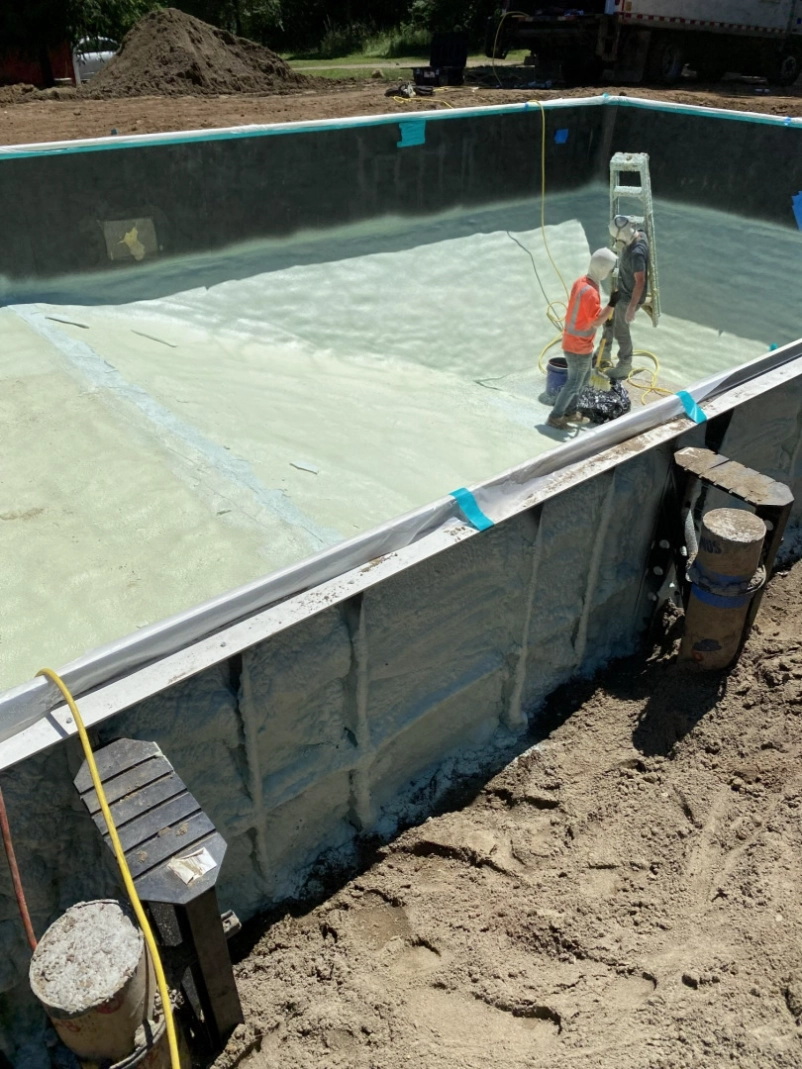
If your commercial roof is showing visible wear, recurring leaks, blistering membranes, or widespread ponding water, a polyurea coating may be the most effective way to restore its performance without a full tear-off and replacement. Polyurea is an elastomer formed through the reaction of an isocyanate component and an amine component, creating a seamless, monolithic membrane with exceptional tensile strength, elongation exceeding 500%, and rapid cure times that allow thick applications in a single pass. Polyurea coating prevent ponding water that helps protect vulnerable areas from ongoing moisture exposure and supports long-term roof performance. For commercial building owners and facility managers weighing restoration against replacement, understanding the specific warning signs that point to polyurea as the right solution can save significant capital and reduce operational downtime. The right approach depends on your roof’s substrate condition, climate exposure, drainage design, and how many years of serviceable life remain.
Polyurea belongs to a class of elastomers derived from the reaction between isocyanate and amine components, as documented in polymer chemistry references Polyurea – Wikipedia. Unlike polyurethane coatings that can take hours to cure and remain sensitive to moisture during application, polyurea reacts and sets in seconds. This rapid cure time means our crew can build up substantial film thickness in a single pass without worrying about dew, humidity, or temperature swings shutting down the job.
The material’s mechanical properties set it apart as well. Polyurea achieves tensile strengths up to 40 MPa (approximately 6,000 psi) with elongation rates exceeding 500%, which means the coating stretches with thermal expansion and contracts without cracking. For a commercial roof that experiences daily temperature swings, foot traffic from HVAC maintenance crews, and seasonal weather extremes, this combination of strength and flexibility is what makes polyurea a long-term solution rather than a temporary patch.
Commercial roof coatings generally fall into three categories: acrylic, silicone, and polyurea/polyurethane systems. Each has a role, but polyurea delivers the highest performance in demanding environments.
| Coating Type | Cure Speed | Tensile Strength | Elongation | Best Application | Limitation |
|---|---|---|---|---|---|
| Acrylic | Moderate (evaporation-based) | Lower | Moderate | Reflective topcoats on well-maintained roofs | Poor on ponding surfaces, weather-sensitive during install |
| Silicone | Moderate to slow | Lower | Good | SPF foam protection, excellent water resistance | Weaker tensile strength, collects dirt over time |
| Polyurea | Seconds | Very high (up to 6,000 psi) | Excellent (500%+) | Direct waterproofing on metal, concrete, foam, wood | Requires plural-component spray equipment |
When the same seam, flashing point, or membrane lap keeps leaking despite repeated repairs, the underlying waterproofing layer has lost its integrity. Patching individual leaks on a deteriorating commercial roof is a losing strategy. Each repair adds labor and material costs while the surrounding membrane continues to degrade. At this stage, a seamless polyurea overlay creates a continuous barrier that eliminates the weak points where water was entering.
If you walk your roof and notice raised blisters, deep cracks, or a pattern of fissures resembling alligator skin, the membrane is undergoing oxidative and UV-driven breakdown. This is especially common on aged modified bitumen, built-up roofs, and single-ply membranes that have exceeded their reflective coating life. Left unaddressed, these cracks widen and allow moisture into the substrate, where it compromises insulation and can lead to structural deck damage.
Water that sits on your roof for more than 48 hours after a rain event is a problem for two reasons. First, it accelerates membrane degradation at the waterline. Second, it creates hydrostatic pressure that forces water through any microscopic pinhole or seam weakness. Polyurea’s seamless, fully adhered application means there are no seams or laps for ponded water to exploit, which is why it performs well on flat and low-slope commercial roofs where drainage improvements alone may not solve the problem.
As roof membranes age, their surface reflectivity drops. A dark, heat-absorbing roof transfers more thermal energy into the building, forcing HVAC systems to work harder. According to the U.S. Department of Energy, cool roofs stay up to 60 degrees Fahrenheit cooler than traditional dark roofs during summer. The DOE’s cool roof guidelines further note that dark roofs can reach temperatures exceeding 150 degrees Fahrenheit, while cool roof surfaces under the same conditions stay more than 50 degrees cooler. If your building’s cooling costs have climbed steadily while insulation and HVAC equipment have remained unchanged, the roof surface is a likely contributor.
If the protective membrane has worn through to the point where the insulation board or the structural deck is visible, you are in the window where a coating can still save the roof. Explore modern insulation solutions to understand how the right insulation can support roof performance. Once the substrate is extensively saturated or degraded, replacement becomes necessary. But when exposure is limited to scattered areas, our team can address those zones with targeted repairs before applying the polyurea system across the entire surface.
Polyurea does not just cover up damage. Its properties directly counteract the mechanisms causing roof failure.
Waterproofing: The seamless, monolithic membrane eliminates seams, laps, and fastener penetrations that are the most common leak paths on commercial roofs.
UV resistance: Polyurea coatings reflect a significant portion of solar radiation, reducing surface temperatures and slowing the photo-oxidative degradation that causes cracking and blistering in the first place.
Thermal cycling tolerance: With elongation exceeding 500%, the coating accommodates the expansion and contraction that occurs during daily temperature swings without developing stress fractures.
Chemical and abrasion resistance: For roofs exposed to HVAC chemical discharge, grease from kitchen exhaust, or regular foot traffic from maintenance personnel, polyurea’s abrasion resistance outperforms acrylic and silicone alternatives.
The Environmental and Energy Study Institute (EESI) reports that coated cool roofs can reduce air conditioning energy use by up to 15% on single-story commercial buildings. By restoring reflectivity and adding an insulating barrier, a polyurea coating addresses both the structural symptoms and the energy-efficiency losses that accompany roof aging.
Not every roof is a candidate for a polyurea coating. The approach works best when the existing substrate has structural integrity and the building owner wants to extend roof life without the cost and disruption of a full tear-off.
| Roof Substrate | Polyurea Suitability | Key Consideration |
|---|---|---|
| Spray polyurethane foam (SPF) | Excellent | SPF requires a protective coating by design; polyurea provides the highest-performance option |
| Metal (standing seam, corrugated) | Excellent | Bonds well with proper primer; seals fastener penetrations and panel overlaps |
| Concrete | Excellent | Concrete is an ideal substrate; polyurea adheres directly with proper surface preparation |
| Single-ply membranes (TPO, EPDM, PVC) | Good | Requires the membrane to be in fair condition; any saturated areas must be cut out and replaced before coating |
| Modified bitumen / built-up roofing | Good | Surface must be clean and free of loose granules; blistered areas need repair before application |
| Asphalt shingles | Limited | Field coating asphalt shingles may void manufacturer warranties; not generally recommended |
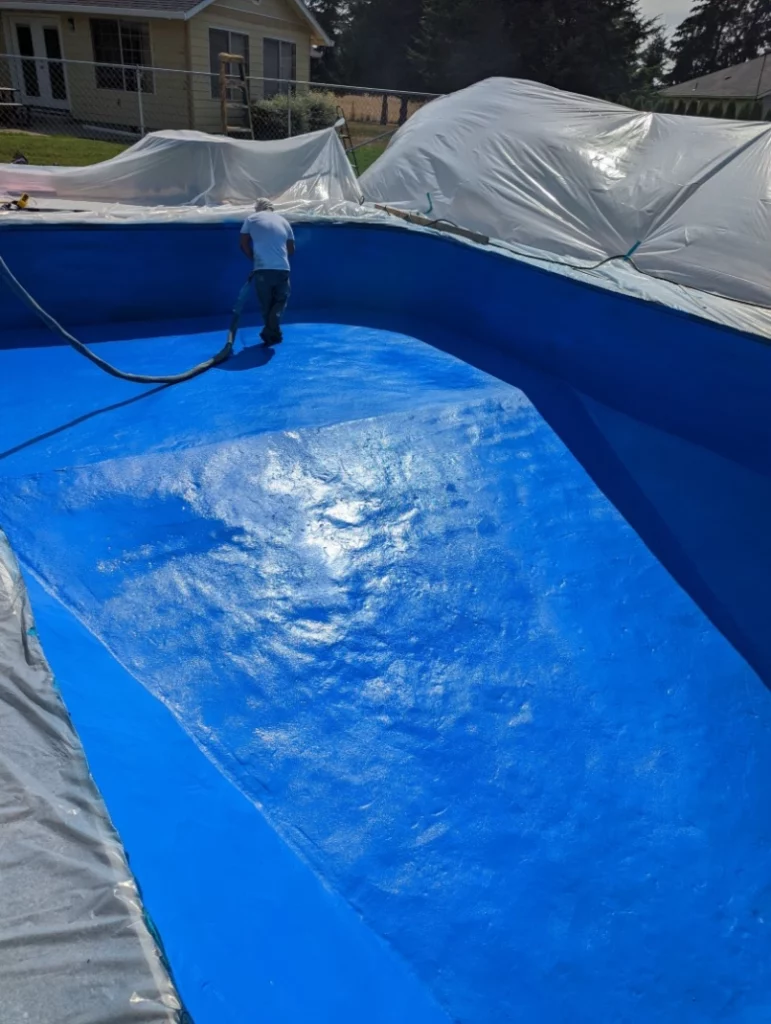
The decision between coating and replacement depends on several factors, but the general rule from the DOE guidelines is straightforward: if your roof is in moderate condition with relatively few leaks and at least five years of expected service life remaining, a coating is a viable option. The main reason for coating a roof is to extend its service life. When the existing membrane is extensively failed, saturated, or the structural deck is compromised, replacement is the correct path.
Coating advantages over replacement include significantly shorter installation timelines, reduced waste sent to landfills, lower disruption to building operations, and the ability to address the roof during normal business hours in many cases. For facilities where operations cannot halt, such as manufacturing plants, warehouses, and retail spaces, this alone can justify the coating approach.
Selecting the right installer matters as much as selecting the right material. Here are the markers of a qualified polyurea roofing contractor:
Spray-On Foam & Coatings has the experience and equipment to evaluate your commercial roof and determine whether a polyurea coating is the right solution for your building. Our team provides honest assessments and only recommends coating when the substrate can support a long-term result.
Contact us at [email protected] or call (360) 667-1993 to discuss your project. We serve Battle Ground, Vancouver, WA and Portland, OR metro areas, including Longview, Kelso, Castle Rock, Centralia, and Aberdeen.
Request a Free Quote | Schedule a Roof Assessment
Polyurea coatings typically last 20 to 30 years when properly applied over a sound substrate, according to industry performance data. Actual lifespan depends on installation quality, substrate condition, climate exposure, and maintenance.
Active leaks and saturated insulation must be repaired or replaced before polyurea application. The coating seals the surface, but trapped moisture beneath the membrane will continue to cause damage if not addressed first.
Yes. Polyurea reacts and cures in seconds using an isocyanate-amine reaction, while polyurethane cures over hours using an isocyanate-hydroxyl reaction. Polyurea offers faster installation, higher tensile strength, and better moisture insensitivity during application.
Many polyurea roof coatings meet or exceed ENERGY STAR cool roof requirements for solar reflectance and thermal emittance. ENERGY STAR defines a cool roof as one with both high solar reflectance and high thermal emittance, and polyurea formulations can achieve these ratings depending on the specific product and color.
Roofs with extensive substrate saturation, structural deck damage, or loose, delaminated membranes are not candidates for coating. Field-coating asphalt shingles is also generally not recommended, as it may void the manufacturer warranty.