
If you have ever walked into a room in your home that is noticeably colder than the rest of the house, or watched your energy bill climb month after month with no clear explanation, the problem almost always comes back to one thing: your building envelope is not doing its job. The insulation in your walls, attic, crawl space, and foundation is the single most important factor in how comfortable your home feels and how much it costs to heat and cool it. Yet most homeowners never think about insulation until something goes wrong.
This guide is the result of years of hands-on experience working with insulation experts across residential and commercial properties. We have installed and assessed insulation in hundreds of homes and buildings, and we have seen firsthand what works, what does not, and what makes a real, measurable difference in comfort and energy use. Whether you are building new, retrofitting an older home, or just trying to understand why one room never stays warm, this guide covers everything you need to know.
Before diving into types and applications, it helps to understand what insulation is really doing. Heat moves in three ways: conduction (through solid materials like wood studs), convection (through air movement), and radiation (as heat energy traveling in a straight line from a warm surface to a cooler one). Good insulation slows all three, but different materials are better at different things.
The standard measurement for how well insulation resists heat flow is the R-value. U.S. Department of Energy According to the U.S. Department of Energy, installing more insulation increases the R-value and the resistance to heat flow, though the relationship is not always perfectly linear depending on the material.
R-values are not just marketing numbers. The Federal Trade Commission enforces the R-value Rule (16 CFR Part 460), which requires manufacturers to test and disclose accurate R-value information on every package of insulation sold in the United States. That means when you see an R-value on a product label, it has been verified through standardized testing.
The amount of R-value you need depends heavily on your climate zone. Homes in colder northern climates need significantly more insulation than homes in warmer southern regions. The DOE has mapped the entire country into climate zones with specific R-value recommendations for attics, walls, crawl spaces, and basements.
Expert Tip: R-value per inch matters more than total R-value when you are working with limited space. In a 2×4 wall cavity, you cannot physically fit enough fiberglass to reach R-21, but you can reach that level with higher-density materials. Always check the R-value per inch, not just the total, when comparing options for tight spaces.
Insulation does not work in isolation. It is part of your building envelope, which is the physical separator between the conditioned (heated or cooled) interior of your building and the unconditioned outside environment. According to Wikipedia’s building science entry, the building envelope includes the foundation, roof, walls, doors, windows, and all their related barriers and insulation.
The envelope has three main jobs: support (resisting structural loads), control (managing heat, air, moisture, and water), and finish (providing the interior and exterior surfaces you see). The control function is where insulation lives, and it focuses on four things in order of importance: rain control, air control, heat control, and vapor control.
Key Takeaways:
Here is a number that surprises most people: air leakage accounts for between 25% and 40% of the energy used for heating and cooling in a typical home. ENERGY STAR. That finding comes directly from ENERGY STAR’s air sealing guide published by the EPA. In other words, even if your home has decent insulation, you could be losing a quarter to nearly half of your heating and cooling energy through cracks, gaps, and unsealed penetrations.
Air leaks happen at joints between building materials, around windows and doors, through penetrations for plumbing and electrical wiring, at the tops and bottoms of walls, and along the rim joists where the framing meets the foundation. Wind, temperature differences between indoors and outdoors (called the stack effect), and exhaust fans all create pressure differences that push and pull air through these gaps.
This matters because insulation only works if air stays still. When air moves through or around insulation, it carries heat with it, which dramatically reduces the material’s effectiveness. In building science, this is called windwashing when cold outside air passes through insulation, and it can account for 10% to 20% of a home’s total heat loss on its own.
Expert Tip: Always seal air leaks before adding insulation. If you insulate without sealing first, you may trap moist air inside wall or ceiling cavities where it can condense and cause hidden mold growth. Air sealing first, then insulating, is the right order every time.
Think of air sealing as the windbreaker and insulation as the sweater. A thick sweater keeps you warm in still air, but if wind cuts through it, you get cold fast. Put a windbreaker over the sweater, and the insulation can do its job. Your building envelope needs both.
The benefits of proper air sealing go beyond energy savings. A tighter building envelope means fewer drafts, more consistent temperatures between rooms, reduced moisture infiltration, better indoor air quality (because you control what air comes in rather than having unfiltered air leaking through random cracks), and less dust and pollen entering the home.
The insulation industry has evolved significantly over the past few decades. What used to be a choice between fiberglass batts and not much else has expanded into a wide range of materials, each suited to different applications, budgets, and performance requirements. Here is a thorough look at every major type you will encounter.
This is the most common and widely available type of insulation. It comes in pre-cut panels (batts) or continuous rolls and is made from flexible fibers, most commonly fiberglass. You can also find batts made from mineral wool, plastic fibers, and natural fibers like cotton and sheep’s wool.
According to the DOE’s types of insulation guide, batts and rolls are suited for standard stud and joist spacing that is relatively free from obstructions. They are relatively inexpensive and can be installed as a DIY project, which makes them popular for homeowners on a budget.
Where it works best: Unfinished walls (including foundation walls), floors, and ceilings with standard framing spacing.
Advantages:
Limitations:
Loose-fill insulation consists of small particles of fiber, foam, or other materials that conform to any space without disturbing existing structures. The most common materials are cellulose (made from recycled newspaper), fiberglass, and mineral wool. All three use recycled content. Cellulose is typically 82% to 85% recycled material, fiberglass products contain 40% to 60% recycled glass, and mineral wool averages 75% post-industrial recycled content.
Where it works best: Enclosed existing wall cavities, open attic floors, and hard-to-reach places where batts cannot fit.
Advantages:
Limitations:
Foam boards are rigid panels used to insulate almost any part of a building, from the roof down to the foundation. They provide high insulating value for relatively little thickness and can block thermal bridging (heat conducting through structural framing) when installed continuously over frames or joists. The main types are:
One thing to keep in mind is that both XPS and polyiso can experience thermal drift, where the R-value drops over time as the low-conductivity gas inside the cells gradually escapes and is replaced by air. Most of this drift happens within the first two years after manufacturing.
Where it works best: Exterior wall sheathing, basement walls, foundation exteriors, attic hatch covers, and under roofing on low-slope roofs.
Advantages:
Limitations:
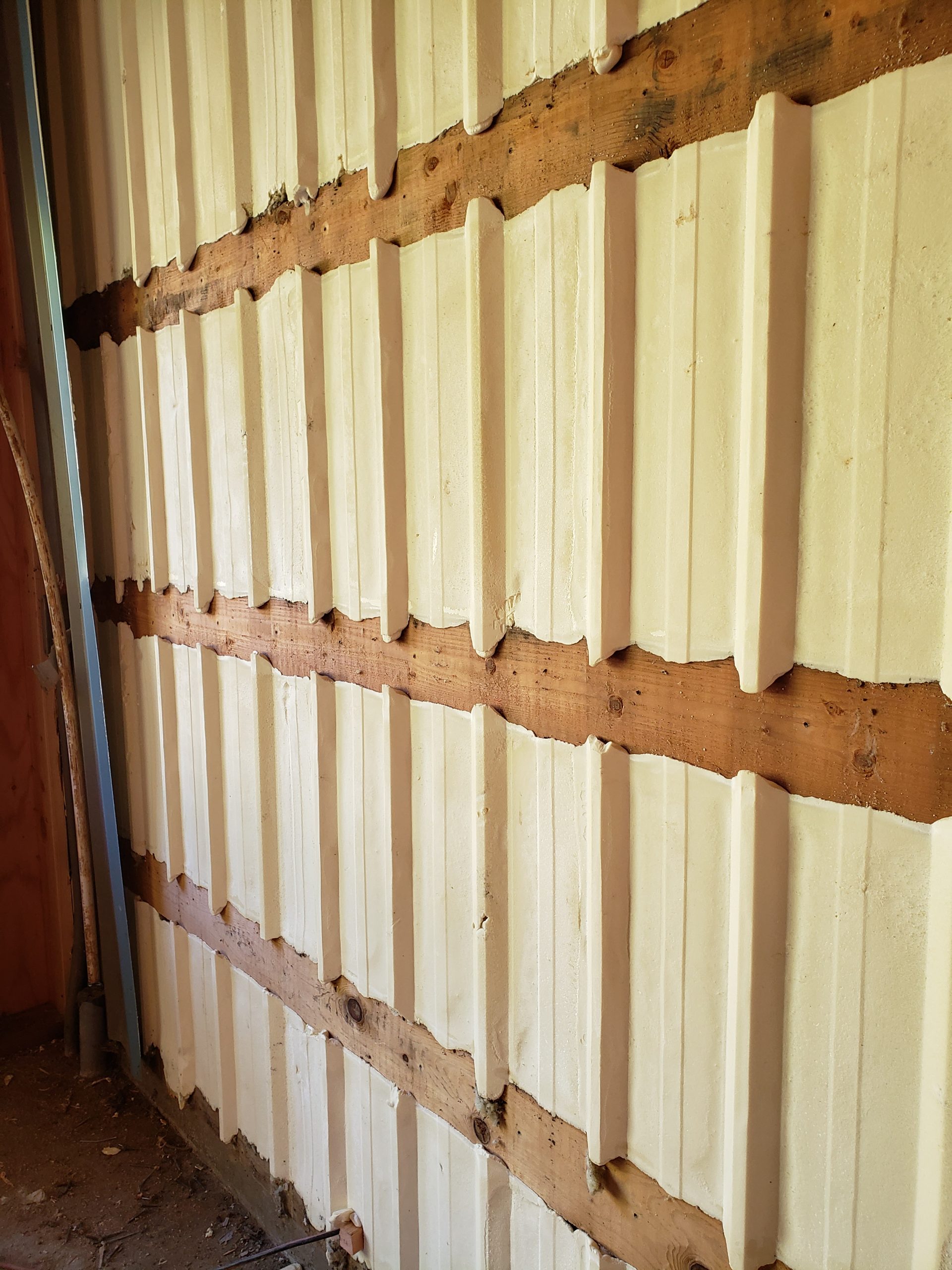
Spray foam solutions has become one of the most popular insulation choices for both new construction and retrofit projects, and for good reason. It is applied as a liquid that expands and hardens, filling every crack, gap, and cavity it touches. This expansion is what sets spray foam apart from virtually every other insulation type. It creates a continuous air barrier while insulating, solving two problems at once.
There are two distinct types:
Open-Cell Spray Foam: The cells in this foam are not completely closed, giving it a softer, spongy texture. It uses air as the blowing agent, so the R-value does not drift over time. It typically delivers R-3.7 to R-3.8 per inch. Open-cell foam expands significantly (up to 100 times its liquid volume), which makes it excellent at filling cavities completely. It is vapor permeable, meaning it allows moisture to pass through rather than trapping it.
Closed-Cell Spray Foam: The cells are completely closed and filled with a gas that gives the foam its expansion power. It delivers R-6.0 to R-7.0 per inch, which is among the highest of any insulation material. The closed cells also make it a vapor barrier, meaning it stops moisture movement. It adds structural rigidity to the wall or cavity it fills and is resistant to water absorption.
Where spray foam works best:
Advantages of spray foam in general:
Limitations:
Expert Tip: In crawl spaces, closed-cell spray foam is almost always the better choice. The moisture resistance and vapor barrier properties protect the wood framing from rot and keep ground moisture from entering the living space above. We have seen crawl spaces transformed from damp, musty problem areas into clean, dry storage spaces with a single application.
SIPs are prefabricated building panels with a foam insulation core sandwiched between two structural facing boards, usually oriented strand board (OSB). They are used to build walls, ceilings, floors, and roofs, and they provide superior and uniform insulation compared to traditional stick-frame construction. According to the DOE, U.S. Department of Energy SIP-built houses offer energy savings of 12% to 14% over conventional construction.
Where they work best: New construction, where walls and roofs are being built from scratch.
Advantages:
Limitations:
Unlike other insulation types that slow conductive and convective heat flow, reflective systems work by reflecting radiant heat. They are made from foil-faced kraft paper, plastic film, or polyethylene bubbles. Radiant barriers are installed in attics primarily to reduce summer heat gain, and studies show they can lower cooling costs 5% to 10% in warm, sunny climates.
Where they work best: Hot climates, especially where cooling ducts run through the attic.
Limitations:
Several other materials deserve a brief mention for specialized applications:
When space is limited, R-value per inch becomes a critical factor. The table below shows how common insulation materials compare on this metric.
| Insulation Material | R-Value Per Inch | Best Application |
| Closed-cell spray foam | R-6.0 to R-7.0 | Crawl spaces, rim joists, pole barns, and metal buildings |
| Polyisocyanurate (polyiso) board | R-5.6 to R-6.5 | Wall sheathing, roofing, and commercial projects |
| Open-cell spray foam | R-3.7 to R-3.8 | Wall cavities, attics, sound control |
| Extruded polystyrene (XPS) | R-5.0 | Below-grade foundations, exterior walls |
| High-density fiberglass batt | R-3.7 to R-4.3 | Standard wall cavities, limited space |
| Expanded polystyrene (EPS) | R-3.8 to R-4.4 | ICFs, SIPs, cavity fill |
| Mineral wool batt | R-3.3 to R-4.2 | Walls, fire-rated assemblies |
| Standard fiberglass batt | R-2.9 to R-3.8 | Standard wall cavities, attics, floors |
| Loose-fill cellulose | R-3.1 to R-3.8 | Attics, existing wall cavities |
| Loose-fill fiberglass | R-2.2 to R-2.7 | Attics, hard-to-reach areas |
Key Takeaways:
Knowing which insulation materials exist is only half the battle. The other half is knowing where to put them. Every home has specific zones that need insulation, and each zone has different requirements based on exposure, moisture risk, and construction type.
The attic is typically the single most important area to insulate in any home. Heat rises, and an uninsulated or under-insulated attic is the primary path for heat loss in winter and heat gain in summer. Depending on your climate zone, the DOE recommends R-30 to R-60 for attic insulation.
For ventilated attics, insulation goes on the attic floor above the ceiling. For unventilated attics (particularly cathedral ceilings), insulation goes directly against the roof deck. Spray foam is an excellent choice for cathedral ceilings because it fills the rafter bays and provides an air barrier.
Wall cavities in standard construction are 2×4 (3.5 inches deep) or 2×6 (5.5 inches deep). The table earlier in this guide shows what R-values are achievable in each. For retrofit situations where you cannot easily access wall cavities, blown-in cellulose or fiberglass through small holes drilled in the exterior sheathing (or through plaster from the interior) is the most practical approach.
Expert Tip: If you are re-siding your home, that is the ideal time to add insulation. You can drill holes through the existing sheathing, blow insulation into the wall cavities, patch the holes, and then install new siding over everything. It is far less disruptive than opening walls from the inside.
Crawl spaces are one of the most commonly under-insulated areas in homes. They sit directly above the ground, which means they are exposed to ground moisture, humidity, and temperature swings. Insulating and sealing crawl spaces has a dramatic impact on comfort, especially on the floors above them.
There are two approaches to crawl space insulation: insulating the floor above the crawl space (between the floor joists) or insulating the crawl space walls and creating a conditioned crawl space. The conditioned approach, where the walls are insulated and sealed with a ground vapor barrier, has become the preferred method in recent years because it keeps mechanical systems (ductwork, plumbing) in a conditioned space.
Basement walls and rim joists (the area where the floor framing meets the foundation wall) are major sources of air leakage and heat loss. Rim joists are notoriously difficult to insulate with batts because of the irregular shape and all the penetrations. Spray foam and rigid foam board cut to fit are the most effective solutions here.
Below-grade insulation helps keep basement temperatures stable and reduces heat loss to the ground. Rigid foam board (EPS or XPS) is the standard choice for exterior foundation insulation, applied before backfilling. Interior rigid foam is an option for existing foundations during renovations.
Insulation is not just for homes. Commercial buildings, agricultural structures, and specialty applications have their own sets of requirements and best practices.
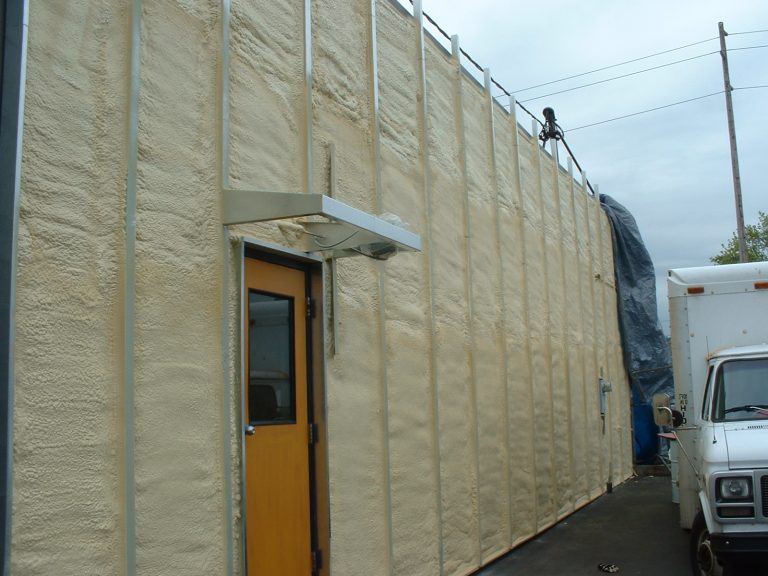
Metal buildings are notorious for condensation problems. When warm, moist indoor air contacts cold metal panels, condensation forms and can drip onto everything below. Spray foam insulation solves this by applying a continuous layer of insulation directly to the metal surface, which both insulates and creates a vapor barrier. Closed-cell foam is the standard choice here because of its moisture resistance and high R-value per inch.
Pole barns and post-frame buildings present similar challenges. The open framing and large wall cavities mean that traditional batt insulation is often impractical. Spray foam fills the irregular spaces and adheres to the framing, providing both insulation and an air barrier.
Commercial insulation projects tend to focus heavily on energy code compliance, fire safety ratings, and acoustic performance. Many commercial buildings use a combination of rigid foam board for continuous insulation (often required by modern energy codes) and cavity fill insulation (batts or spray foam) between framing members. The emphasis on continuous insulation in commercial construction has been a major driver of foam board and spray foam adoption.
Numbers tell the story better than anything else. According to the Department of Energy’s Guide to Home Insulation, you can save up to 20% on heating and cooling costs, or up to 10% on total energy costs, by adding insulation to attics, floors, crawl spaces, and basement rim joists, and by reducing unwanted air leaks.
ENERGY STAR’s methodology data breaks it down further by climate zone. In northern climate zones (5 through 8), total home energy savings range from 12% to 16%. In southern zones (1 through 3), savings range from 5% to 8%. Heating and cooling savings alone range from 7% to 20%, depending on location.
ENERGY STAR’s methodology data breaks it down further by climate zone. In northern climate zones (5 through 8), total home energy savings range from 12% to 16%. In southern zones (1 through 3), savings range from 5% to 8%. Heating and cooling savings alone range from 7% to 20%, depending on location.
The global building insulation market reflects the growing recognition of these benefits. According to Grand View Research’s market analysis, the building thermal insulation market is projected to reach $37.8 billion by 2030, growing at a compound annual growth rate of 5.9% from 2025. This growth is driven by tightening energy codes, rising energy costs, and increasing awareness of the connection between insulation, comfort, and sustainability.
Expert Tip: Do not just look at the percentage savings. Look at the dollar amount on your actual energy bills. If you spend $3,000 per year on heating and cooling, a 15% reduction saves you $450 per year, every year, for the life of the insulation (which can be 50+ years for many materials). That is real money back in your pocket.
After years of installing and assessing insulation, we have seen the same mistakes repeated in home after home. Here are the most common ones and how to avoid them.
Fiberglass and mineral wool batts work by trapping still air. When you compress a batt to fit it into a space, you squeeze out the air pockets, and the R-value drops. A R-13 batt compressed into a 2-inch space might only perform at R-8 or less. Never compress batts to fit. If the space is too shallow, use a thinner batt designed for that depth.
This is the single most common and most costly mistake. Installing insulation without first sealing air leaks is like wearing a thick coat with the zipper open. The air moves through and around the insulation, carrying heat with it. Seal first, then insulate.
In attics with traditional ventilation, the insulation must allow air to flow from the eave vents (soffit vents) up through the attic space to the ridge or gable vents. If you push insulation into the eaves and block the soffit vents, you trap moist air in the attic, which can cause condensation, wood rot, and mold. Use baffles or rafter vents to maintain the air channel.
Open-cell spray foam should never be used below grade or in crawl spaces where it might absorb groundwater. Fiberglass batts are a poor choice for crawl spaces because they can hold moisture and sag. Polyiso board should not be used in direct ground contact. Each location in your building has specific requirements, and using the wrong material can cause problems that are expensive to fix later.
Even the best insulation material will underperform if it is installed poorly. Gaps around the edges of batts, voids in blown-in insulation, and thin spots in spray foam all reduce the effective R-value. A study cited by the DOE found that walls insulated with the Blow-In-Blanket System (a specialized blown-in fiberglass method) performed significantly better than walls with standard batts because the blown-in method achieved more complete coverage.
The insulation industry is not standing still. Several trends are shaping the next generation of insulation solutions.
Manufacturers continue to push R-value per inch higher. New formulations of polyiso and polyurethane foams are achieving better long-term thermal performance with reduced thermal drift. Low-global-warming-potential (low-GWP) blowing agents are replacing older chemicals, which makes foam insulation more environmentally friendly without sacrificing performance.
Modern building energy codes are increasingly requiring continuous insulation on the exterior of buildings, rather than relying solely on cavity insulation between framing members. This approach eliminates thermal bridging through studs and other framing, and it has become a standard practice in commercial construction and is spreading to residential building codes in many jurisdictions.
Building science has made it clear that moisture control is just as important as thermal control. The trend toward conditioned attics and sealed crawl spaces reflects a growing understanding that insulation, air sealing, and moisture control must be designed as an integrated system, not treated as separate problems.
Cellulose insulation (82-85% recycled newspaper), fiberglass (40-60% recycled glass), and mineral wool (75% post-industrial recycled content) all offer significant recycled content. Natural fiber insulations made from hemp, cotton, and sheep’s wool are also gaining attention, particularly in green building projects.
As homes become more connected, insulation is becoming part of larger smart building systems. Sensors that monitor moisture levels within wall and ceiling cavities, automated ventilation systems that adjust fresh air intake based on occupancy, and energy monitoring systems that track the real-world performance of insulation are all emerging technologies that will change how we think about building envelopes.
Check your attic first. If you can see the floor joists through the insulation, you likely need more. Ice dams on your roof in winter, uneven temperatures between rooms, and high energy bills are also strong indicators.
Batts and rolls in accessible areas like attics can be a DIY project, but blown-in and spray foam insulation require professional equipment and training for proper installation and safe handling.
Most insulation materials last 50 years or more when properly installed and protected from moisture. Fiberglass, mineral wool, and spray foam do not degrade over time under normal conditions.
Insulation reduces sound transmission between rooms and from outside. Fiberglass, mineral wool, and open-cell spray foam are particularly effective at absorbing sound in addition to blocking heat.
An air barrier blocks the movement of air through the building envelope, while a vapor barrier blocks the movement of water vapor. Some materials, like closed-cell spray foam, serve as both, but many insulation materials are neither on their own.
Spray foam typically has a higher upfront cost than fiberglass batts or blown-in insulation. However, it provides an air barrier and insulation in one step, which can offset the cost of separate air sealing work, and the higher per-inch R-value can reduce the total thickness needed.
The right insulation strategy depends on your specific home, your climate, your budget, and your goals. There is no universal answer, but there is a right answer for every situation. Start by understanding where your home is losing energy. An energy audit, which often includes a blower door test and infrared thermography, will identify the specific areas where insulation and air sealing will have the biggest impact.
From there, prioritize the areas with the greatest need. For most homes, the attic and crawl space offer the biggest return on investment because they are often the most under-insulated areas and the most accessible. Then move to walls and rim joists, which require more effort but can still deliver significant savings.
Remember that insulation works as part of a system. Air sealing, moisture control, and proper ventilation all need to be addressed alongside insulation for the best results. Cutting corners on any one of these elements reduces the performance of the whole system.
We created this guide to be a resource you can come back to whenever you need it. Bookmark it, share it, and use it as a reference as you make decisions about your home or building. The information here is based on real-world experience, government research, and established building science, not marketing claims.
If you are ready to improve your home’s insulation or want a professional assessment of what your building actually needs, we are here to help. Reach out to Spray-On Foam & Coatings at (360) 667-1993 or email [email protected]. Our team can evaluate your specific situation and recommend the right solution based on your home’s needs, your climate zone, and your budget.