
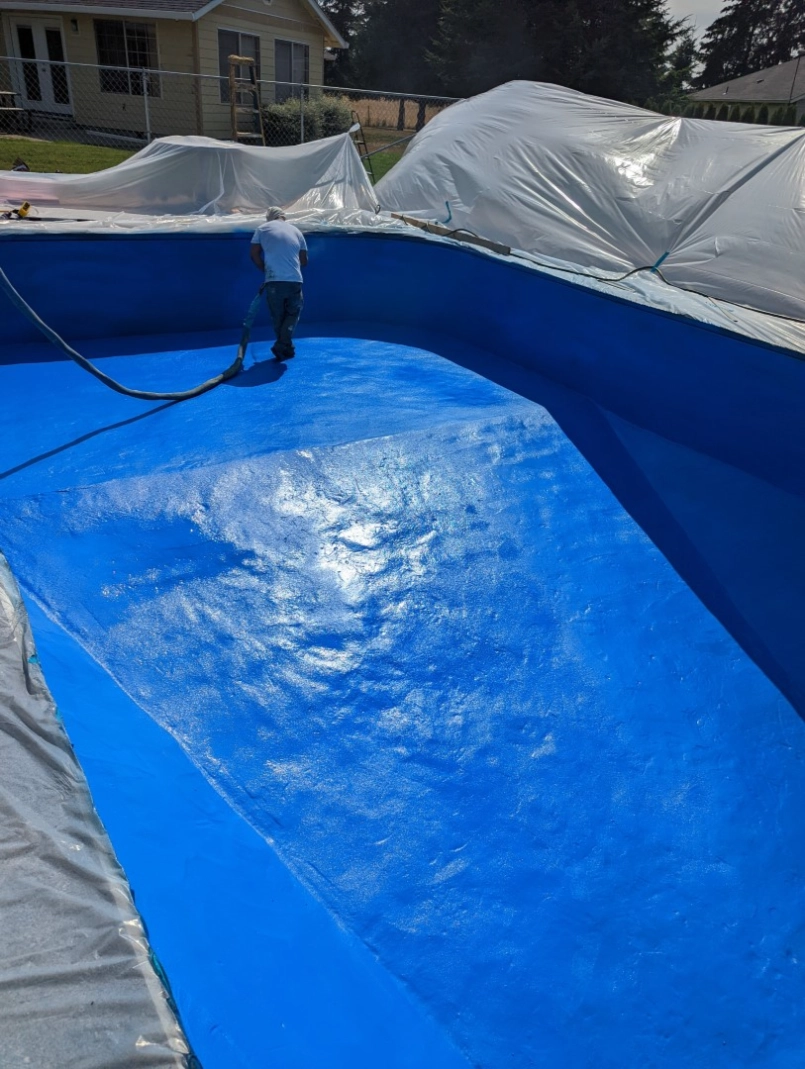
Polyurea roof coatings prevent ponding water damage by forming a seamless, continuous membrane that bonds directly to the roof substrate, eliminating the seams, joints, and gaps where water typically infiltrates. Unlike many traditional roofing materials that degrade, blister, or lose adhesion under standing water, polyurea is a fast-curing elastomer derived from the reaction of an isocyanate component and an amine component, producing a membrane with exceptional tensile strength, high elongation, and resistance to prolonged moisture exposure. When applied over spray polyurethane foam (SPF) or existing roof substrates, polyurea coatings act as both a protective UV barrier and a waterproofing layer that can withstand permanent ponding conditions without breaking down.
Ponding water on flat or low-slope roofs is not a cosmetic issue. When water accumulates and remains on a roof surface beyond 48 hours after rainfall, it meets the industry definition of problematic ponding as established by the National Roofing Contractors Association. The NRCA Roofing Manual states that proper slope for drainage means no ponding water remains on the roof 48 hours after rain during conditions conducive to drying.
Standing water creates a cascading set of problems. First, it accelerates the deterioration of most roofing materials. UV exposure combined with constant moisture breaks down asphalt, single-ply membranes, and many conventional coatings at a faster rate than they would degrade under normal conditions. The repeated cycles of ponding, evaporation, and re-ponding pull adhesives apart, weaken flashings, and force water into microscopic imperfections that expand over time.
Second, ponding water adds dead load to the roof structure. A seemingly shallow pond covering a large roof area can add thousands of pounds of weight, contributing to structural deflection that deepens the pond and creates a self-reinforcing cycle. The more the structure deflects, the more water collects, the more it deflects.
Third, standing water promotes biological growth. Algae, moss, and mold thrive in persistently wet conditions, and their root systems can penetrate membrane surfaces and create channels for water infiltration into the building envelope.
The performance advantage of polyurea starts at the molecular level. Polyurea is an elastomer formed through the reaction of isocyanate and amine components, creating tightly linked polymer chains with urea bonds. According to Wikipedia’s entry on polyurea, the reaction between an isocyanate and amine is extremely fast and does not require a catalyst, which means the material reaches full cure almost instantly upon application. This rapid reactivity, combined with moisture insensitivity, allows polyurea to form a continuous membrane even in conditions that would compromise other coating chemistries.
Key material properties that make polyurea effective against ponding water:
The Insurance Institute for Business & Home Safety (IBHS) provides a detailed comparison of coating types used over spray polyurethane foam roofing systems. Their guidance identifies acrylic, butyl, silicone, polyurethane, and polyurea as the primary coating categories, each with distinct performance characteristics.
| Coating Type | Ponding Water Resistance | Elongation | UV Resistance | Cure Time | Best Application |
|---|---|---|---|---|---|
| Polyurea | Excellent, permanent ponding capability | 300-500%+ | Good (topcoat required) | Seconds to minutes | Commercial flat roofs, roofs with known drainage issues |
| Silicone | Very good, high ponding tolerance | 100-200% | Excellent | Hours | Roofs with heavy UV exposure, high-temperature environments |
| Acrylic | Poor to moderate, degrades with ponding | 150-300% | Moderate | Hours | Budget-conscious projects with good drainage |
| Polyurethane | Moderate, varies by formulation | 100-300% | Moderate to good | Hours | General-purpose applications |
| Butyl | Good, very low vapor permeability | 200-400% | Poor (requires topcoat) | Hours | Coolers, freezers, cryogenic applications |
Acrylic coatings, the most commonly used and lowest-cost option, have high moisture vapor permeability, which means they allow water vapor to pass through. While this can be an advantage in some assemblies, it also means acrylic coatings absorb water when subjected to ponding conditions. Repeated wetting and drying cycles cause acrylics to lose adhesion, blister, and ultimately fail in areas where water stands for extended periods. For a closer comparison, see silicone vs. acrylic foam roof coatings to understand how different coating systems perform under these conditions. Many acrylic manufacturers explicitly exclude ponding water from warranty coverage.
Silicone coatings perform significantly better under ponding conditions and retain their physical properties through extreme temperature swings. However, silicone has lower tensile strength and tear resistance compared to polyurea, making it more vulnerable to physical damage from foot traffic, hail, and debris.
Polyurea occupies a unique position in this comparison. Its combination of high tensile strength, exceptional elongation, fast cure, and moisture insensitivity during application makes it one of the few coating types that can be specified for roofs with known ponding issues and relied upon to perform under those conditions long term.
One of the most practical advantages of a spray polyurethane foam and polyurea coating system is the ability to address ponding water in two ways simultaneously: waterproofing and drainage correction.
As the IBHS spray foam roofing guide explains, SPF can be applied in varying thicknesses directly onto the existing roof substrate. In low-lying areas where water accumulates, the foam is applied thicker to build slope and redirect water toward existing drains. This process, called drainage enhancement, is unique to spray-applied systems. Factory-manufactured membranes cannot adjust thickness on-site, but SPF can be sculpted to create custom drainage planes without the need for tapered insulation boards or structural modifications.
The process works in stages:
The result is a roof that has been physically re-graded to drain properly, with a monolithic waterproof coating protecting both the foam and the substrate beneath it.
Several variables influence how well a polyurea coating system will perform in ponding conditions:
Substrate condition and preparation: Polyurea bonds directly to the substrate or to SPF foam. If the surface is contaminated with oil, grease, loose material, or moisture, adhesion will be compromised. The IBHS guide specifies that substrates must be structurally secure, dry, and free of contaminants. Priming may be required based on manufacturer specifications.
Application thickness: Total dry film thickness (DFT) of the coating system is a primary determinant of long-term performance. Thin applications leave the coating vulnerable to pinholes and premature wear. The IBHS guide indicates minimum total coating DFT is generally between 20 and 40 mils, with specific requirements varying by manufacturer and project.
Drainage infrastructure: Polyurea coatings prevent water from penetrating the roof membrane, but they do not eliminate the need for functional drainage systems. Roof drains, scuppers, and gutters must be clear and properly positioned. The NRCA guidelines emphasize that secondary or emergency drainage is required by building codes where the roof perimeter construction extends above the roof in a way that could trap water.
UV exposure and topcoat selection: Most polyurea formulations used in roofing are aromatic, which means they can degrade under direct UV exposure if not properly top-coated. Aliphatic topcoats or UV-resistant top layers protect the underlying polyurea from discoloration, chalking, and surface erosion. Selecting the correct topcoat system is essential for roofs with full sun exposure.
Climate zone and thermal cycling: In the Pacific Northwest service area, roofs experience significant temperature variation between seasons. Polyurea’s high elongation allows it to accommodate thermal expansion and contraction of the substrate without cracking. However, extreme freeze-thaw cycling can stress any coating system, making proper thickness and adhesion even more important.
| Scenario | Building Type | Problem | Solution | Outcome |
|---|---|---|---|---|
| Commercial warehouse | 15,000 sq ft flat roof, 20 years old | Chronic ponding near HVAC curbs, previous acrylic coating blistering and peeling in pond zones | SPF applied thicker around equipment curbs to build crickets and divert water, coated with polyurea system | Standing water eliminated from all previously ponded areas, roof restored to positive drainage |
| Agricultural storage | Metal roof pole barn with screw-down fasteners | Water pooling in low spots between purlins, rust forming at fastener points after every rain event | SPF applied over entire metal deck to fill low areas and create uniform slope, sealed with polyurea coating | Seam leaks eliminated, rust progression halted, building interior remains dry during heavy rainfall |
| Residential flat-roof addition | 800 sq ft low-slope roof over kitchen addition | Water accumulating near scupper, previous modified bitumen membrane splitting at pond edges | SPF used to build tapered slope toward scupper, polyurea base and top coat applied over foam | 48-hour drainage requirement met, membrane integrity restored, no further interior water staining |
| Office building reroof | Multi-tenant commercial building, 8,000 sq ft | Multiple ponding areas due to structural deflection between support columns, two previous coating failures | SPF drainage enhancement at column midspans combined with additional roof drains, full polyurea coating system | Dead load reduced by removing old gravel surfacing, drainage improved to code compliance, cooling costs reduced with reflective topcoat |
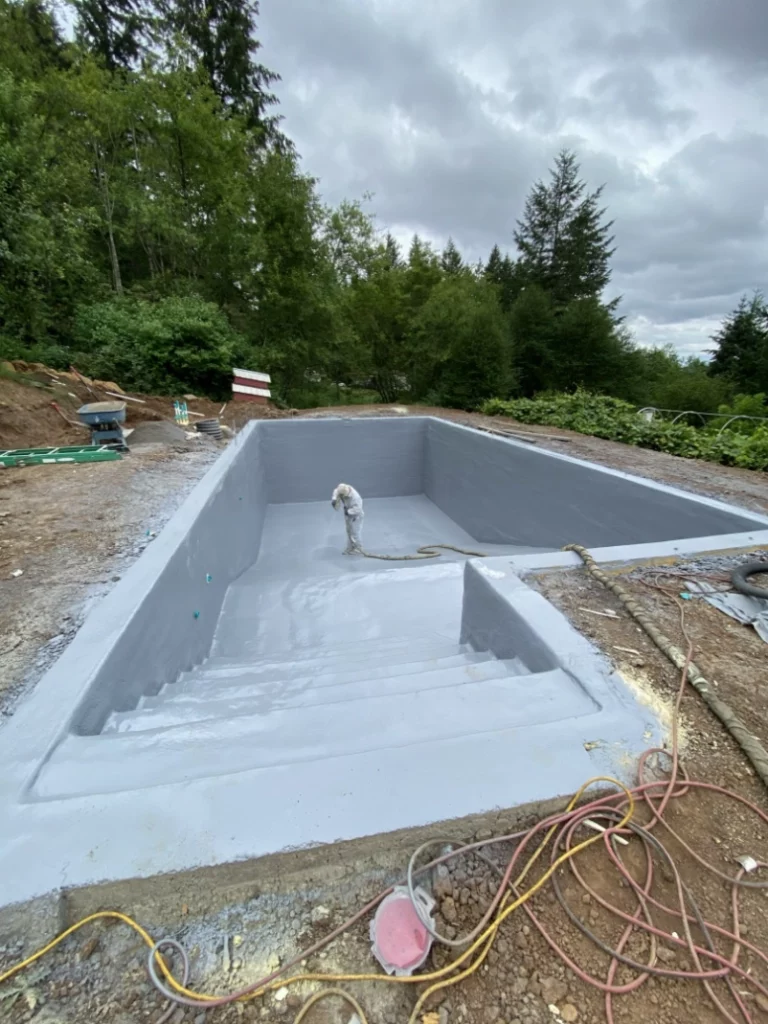
1. Identify ponding zones before proposing any coating system. Walk the roof during or immediately after rainfall to document exactly where water stands and how long it remains. Mark these areas and measure the depth. This documentation drives material specification and determines whether SPF slope-building is needed in addition to the coating.
2. Specify SPF thickness to correct drainage, not just insulate. The IBHS guide notes that SPF thickness should be a minimum of 1 inch and is typically greater to satisfy R-value requirements and enhance drainage patterns. When ponding is the primary concern, design the foam thickness profile specifically to redirect water toward existing drainage points before calculating insulation value.
3. Verify substrate dryness and cleanliness before application. SPF cannot be applied to wet surfaces. The IBHS guide states that SPF components are highly sensitive to water and moisture. Schedule application during appropriate weather windows and confirm the substrate meets manufacturer requirements for temperature and moisture content.
4. Apply coating in multiple passes with contrasting colors. The IBHS guide recommends a base coat followed by a top coat in a contrasting color to aid in judging application thickness. This quality control step ensures complete coverage and allows the applicator to visually identify thin spots before the system is complete.
5. Schedule biannual inspections. The IBHS guide recommends two inspections per year, one in spring and one in fall. Check for coating wear, exposed foam, blisters, and drainage obstructions. Small issues caught early can be repaired with compatible sealant, preventing minor defects from becoming major failures under ponding conditions.
6. Clean drains and gutters as part of routine maintenance. Even the most effective coating system will fail if water cannot exit the roof. Debris-clogged drains create artificial ponding that no coating can compensate for. Include drain and gutter inspection in every maintenance visit.
Beyond waterproofing, polyurea roof coatings contribute to building energy efficiency when specified in light colors. The EPA notes that buildings with cool roofs use less air conditioning, save energy, and have more comfortable indoor temperatures. Liquid-applied roof coatings with light or cool colors are specifically listed among the low-slope cool roof products recognized by the EPA.
ENERGY STAR reports that a clean white roof reflecting 80% of sunlight can stay about 50°F cooler than a grey roof reflecting only 20%. For buildings in warm months, this temperature differential directly translates to reduced cooling loads and lower energy costs. In the Pacific Northwest climate zone, where summer cooling demands have been increasing, this benefit is increasingly relevant.
For building owners dealing with chronic ponding, a polyurea coating system offers a dual benefit: it waterproofs and drains the roof while simultaneously reducing cooling energy costs through solar reflectance.
Spray-On Foam & Coatings brings extensive experience applying SPF and polyurea roof coating systems for commercial, agricultural, and residential buildings throughout the Battle Ground, Vancouver metro area and the Pacific Northwest. Our team evaluates every roof’s drainage profile, substrate condition, and building use before recommending a system that addresses ponding water at its source. Whether your building has known drainage deficiencies or you want to prevent future ponding problems before they start, we design solutions built to last.
Contact us at [email protected] or call (360) 667-1993 to discuss your roof coating project.
Request a Free Quote | Schedule a Roof Assessment
Properly applied polyurea coatings over SPF typically last 10 to 20 years before requiring reapplication, and the underlying SPF roof system itself has a documented lifespan exceeding 30 years with proper maintenance. The key to longevity under ponding is correct initial thickness, appropriate topcoat selection for UV protection, and biannual inspections to catch wear before it progresses to failure.
Yes, SPF and polyurea coating systems are designed as recover systems that can be applied over existing roof substrates. The foam is used to build additional thickness in low-lying areas, creating positive slope that redirects water toward drains. The existing substrate must be dry and structurally sound before application begins.
Polyurea offers significantly higher tensile strength and elongation than silicone, making it more resistant to physical damage from hail, foot traffic, and debris. Silicone has excellent UV resistance and performs well under ponding conditions, but it is softer and more susceptible to punctures and tears. Polyurea also cures much faster, allowing same-day completion of multi-coat applications.
No. Polyurea coatings prevent water from penetrating the roof membrane, but functional drainage systems are still required. The International Building Code requires secondary drainage where roof perimeter construction could trap water. Coatings manage water that remains temporarily on the surface but do not replace drains, scuppers, and gutters as the primary means of moving water off the roof.
Yes. Polyurea coating systems over SPF are appropriate for residential flat and low-slope roofs, including additions, garages, and outbuildings. The lightweight nature of coated SPF systems, adding less than 0.5 pounds per inch of thickness, makes them suitable for residential structures where roof loading capacity may be limited compared to commercial buildings.