
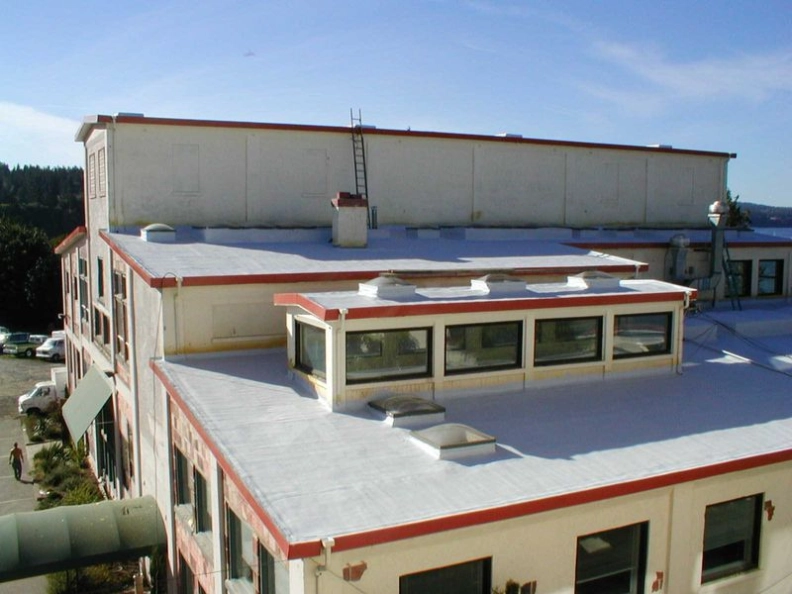
Silicone coatings outperform acrylic in Battle Ground, WA for foam roof systems. Battle Ground receives over 54 inches of rain annually across roughly 175 precipitation days, making ponding water resistance the single most important factor in coating performance. Silicone tolerates standing water without softening or blistering, while acrylic roof coatings break down when water sits on the surface for extended periods. For property owners in Battle Ground’s wet Pacific Northwest climate, silicone over spray polyurethane foam delivers longer service life, lower maintenance, and better resistance to the constant moisture exposure that defines our region. Acrylic has a role on well-drained roofs with tight budgets, but for long-term protection in this climate, silicone is the clear winner.
Spray polyurethane foam (SPF) roofing delivers excellent insulation and creates a seamless, monolithic surface. But SPF degrades quickly under UV exposure without a protective topcoat. That topcoat, whether silicone or acrylic, is not an add-on. It is the roof’s outer defense. The coating blocks UV rays, sheds water, handles thermal cycling, and maintains the energy efficiency of the foam beneath it.
Both silicone and acrylic coatings are classified as cool roof products. According to the U.S. EPA, cool roofs absorb and transfer less heat from the sun into the building, reducing air conditioning demand by 11 to 27% in conditioned buildings. The key difference is how each chemistry holds up under the specific conditions found in Battle Ground.
The local climate is not a minor detail in this decision. It is the deciding factor.
According to BestPlaces climate data, Battle Ground receives 54.3 inches of rain per year, significantly above the national average of 38 inches. The area gets around 140 sunny days annually compared to the national average of 205. November is the wettest month with 8.5 inches and 21 rainy days. Temperatures range from average January lows of 33°F to July highs around 78°F, with roughly 62 freezing nights per year.
What this means for your roof:
| Performance Factor | Silicone Coating | Acrylic Coating |
|---|---|---|
| Ponding Water Resistance | Excellent; tolerates indefinite standing water | Poor; softens and blisters with standing water |
| UV Resistance | Very good; maintains reflectivity over time | Excellent initially; degrades faster over time |
| Initial Solar Reflectance | High (80%+) | Very high (85%+) at time of application |
| Lifespan in Wet Climates | 15 to 20 years | 8 to 12 years |
| Freeze-Thaw Durability | Very good | Moderate; susceptible to cracking |
| Recoat Compatibility | Requires surface preparation; silicone does not bond to itself | Easy to recoat; water-based formulas adhere well |
| Dirt Retention | Higher; surface can attract debris | Lower; stays cleaner longer |
| Application Temperature | Wider temperature tolerance | Requires warmer, drier conditions |
| VOC Content | Higher (solvent-based options) | Lower (water-based formulas) |
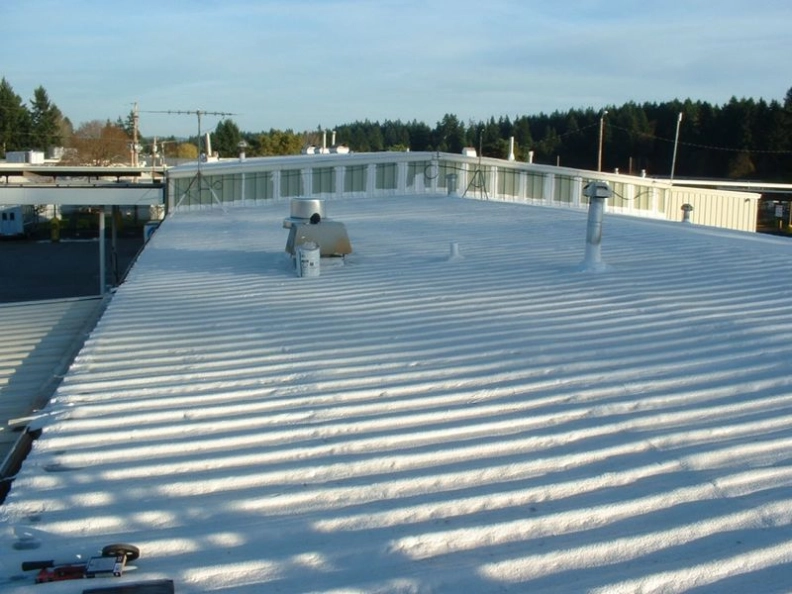
Spray polyurethane foam needs full UV protection to survive. The coating is not cosmetic. Without it, the foam oxidizes, turns to dust, and loses both its insulating value and waterproofing capability within a matter of months.
Silicone over SPF: Silicone forms a thick, rubbery membrane that stretches with the foam as it expands and contracts through temperature swings. Its biggest advantage is water tolerance. On Battle Ground’s flat commercial roofs where drainage is rarely perfect, ponding water is a fact of life during winter months. Silicone sits under that water for weeks without breaking down. This is why it has become the dominant coating choice for SPF systems in the Pacific Northwest. UV protection for commercial roofs is also an important consideration when choosing a protective coating.
Acrylic over SPF: Acrylic goes on thinner, costs less, and reflects more sunlight when first applied. The ENERGY STAR cool roofs program notes that high-reflectance coatings reduce roof surface temperatures significantly, which is a real benefit during our limited summer cooling season. But acrylic is water-based, and standing water causes the film to soften. On a well-drained roof with a proper slope in Battle Ground, acrylic can work. On a flat or low-slope roof where water collects, it will fail prematurely.
Both silicone and acrylic coatings qualify as cool roof materials. According to the Roof Coatings Manufacturers Association (RCMA), reflective roof coatings reduce surface temperatures, lower cooling energy costs, and extend the life of underlying roofing materials. The RCMA notes that roofing materials are the third largest contributor to waste in landfills, so coatings that defer tear-off and replacement provide measurable environmental benefits.
Cool roof benefits that apply to Battle Ground commercial and residential properties:
The InterNACHI cool roofs guide references EPA ENERGY STAR standards requiring cool roof products to maintain a minimum reflectance of 0.50 after three years of weathering. Both silicone and acrylic can meet this standard when properly applied, though silicone maintains its reflectance longer in wet conditions.
| Scenario | Property Type | Roof Condition | Recommended Coating | Rationale |
|---|---|---|---|---|
| Warehouse with standing water | 15,000 sq ft commercial | Flat, poor drainage, 10-year-old SPF | Silicone | Ponding water makes acrylic failure likely within 2-3 years |
| Office building with good slope | 8,000 sq ft commercial | Low-slope, well-drained, new SPF | Either; silicone preferred | Good drainage allows acrylic to perform, but silicone for longevity |
| Agricultural storage barn | 5,000 sq ft rural | Flat roof, budget-constrained | Acrylic | Lower upfront cost, well-drained design, shorter ownership horizon |
| Multi-family residential | 20 units, flat roof | Low-slope, moderate drainage | Silicone | Long-term ownership, tenant comfort, minimize maintenance disruptions |
| Light industrial facility | 12,000 sq ft | Flat, ponding in sections | Silicone | Must handle standing water; cannot afford premature coating failure |
Several variables determine which coating delivers the best return for a specific property in Battle Ground:
Choosing between silicone and acrylic for your foam roof in Battle Ground, WA is not a guessing game. Our team at Spray-On Foam & Coatings evaluates your roof’s drainage, existing conditions, building use, and ownership goals before recommending the coating system that delivers the best performance and value for your specific situation. We serve Battle Ground and the surrounding areas with professional SPF installation and coating services built for the Pacific Northwest climate.
Request a Free Quote | Schedule a Free Roof Assessment
Reach us at (360) 667-1993 or [email protected] to get started.
In most cases, no. Silicone does not adhere well to acrylic surfaces. The existing acrylic would need to be removed or a compatible primer used, which often makes complete recoat with silicone more cost-effective on older systems.
Most commercial projects in the Battle Ground area take 2 to 5 days depending on roof size, surface preparation needs, and weather conditions. We monitor local forecasts closely since both silicone and acrylic require dry conditions during application and curing.
The EPA notes that cool roofs may slightly increase heating demand in cold climates, but this winter penalty is largely offset by summer cooling savings and is further reduced by adequate roof insulation beneath the SPF layer.
If the foam is still intact and adhering well to the substrate, recoating is usually the right path. Our team performs core samples and moisture scans to determine whether the underlying foam has sustained damage before recommending recoat versus replacement.
It depends on drainage and how long you plan to keep the building. If the roof drains well and your timeline is short, acrylic can work. For a permanent structure where you want decades of protection, silicone justifies the investment, especially in Battle Ground’s wet climate.