
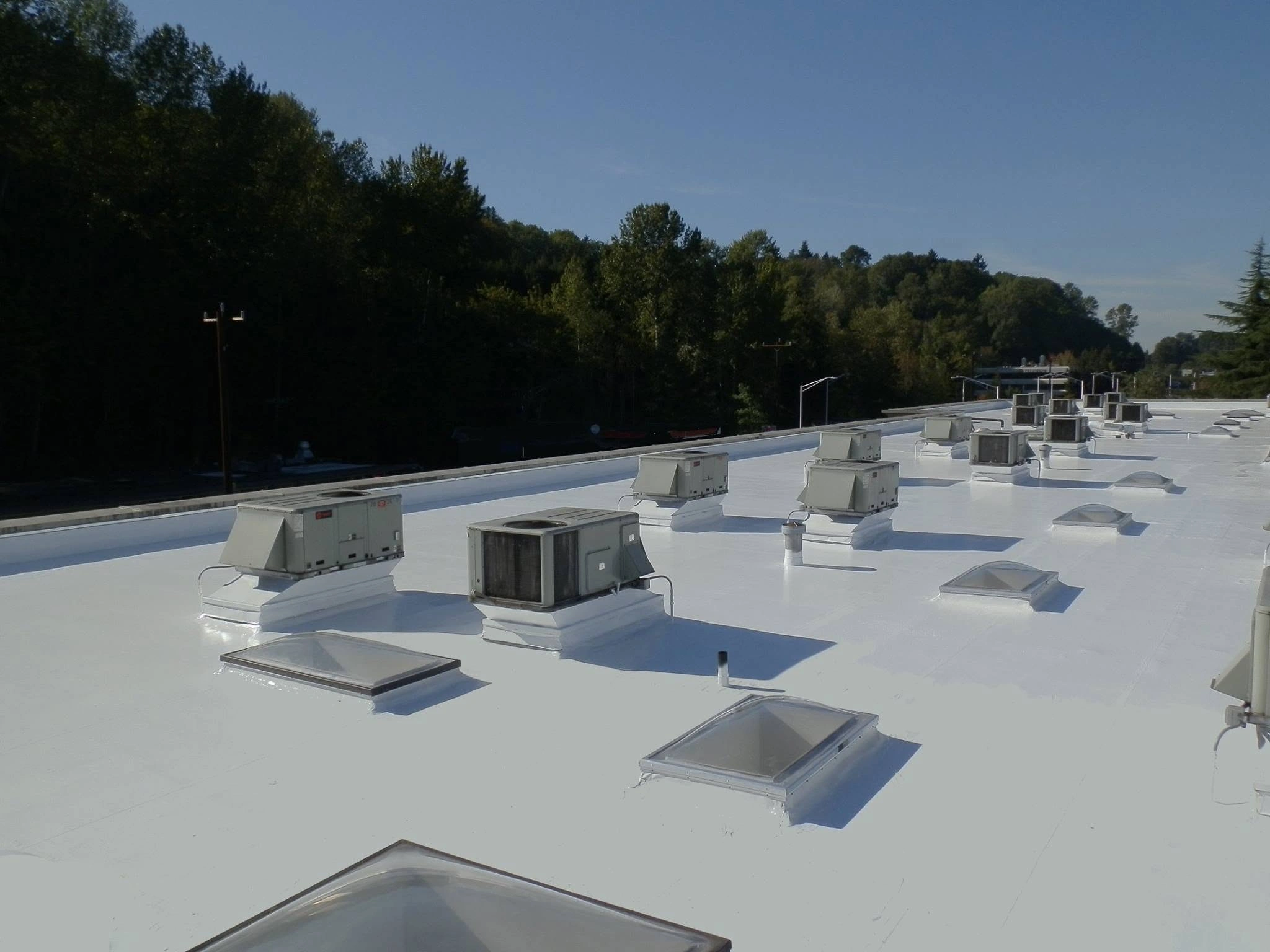
Ultraviolet radiation is one of the most destructive forces your commercial roof faces every day. The sun emits energetic UV photons that break down chemical bonds in common roofing materials like asphalt, TPO, EPDM, and spray polyurethane foam, leading to cracking, brittleness, blistering, and premature failure. Applying a high-quality roof coating services are the most practical and cost-effective way to shield your existing roof from UV degradation, reduce thermal cycling stress, lower cooling energy costs, and extend the life of your roofing system without a full tear-off. The right coating depends on your roof type, climate, building use, and budget, so understanding your options before making a decision is essential.
Every commercial roof sits fully exposed to the elements, absorbing roughly 1 kilowatt of solar energy per square meter at peak sunlight. About 5% of that energy arrives as ultraviolet photons with energies above 3 electron volts, which is enough to disrupt chemical bonds in most organic materials Weathering of Roofing Materials – LBNL/OSTI. According to the Lawrence Berkeley National Laboratory and Oak Ridge National Laboratory research, this photodegradation process is the primary driver of material breakdown in plastics, wood, and asphalt-based roofing systems.
When UV photons strike a roofing membrane, they initiate photo-oxidation. The polymer chains that give materials like TPO, EPDM, and asphalt their flexibility begin to break down and crosslink. Oxygen and moisture then react with these disrupted chains, creating carbonyl groups that further weaken the material. The result is a surface layer that becomes brittle, cracks under thermal cycling, and progressively loses its ability to hold together.
Elevated temperatures compound the problem. Dark-colored commercial roofs routinely reach 61 to 90 degrees Fahrenheit above ambient air temperature during peak sun exposure LBNL/OSTI Weathering Report. Higher temperatures accelerate the rate of deleterious chemical reactions, and research shows that reaction rates can double with every 18-degree Fahrenheit increase. This means a roof in a hot climate degrades significantly faster than the same material in a cooler region, even at the same UV exposure level.
Recognizing UV damage early allows you to address it before it leads to leaks or structural problems. Here are the most common indicators:
Roof coatings are liquid-applied materials that cure to form a continuous, protective membrane over your existing roof. They serve a dual purpose: blocking UV radiation from reaching the underlying material and reflecting sunlight to reduce heat absorption. The Cool Roof Rating Council maintains a directory of rated products with verified solar reflectance and thermal emittance values, making it easier to compare options to the Cool Roof Rating Council.
| Coating Type | Best For | UV Resistance | Reflectivity | Typical Lifespan | Key Limitation |
|---|---|---|---|---|---|
| Silicone | Flat/low-slope roofs with ponding water issues | High | High (80%+) | 15-20 years | Higher material cost, difficult to recoat |
| Acrylic Elastomeric | Most commercial flat roofs, TPO, modified bitumen | Moderate to high | High (80%+) | 10-15 years | Can soften under ponding water |
| Polyurethane | High-traffic roofs, SPF foam systems | Very high | Moderate to high | 10-15 years | Moisture sensitive during application |
| Silicone-Modified Polyester | Metal roofs, corrugated panels | High | High | 10-20 years | Primarily for pre-finished metal |
| PVDF (Fluoropolymer) | Premium metal roof systems | Very high | High | 20+ years | Premium pricing, factory-applied |
Silicone roof coatings deliver excellent UV resistance and maintain their reflectivity over time. They tolerate ponding water without breaking down, which makes them a strong choice for flat commercial roofs with drainage challenges. Their flexibility allows them to accommodate thermal expansion and contraction without cracking.
Acrylic coatings are among the most widely used for commercial roof restoration. They offer high initial solar reflectance, are easy to apply, and cost less than silicone alternatives. They perform well on TPO, EPDM, modified bitumen, and built-up roofing. The main drawback is that standing water can soften the coating over time, so proper drainage matters.
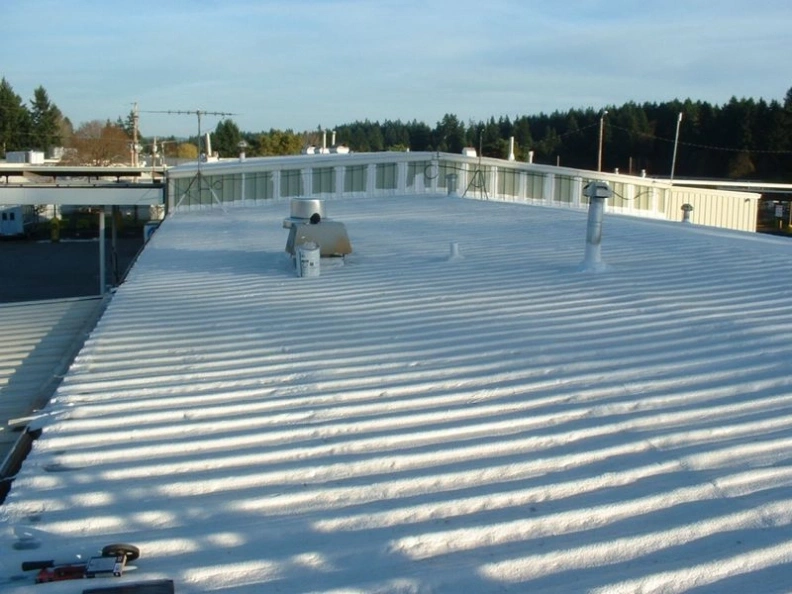
Polyurethane coatings provide outstanding durability and UV resistance, which is why they are frequently used as the top protective layer over spray polyurethane foam (SPF) roofing systems. They handle foot traffic well and form a tough, abrasion-resistant surface. Application requires dry conditions since moisture can interfere with curing.
PVDF-based coatings represent the premium tier in UV protection. The LBNL weathering research noted that PVDF coatings on metal roofing show minimal color change, less than 5% reflectance loss, and strong chalking resistance after 15 to 35 years of exposure in Florida LBNL/OSTI Weathering Report. These are factory-applied to metal panels rather than field-applied as a liquid coating.
A well-applied roof coating works on multiple fronts to protect your commercial roof:
Blocking UV photons at the surface: The coating absorbs and reflects UV radiation before it reaches the underlying membrane. This prevents the photo-oxidation process from starting in the first place. The LBNL research confirmed that when outer layers are sufficiently UV-absorbing, more UV-sensitive materials underneath can be effectively protected.
Reducing thermal stress: Reflective coatings dramatically lower surface temperatures. According to the Lawrence Berkeley National Laboratory Heat Island Group, a clean white roof reflecting 80% of sunlight can stay approximately 55 degrees Fahrenheit cooler than a gray roof reflecting only 20% LBNL Heat Island Group – Cool Roofs. Lower temperatures mean slower chemical degradation rates and less thermal cycling damage.
Sealing and waterproofing: Coatings fill minor cracks, seams, and fastener penetrations that would otherwise allow water infiltration and accelerate deterioration. This watertight seal also prevents the moisture-related freeze-thaw damage that compounds UV effects.
Restoring reflectivity: Many older commercial roofs have lost their original reflective properties through soiling, biological growth, and UV fading. A coating restores the surface to its designed reflectance level, recovering energy efficiency and reducing the urban heat island contribution.
Selecting the best coating requires matching the product to your specific roof conditions. Climate zone, roof substrate, drainage quality, foot traffic, and budget all factor into the decision.
| Building Context | Recommended Coating Approach | Key Considerations |
|---|---|---|
| Warehouse / Distribution Center (low-slope, large footprint) | Acrylic elastomeric or silicone | Prioritize high reflectivity for energy savings; silicone if ponding occurs |
| Office Building (moderate slope, visible from street) | Cool-colored acrylic or silicone-modified polyester | Balance aesthetics with reflectivity; consider LEED credit potential |
| Manufacturing Facility (high foot traffic, SPF roof) | Polyurethane or silicone over SPF | UV protection for foam plus abrasion resistance for traffic |
| Retail Building (flat roof with HVAC equipment) | Acrylic elastomeric | Good reflectivity near rooftop HVAC units reduces cooling load |
| Cold Storage / Refrigerated Warehouse | High-reflectance silicone or acrylic | Minimize heat gain to reduce refrigeration energy costs |
The Cool Roof Rating Council provides resources on codes, standards, and incentive programs that can influence which products qualify for your project. Energy Star and LEED both set minimum solar reflectance and thermal emittance requirements that guide product selection.
Choosing a qualified contractor is just as important as selecting the right coating material. Here are indicators that you are working with a team that will deliver lasting protection:
Spray-On Foam & Coatings specializes in protecting commercial roofing systems from UV damage with professional-grade coating applications. Our team evaluates your roof’s current condition, recommends the right coating system for your substrate and climate, and applies it with precision to deliver years of reliable UV protection and energy savings. Whether you need to protect a new spray foam installation or restore an aging TPO or modified bitumen roof, we have the experience and expertise to get the job done right.
Request a Free Quote | Schedule a Roof Assessment
Call us at (360) 667-1993 or email [email protected] to discuss your commercial roofing needs with our team.
Most commercial roof coatings last 10 to 20 years depending on the type, application quality, and local climate conditions. Silicone coatings tend to last longer than acrylic in ponding-prone environments, while polyurethane coatings on SPF systems typically need recoating every 10 to 15 years.
Yes, that is one of the main advantages of roof coatings. When the underlying membrane is structurally sound and properly prepared, a coating can be applied directly over TPO, EPDM, modified bitumen, built-up roofing, metal, and spray foam systems.
Research from Lawrence Berkeley National Laboratory shows that cool roofs can reduce annual air-conditioning energy use by up to 15% for single-story commercial buildings Wikipedia – Reflective Surfaces. The actual savings depend on your climate zone, insulation levels, and building configuration.
Unprotected spray polyurethane foam begins to degrade within days of UV exposure. The surface develops a chalky texture, starts to erode, and gradually loses material thickness. Without a protective coating, an SPF roof will fail in a matter of months rather than decades.
Cool roofs can still offer net energy savings in most U.S. climates, though the winter heating penalty increases in colder regions. The LBNL Heat Island Group found that summer cooling savings typically outweigh winter heating penalties across most of the United States, with the exception of the northernmost zones LBNL Heat Island Group – Cool Roofs.