

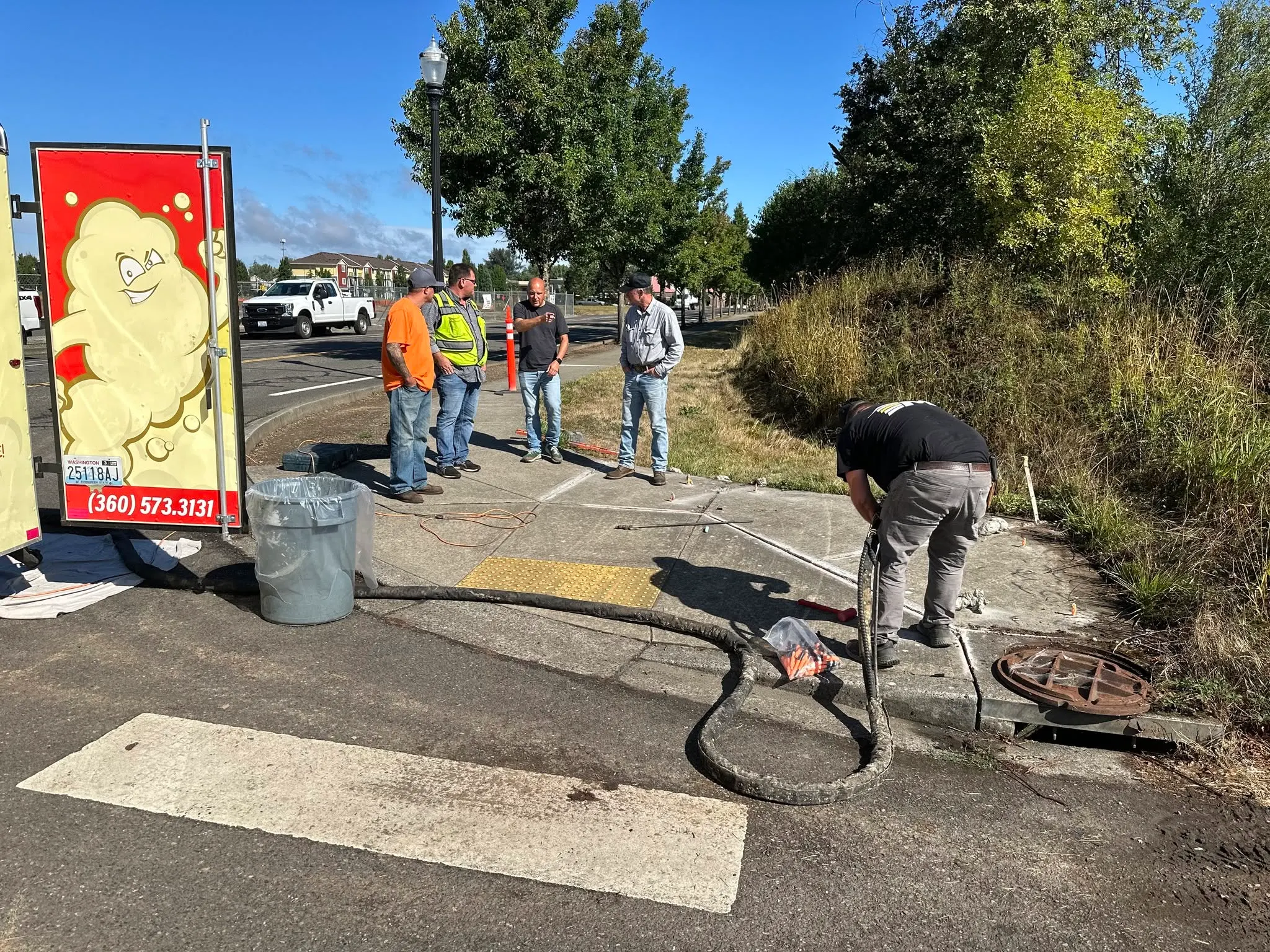
Concrete lifting in Washougal fixes sunken walkways and patios by injecting expanding polyurethane foam through small holes drilled in the slab. The foam fills the empty pockets underneath, pushes the slab back toward level, and hardens within minutes. You keep your concrete and skip the cost and mess of a tear-out.
A slab is only as level as the ground under it. When that ground settles or washes away, the slab drops.
Concrete lifting fills that gap from below. The foam goes in as a liquid, spreads into voids and loose soil, and lifts the slab as it expands.
This kind of uneven concrete repair saves the concrete you already paid for. The Spray Polyurethane Foam Alliance says raising concrete can usually be done for less than half the cost of pouring new concrete, and you also avoid demolition, haul-off and lawn repair.
Finding the cause matters, because lifting a slab without fixing the cause invites the same problem back.
Most concrete leveling Washougal WA jobs we see trace back to water. The USDA Natural Resources Conservation Service describes the Washougal soil series, named for this area, as soil formed in river deposits that include volcanic ash, sitting on river terraces in a climate of cool, wet winters. Soil that stays wet for months can soften and settle under a slab’s weight.
Common triggers we find around homes:
A patio that tilts toward your house deserves fast attention, since rain then runs toward your foundation.
Lifting is a slow, controlled job. Here’s what a typical visit looks like.
Most repairs take one to two hours, and the foam cures in minutes, so you can usually walk on the slab the same day.
Lifting fixes a lot of sunken concrete, but not all of it. A quick look at your slab tells you which group it’s in.
Patio slab lifting fixes these problems and brings back the slope that carries rain away from your house. For scale, the ADA Standards published by the U.S. Access Board allow a vertical change in level of no more than 1/4 inch before an edge needs a bevel, and anything over 1/2 inch needs a ramp. Those rules cover public sites, not private homes, but they make a handy yardstick for trip risk.
If lifting won’t hold up, we’ll tell you straight.
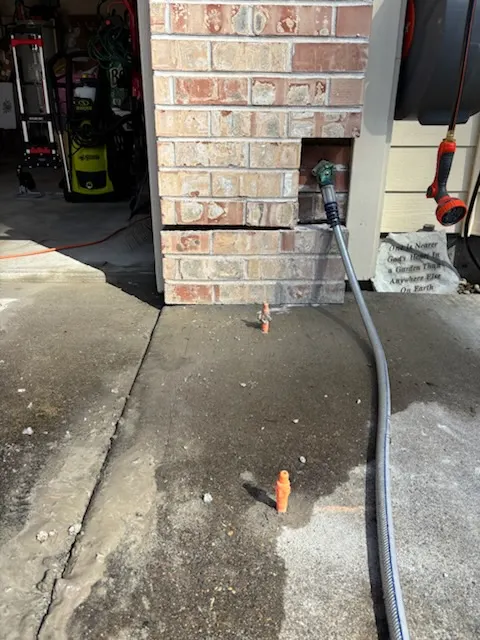
Foam isn’t the only fix. Here’s how the three common options compare.
| Method | How It Works | Trade-Offs |
|---|---|---|
| Foam lifting | Light polyurethane through small holes | Pricier material than mudjacking, same-day use |
| Mudjacking | Heavy cement slurry through larger holes | Often cheaper upfront, adds weight to weak soil |
| Replacement | Tear out and pour new concrete | Highest cost, most mess, days of curing |
Weight matters. Foam adds little load to soil that already gave way, while heavy slurry can push it down again. Closed-cell foam also resists water, which counts in a wet climate.
Lifting fixes the slab. These habits fix what sank it.
Got a lip on your walkway or a patio that drains toward the house? Spray-On Foam & Coatings provides concrete lifting services in Washougal, WA. We’ll check the slab, find what sank it, and give you a free quote before any work starts. Call (360) 667-1993 or email [email protected] to set up your free quote.
Often, yes. If it cracked into a few large, solid pieces, each can be lifted and the cracks sealed. Slabs broken into many loose chunks usually need replacing.
Yes, in most cases. Lifting foam cures even when the soil underneath is damp. We still avoid pouring-rain days so the holes patch cleanly.
It’s a poor fix. A thin topping tends to crack and peel, adds weight to soil that already failed, and leaves the void underneath.
Not always. Most patio settling comes from loose fill or washout near the surface. If you also notice sticking doors or new wall cracks, have the foundation checked.
Canned hardware-store foam isn’t the same product. Lifting foam is denser and pumped with heated, high-pressure equipment that controls the rise. Without that control, it’s easy to over-lift and crack the slab.