

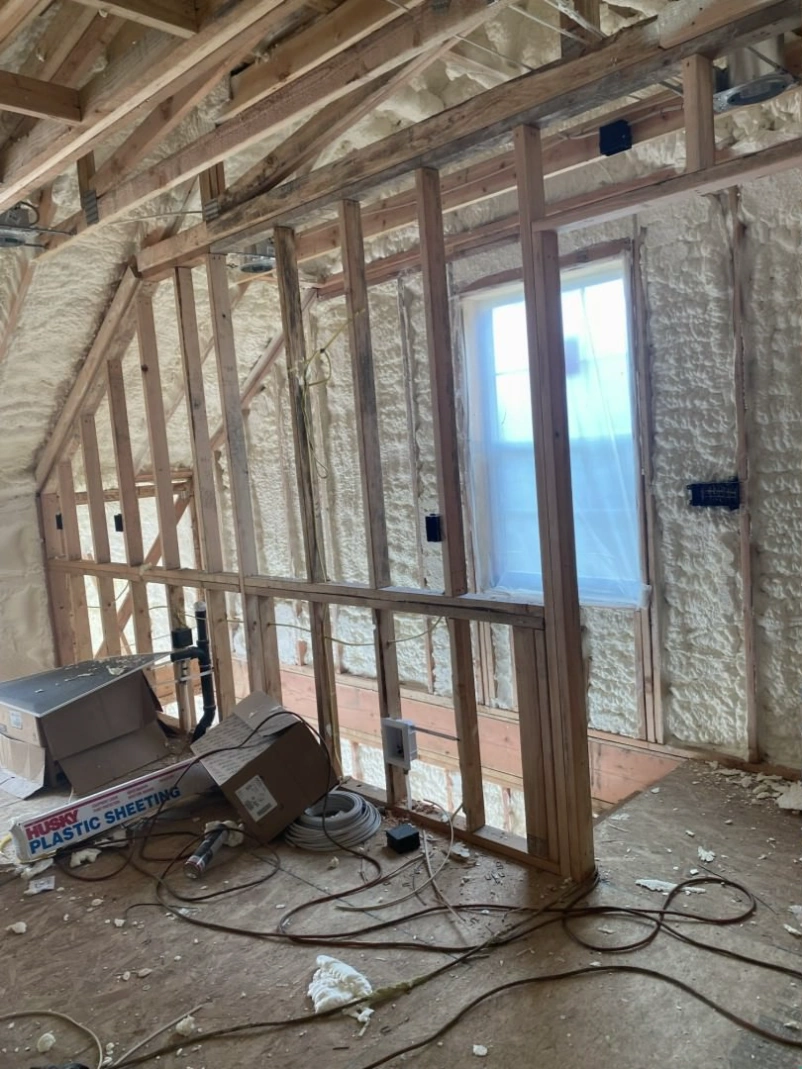
Open-cell spray foam insulation delivers strong air sealing and sound dampening at a lower material density than closed-cell alternatives, making it a practical option for many Seattle homes. The right results, however, depend heavily on the installer’s understanding of local climate conditions, material behavior during curing, and proper application thickness for the Puget Sound region’s specific moisture and temperature patterns. An experienced crew knows where open-cell performs well and where it does not, which prevents moisture problems, code issues, and wasted investment.
Open-cell spray polyurethane foam (ocSPF) is a low-density insulation, weighing roughly 0.5 pounds per cubic foot, that expands significantly during application, often filling an entire wall cavity or rafter bay in a single pass. According to the U.S. Department of Energy’s Building America program, typical R-values for open-cell SPF run approximately 3.6 per inch, and it is considered air-impermeable at standard application thicknesses.
What sets open-cell apart from closed-cell foam is its vapor permeability. Building Science Corporation notes that low-density open-cell foam registers around 50 perms per inch of thickness, while high-density closed-cell foam in Seattle, WA is approximately 3 perms per inch. This means water vapor can pass through open-cell foam, which is beneficial in certain wall assemblies where drying potential matters, but problematic in applications where liquid water or sustained moisture is present.
Open-cell also absorbs and holds liquid water, with the DOE guide noting it can retain up to one-third of its volume in water. That single property is what makes installer experience so important, because placing open-cell foam in the wrong location can lead to saturation, mold risk, and structural damage over time.
Seattle falls within IECC Climate Zone 4C (marine), characterized by cool, wet winters and mild, dry summers. The region averages roughly 39 inches of precipitation annually, with about 150 days recording measurable rainfall. Winter temperatures routinely drop into the upper 30s and low 40s Fahrenheit, while summer highs average in the mid-70s.
In this climate, vapor drive patterns shift seasonally. During winter, warm indoor air pushes moisture outward toward cooler exterior surfaces. During summer, the drive reverses as humid outdoor air pushes inward. This bidirectional moisture movement means insulation assemblies must allow controlled drying in both directions, which is precisely why the choice between open-cell and closed-cell foam, and the expertise of the person selecting and installing it, carries real consequences.
Building Science Corporation‘s residential spray foam guide confirms that both open-cell and closed-cell spray foam work in most wall assemblies across varying climates, but notes that in IECC Climate Zones 5 and higher, only closed-cell foam should be used for certain roof and crawlspace applications. Seattle’s Zone 4C classification sits just below that threshold, which means open-cell remains an option for walls and attics, but the installer must still account for condensation control, interior vapor retarders, and exterior permeability.
Not every part of a Seattle, WA home is a good candidate for open-cell foam. The DOE guide provides clear application guidance based on climate and assembly type:
| Application Area | Open-Cell in Zone 4C | Notes |
|---|---|---|
| Frame wall cavities | Preferred | Provides R-20 in a 5.5″ cavity with air sealing; pair with interior vapor retarder paint |
| Sloped roof rafters (unvented attic) | Acceptable | Requires vapor-permeable roof underlayment or standing seam metal roofing |
| Cathedral ceilings | Acceptable | Thickness depends on manufacturer evaluation reports (5.5″ to 10″) |
| Ceiling below vented attic | Acceptable | Effective for air sealing penetrations, though less common |
| Band joists and mudsills | Acceptable | Good value for smaller areas; concealed locations need no thermal barrier |
| Cantilevered framing | Acceptable | Leave any void at the bottom of the assembly, not the top |
| Foundations and crawl spaces | Not acceptable | Moisture permeable nature makes ocSPF incompatible with below-grade use |
| HVAC duct insulation | Not acceptable | Condensation risk on permeable foam in humid attic environments |
The key factor in every “acceptable” or “preferred” rating is the installer’s ability to assess the specific assembly, verify drainage planes and vapor retarders, and apply the foam at the correct thickness for the given manufacturer’s product.
Spray polyurethane foam involves reactive chemicals that generate isocyanate vapors and aerosols during application. The EPA’s consumer safety guidance states that building occupants, including pets, must vacate the premises during installation, and that safe re-entry times vary based on product type, foam thickness, temperature, humidity, and applicator technique.
The EPA further notes that spray foam may appear hardened within seconds to minutes but is still curing and contains unreacted chemicals. Some manufacturers recommend 24 hours before re-entry without protective equipment for two-component professional systems, but that timeframe can vary. An experienced installer manages these variables by:
The EPA’s safer workplace practices for SPF installation also recommend that homeowners verify contractor training, insurance, licenses, and references before hiring Safer Workplace Practices for SPF Installation. Cutting corners on any of these steps increases the risk of improper curing, off-gassing complaints, and potential long-term indoor air quality problems.
The practical difference between a trained SPF installer and an inexperienced one shows up in several measurable ways:
Material efficiency. An experienced applicator knows how open-cell foam expands and can dial in the spray pattern to minimize waste while achieving consistent coverage. This directly affects the board-foot yield and open-cell foam cost.
Thickness accuracy. Code requirements and manufacturer specifications demand specific minimum thicknesses for open-cell foam to qualify as air-impermeable insulation. Underspraying creates gaps in the air barrier, while overspraying wastes material and budget.
Assembly compatibility. Knowing when open-cell needs an interior vapor retarder, when the exterior sheathing must remain vapor-permeable, and when the assembly calls for closed-cell instead is not something a novice can assess on the fly. The DOE guide documents specific climate-by-climate recommendations that require judgment in application DOE Building America – Which Spray Foam Is Right For You.
Troubleshooting. Experienced installers recognize substrate moisture issues, temperature problems, and curing anomalies before they become costly failures. They also know when a project should not proceed until conditions improve.
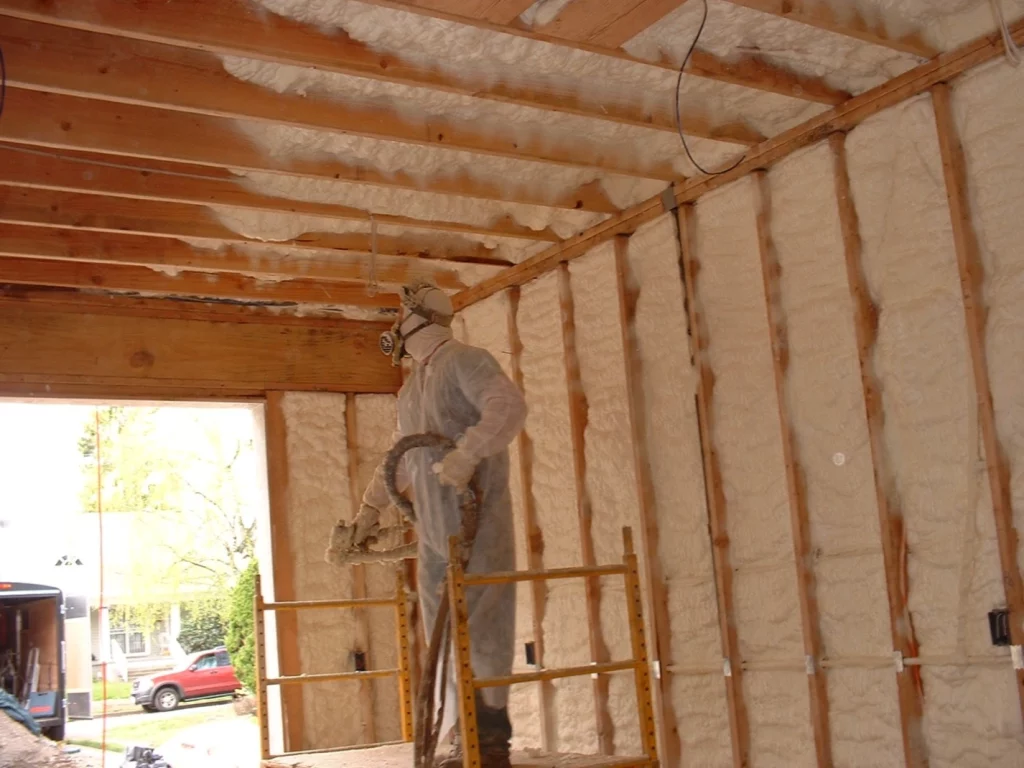
When evaluating a spray foam contractor in Seattle, WA, look for these indicators:
An installer who cannot address these points clearly may lack the experience needed for the specific demands of Seattle’s marine climate.
Spray-On Foam & Coatings brings years of hands-on spray foam installation experience to the Pacific Northwest, and we are actively expanding our service area into Seattle. Our team understands the moisture dynamics, code requirements, and material science behind open-cell spray foam, and we apply that knowledge on every project. Whether you need wall cavity insulation, attic air sealing, or cathedral ceiling foam in a new build or retrofit, we will assess your assembly, recommend the right approach, and complete the work to standard.
Contact us at [email protected] or call (360) 667-1993 to discuss your project with our team.
Schedule an Insulation Assessment
Yes, open-cell can be installed directly to the underside of the roof deck in unvented attics in Climate Zone 4C, but the assembly must include proper moisture removal and the foam must meet the manufacturer’s minimum thickness requirements.
Curing varies based on temperature, humidity, and product formulation. The foam may feel tack-free within minutes, but the EPA recommends following the manufacturer’s specific re-occupancy guidance, which can range from 8 to 24 hours or longer depending on conditions.
Open-cell foam is vapor-permeable and can absorb liquid water. Below-grade and crawlspace environments expose insulation to moisture from soil, groundwater, and condensation, making only closed-cell foam appropriate for these locations.
ENERGY STAR estimates that air sealing and insulation improvements can reduce heating and cooling costs by 20% in Climate Zone 4C. Open-cell foam provides air-impermeable sealing that eliminates drafts and thermal bypasses, which directly supports those savings.
Ask about their training and certifications, which foam type they recommend for each area of your home, how they handle curing and re-occupancy, what safety protocols they follow, and whether they can explain why a specific assembly design works for Seattle’s climate zone.