

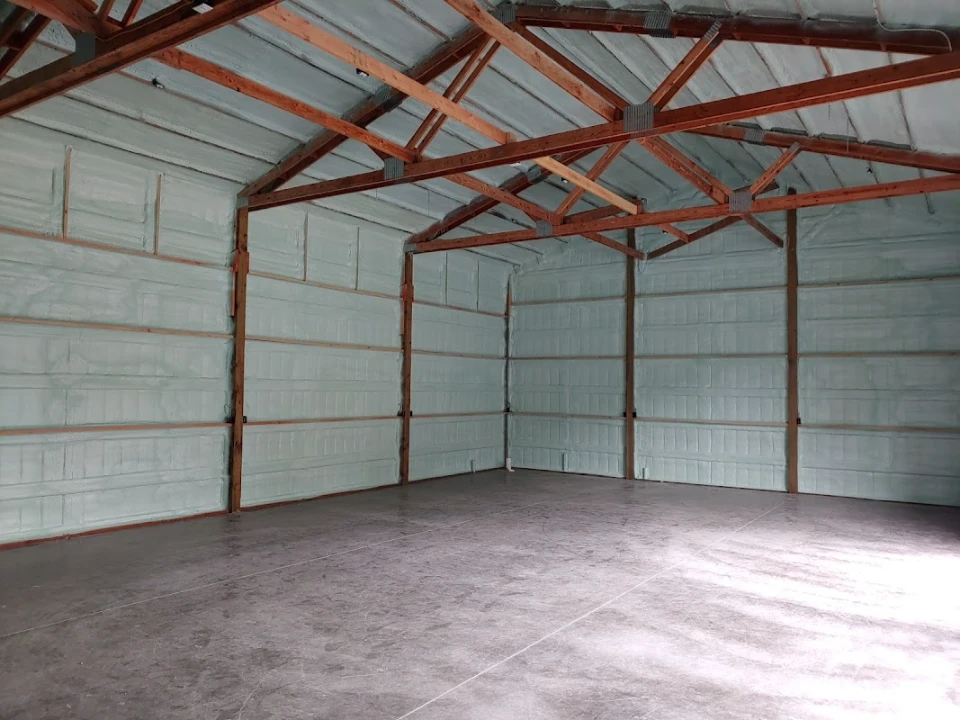
Vancouver builders can design more airtight walls with closed-cell spray foam services by treating the foam as both the insulation and the air barrier, keeping that air control layer continuous from the mudsill to the top plate, and choosing an assembly that lets the wall handle Clark County’s wet marine climate. The right approach depends on framing depth, R-value targets, and whether the project is a custom home, a production build, or a retrofit. The three strategies that work best here are full-cavity closed-cell spray foam, flash-and-batt hybrids, and closed-cell paired with continuous exterior insulation, each serving a different balance of performance, wall thickness, and budget. The sections below break down how each strategy works and where it pays off most for Vancouver, WA builders.
Vancouver’s climate punishes leaky walls. The city averages over 37 inches of annual precipitation spread across about 160 days with measurable rain, concentrated from fall through spring, which means walls stay wet-tested for most of the year.
Air leakage is the main transport mechanism. When condition-ed indoor air escapes through gaps, it carries water vapor into the cavity where it can condense on cold sheathing. ENERGY STAR puts the scale in plain terms: added up, the leaks in a typical home equal leaving a window open every day of the year, and 9 out of 10 U.S. homes are under-insulated.
This is why we always tell builders to fix air movement before anything else. As the Department of Energy’s Building Science Education program explains, air barriers should be applied everywhere in the home, while vapor retarders are added on top of the air barrier only where diffusion is a concern based on climate and construction. Get the air barrier right and the vapor problem shrinks dramatically.
Closed-cell spray polyurethane foam is a two-component system that expands to fill voids, then cures into a rigid, high-density material. Two properties make it uniquely suited to airtight wall design:
Because the foam adheres directly to sheathing, studs, and plates, it seals the odd-shaped gaps around wiring, plumbing, and framing intersections that batts simply sit behind. Building Science Corporation notes that spray-applied closed-cell, high-density foam is a “clever version” of a high-performance wall because one material can combine multiple principal control layers.
The Perfect Wall concept ranks four control layers in order of importance: rain, then air, then vapor, then thermal. If you can’t keep rain out, don’t bother with air. If you can’t keep air out, don’t bother with vapor.
For wood-framed residential walls, Building Science recommends splitting thermal resistance roughly 50:50 between the exterior and the cavity in demanding climates, and specifically avoiding a vapor barrier on the interior so the assembly can dry in both directions. In Vancouver’s mixed marine climate, that guidance maps directly onto a hybrid approach: continuous exterior insulation for thermal and rain control, with closed-cell foam inside handling air and vapor.
| Strategy | Best For | How It Works | Airtightness Payoff | Limitations |
|---|---|---|---|---|
| Full-cavity closed-cell (2×4 or 2×6) | Remodels, garages, rim joists, high-moisture walls | Foam fills the entire cavity, adhering to every surface | Foam itself is the air and vapor barrier at ~2 inches | Uses more material; cavity R-value is capped by depth |
| Flash-and-batt hybrid | Production homes, 2×6 walls, budget-conscious R targets | 2 inches of closed-cell seals and controls vapor, batts fill the rest | Foam layer guarantees airtightness; batts add low-cost R | Requires careful depth marking so batts are not compressed |
| Closed-cell + continuous exterior insulation | High-performance and near-passive builds | Exterior rigid insulation keeps sheathing warm; foam seals the cavity | Warm sheathing plus dual barriers controls condensation risk | Deeper window jamb details and furring required |
| Foam-sealed utility chases and penetrations | Every project, before insulation | Foam targets plates, wire holes, and rim joists first | Cheap insurance against the biggest single leak points | Does not replace a full air barrier strategy |
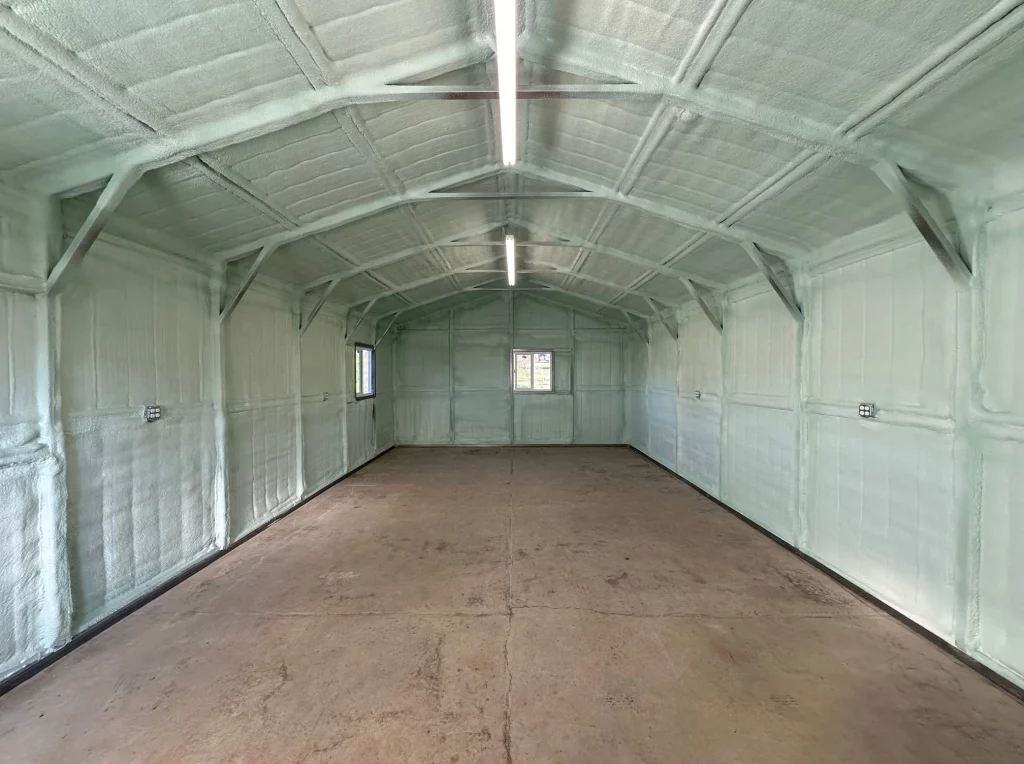
An air barrier is a system, not a product. Foam only delivers tested airtightness when the barrier stays unbroken across assemblies. We focus on these details on every project:
Per our current closed-cell spray foam pricing, it typically runs $1.20 to $3.00 per board foot, with most projects landing around $1.50 per board foot (a board foot is one square foot sprayed at one inch of thickness). Three factors move that number:
For builders sealing existing stock or phased retrofits, standalone closed-cell spray foam air sealing projects typically range from $1,500 to $10,000, averaging $4,500.
You are on the right track when your insulation partner explains vapor drive in your specific climate instead of quoting R-values alone, when the proposal spells out target thickness per pass, and when the crew commits to blower door verification instead of resisting it. Clear communication about drying potential, thermal barrier requirements, and jobsite sequencing signals a team that builds for the life of the wall, not just the inspection.
| Builder Type | Recommended Approach | Why It Works in Vancouver, WA |
|---|---|---|
| Custom home builders | Closed-cell + continuous exterior insulation | Delivers top-tier airtightness and manages condensation risk in 37-inch rainfall territory |
| Production builders | Flash-and-batt in 2×6 walls | Balances code-level R-values, airtightness, and per-unit cost at scale |
| Remodelers and retrofitters | 2 inches of closed-cell plus targeted air sealing | Solves airtightness where cavities and access are already constrained |
| ADU and garage builders | Full-cavity closed-cell | One step insulates and air seals thin walls and rim joists |
Our team at Spray-On Foam & Coatings helps Vancouver and Clark County builders hit airtightness targets on schedule, from full-cavity foam packages to flash-and-batt hybrids and precision air sealing. Call us at (360) 667-1993 or email [email protected] to talk through your next wall assembly.
Request a Free Quote | Schedule a Wall Assembly Consultation
Stop letting your walls leak the energy you paid to install. Let’s design the assembly together.
About two inches, roughly 50 mm, is the minimum thickness at which closed-cell foam functions as both an air barrier and a vapor barrier. Thinner flash coats still seal air but should not be relied on for vapor control.
No, in a mixed marine climate like Vancouver’s, building science guidance warns against interior vapor barriers because they block inward drying. Closed-cell foam already provides the needed vapor control.
Yes, this is the flash-and-batt approach: two inches of closed-cell foam handle air sealing and vapor control while batts add cavity R-value economically. Mark stud depths so batts are not compressed behind the foam.
Yes, as enclosures get tighter, planned air change becomes part of the design rather than an accident of leakage. Build ventilation into your HVAC scope alongside the airtightness upgrade.
Our closed-cell spray foam typically runs $1.20 to $3.00 per board foot, averaging $1.50, with larger projects earning lower per-board-foot rates. Request a quote with your wall square footage and target thickness for a project number.