
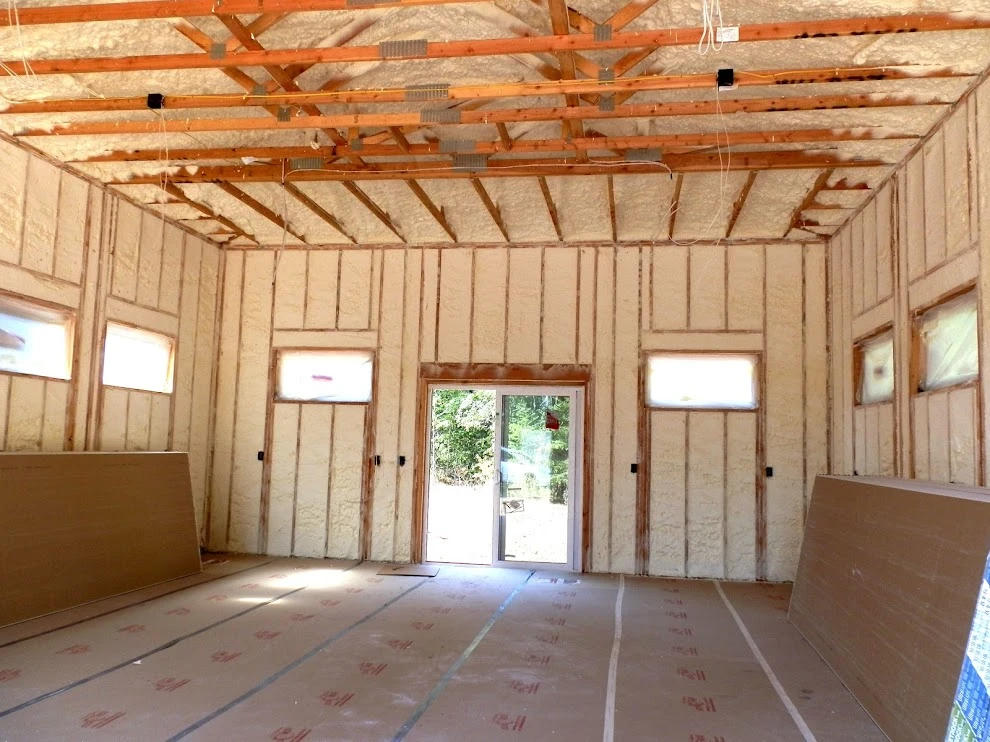
If you are done with spray foam insulation in Battle Ground, WA, then you will probably have to wait 24 hours. However, during this time, the surface feels dry to the touch within 1 minute. Remember that spray foam insulation is a chemical process, and the reaction does not stop early, as it will take some time. Don’t proceed with further construction activities during the drying process.
Environmental factors such as high humidity and cool temperatures may influence and extend the drying time. Here, you can learn more about the spray foam insulation process and how understanding the local context can impact the overall project timeline.
Tack-free means the actual skin of the spray foam is dry, and the inner layers are still in a reactive phase. The outer surface is non-sticky and dry, probably within a minute after closed-cell or open-cell spray foam insulation.
Curing is the complete chemical stabilization of the two-part foam mixture. During this phase, the isocyanate and polyol resin finish their reaction and release heat. Right after the foam reaches its full cure, its spray foam insulation benefits become fully established, including its R-value and overall structural integrity. Modifying the foam during this time may affect its longevity and effectiveness.
There is a specific timeline; just hold on, and after drying, resume your renovation or construction process. You can learn more from Wikipedia.
Here you can clearly see the science behind the drying process.
| Stage of Hardening | Approximate Timeframe | Physical Characteristics |
|---|---|---|
| Cream Time | 1 – 3 Seconds | Liquid begins to expand and turn into foam |
| Tack-Free Time | 30 – 60 Seconds | Surface is firm and no longer sticks to skin |
| Initial Set | 4 – 6 Hours | Foam is rigid enough to support its own weight |
| Full Cure | 24 Hours | Chemical reaction stops, and off-gassing ends |
| Extended Cure | 48 Hours | Necessary in high humidity or low temperature |
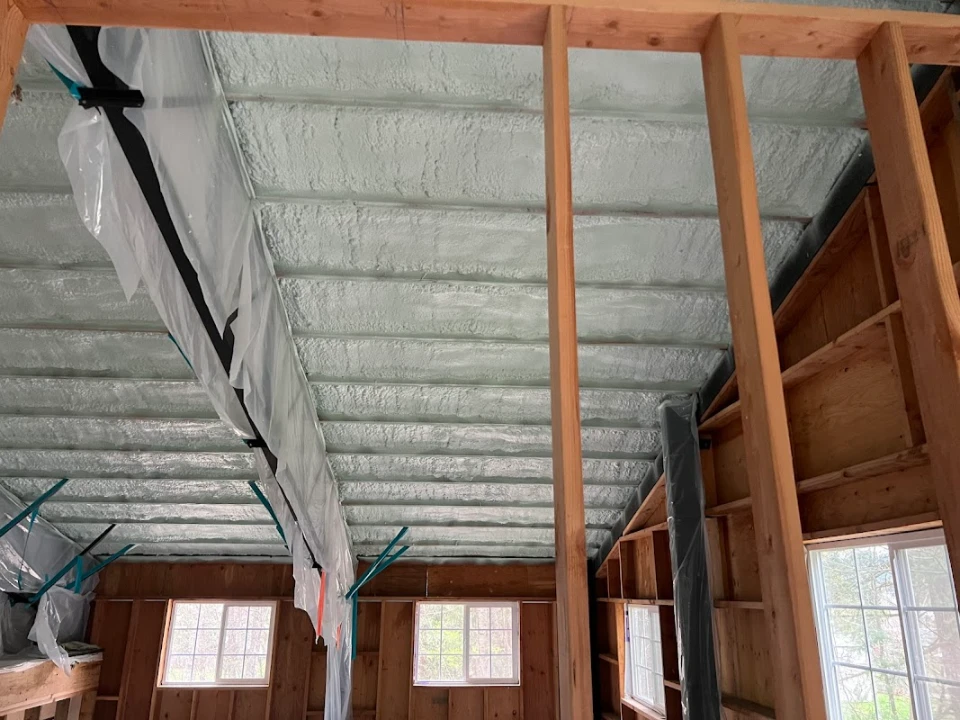
As a residential and commercial owner, you are literally unaware of the chemical drying process and all that. This is all on your spray foam contractor. The right one knows when to apply and how much time you need to pause further work.
Be careful while selecting your contractor, as it all relies on them. Consider researching their social presence, and word of mouth can help you in finding the right fit for your property. You can trust spray-on foam for this job, as we have certified technicians and a powerful strategic mindset towards every project.
If you want to pursue your spray foam insulation journey. You can reach out to us anytime. Our team will get back to you in no time. Our quick response is your first convenience in your spray foam insulation process. Call (360) 667-1993 or email [email protected]. We will provide our customers with a free quote. Improve your comfort and take a step towards a hassle-free experience.
If applied incorrectly, high-expansion foam may also warp frames. Low-pressure, minimal-expansion foam, which is designed for windows and doors, is used to minimize the pressure on the structure during the drying phase.
The surface cools quickly and oversprays, which leads to strong winds. We insulate the areas to apply the foam to keep the foam from changing temperature, because this is important for a consistent and effective chemical cure.
Spray foam is not applied over knob-and-tube or damaged wiring. Old wires can overheat during and after curing due to the heat-trapping property of the foam, which presents a fire hazard.
If the mix is not formulated correctly, it will leave an excess of tackiness that will be a problem. If the A and B components do not bond properly, the foam will not cure and needs to be removed professionally and replaced.
When cured, cut off excess foam with a long-handled serrated saw or a foam plane. The material is stiff enough to cut through without tearing and crumbling.