

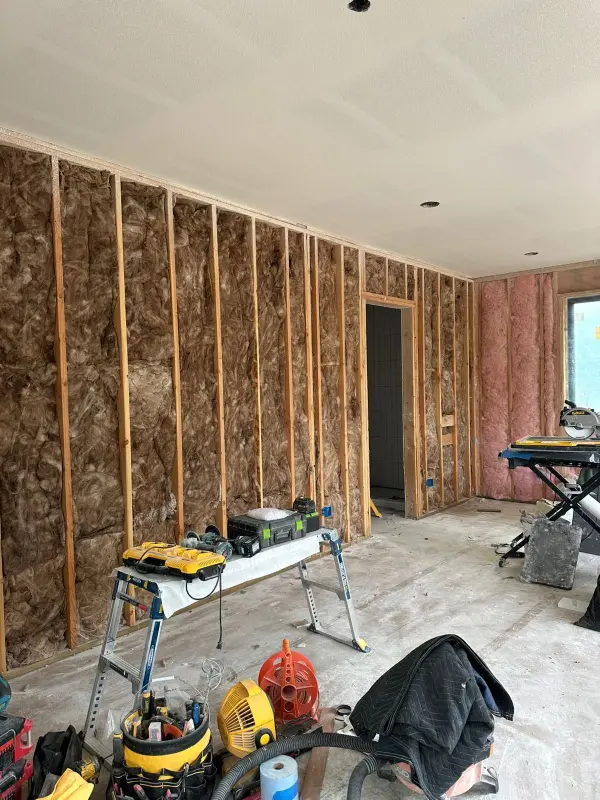
Wall insulation sags when the material inside your wall cavities loses its structural integrity, pulls away from the framing, and leaves gaps that let heat escape and moisture in. In Sandy, Oregon, where the winters are cold, wet, and long under a marine climate zone classification, this problem shows up frequently in homes built with fiberglass batts. The constant cycle of humidity, temperature swings, and gravity takes a toll on materials that were never designed to hold their shape indefinitely. Several insulation options exist that resist sagging, including mineral wool and spray foam, each with different strengths. The right choice depends on whether you are building new, retrofitting existing walls, or dealing with a specific moisture problem.
Understanding why insulation pulls away from framing starts with understanding what holds it in place, and what breaks that connection over time.
Gravity and material density. Fiberglass batts rely on friction fit and, in many cases, staples or wire supports to stay in position inside a stud bay. Over years, the lightweight glass fibers compress under their own weight. The material settles downward, leaving an uninsulated gap along the top of the wall cavity. This gap creates a direct path for heat to escape in winter and enter in summer. As Martin Holladay of Green Building Advisor notes, mineral wool insulation retains its shape better than fiberglass or cellulose and will not settle within walls, leaving cold gaps along the top plate.
Moisture exposure. Sandy sits in the Cascade foothills in Clackamas County, within the warm-summer Mediterranean climate zone (Csb) that defines most of Western Oregon. Winters bring frequent rain, overcast skies, and sustained moisture exposure. When humid air finds its way into wall cavities, fiberglass absorbs and holds moisture. Wet fiberglass loses R-value and gains weight, accelerating the sagging process. This creates a compounding cycle where moisture degrades performance and gravity pulls the heavy, wet material down even faster.
Poor installation practices. Many homes in the Sandy area were built during construction booms when fiberglass was the default wall insulation. Batts that were stuffed into cavities rather than friction-fit, compressed around wiring and plumbing, or installed without proper stapling, start their life already compromised. As building science expert Martin Holladay explained in a ENERGY STAR, fiberglass batts that are “stuffed, not stapled, between the studs” will sag away from the wall and become essentially useless without an air barrier backing.
Missing air barriers. Insulation only performs at its rated R-value when it is in direct contact with an air barrier on all sides. In wall assemblies, that means the drywall on the interior and the sheathing on the exterior. When batt insulation pulls away from either surface, convective air loops form within the cavity, dramatically reducing thermal performance even if the insulation material itself is still present.
Sandy, Oregon experiences cold, wet winters with average temperatures ranging from 33 to 83 degrees Fahrenheit across the year, according to climate data. The area receives between 35 and 45 inches of precipitation annually, placing it firmly in the marine-influenced zone west of the Cascade Range. This climate classification means your wall insulation must handle sustained moisture exposure, not just occasional humidity spikes.
Per the Oregon Building Codes Division, homes in Climate Zone 4C and Zone 5 require wood-framed above-grade walls to meet either R-21 cavity insulation or a combination of R-13 cavity insulation with R-3.8 continuous insulation. These requirements reflect the heating demands of a region where the wet season runs from November through March.
The EPA’s Seal and Insulate program further recommends that homeowners seal air leaks before adding insulation, because insulation works best when air is not moving through or around it. In a marine climate like Sandy’s, this combination of proper air sealing and moisture-resistant insulation makes the difference between a comfortable home and one with cold spots, high energy bills, and potential moisture damage.
The comparison between mineral wool and fiberglass matters most when you are making decisions about new construction or gut renovations where wall cavities are fully accessible.
| Feature | Fiberglass Batts | Mineral Wool Batts | Closed Cell Spray Foam |
|---|---|---|---|
| R-value per inch | R-3.1 to R-3.4 | R-3.8 to R-4.3 | R-6.0 to R-7.0 |
| Moisture resistance | Absorbs water, loses R-value | Hydrophobic, drains and dries | Forms moisture barrier |
| Sagging / settling | Common over time | Resists settling, holds shape | Adheres to framing, cannot sag |
| Air sealing | No air sealing capability | Minimal air sealing | Superior air seal in one step |
| Fire resistance | Burns, requires retardant treatment | Noncombustible to 2,150 degrees F | Varies by formulation |
| Sound dampening | Moderate | High density, strong NRC ratings | Good, seals gaps that transmit sound |
| Installation method | Friction fit, staples | Friction fit, compression edge | Sprayed into cavities |
| Retrofit feasibility | Difficult in closed walls | Difficult in closed walls | Can be injected through small holes |
Mineral wool offers clear advantages over fiberglass in several categories that matter for Sandy homeowners. Its higher R-value per inch means thinner walls can achieve the same thermal performance. Its hydrophobic nature means it does not absorb moisture the way fiberglass does, which directly addresses the moisture-driven sagging problem. And its rigidity means it stays in place within the stud cavity without relying on staples or wire supports that can fail over time.
However, mineral wool shares a limitation with fiberglass: neither material seals air leaks on its own. Gaps around electrical boxes, plumbing penetrations, and framing irregularities still allow air movement through the wall assembly unless separately addressed.
While mineral wool is a strong upgrade over fiberglass for new construction and open-wall projects, spray foam insulation in Sandy, OR addresses the full picture of what causes wall insulation problems in Sandy’s climate.
Spray foam, particularly closed cell formulations, combines insulation and air sealing into a single application. The material expands to fill the entire cavity, conforms to irregular framing, and adheres permanently to all surfaces. It cannot sag because it bonds to the wood, drywall, and sheathing. It also creates a moisture-resistant barrier that prevents the humidity cycles that degrade fiberglass.
For existing Sandy homes with sagging fiberglass, spray foam injection is often the most practical retrofit approach. Rather than removing interior drywall or exterior siding, small holes are drilled through the exterior sheathing, foam is injected into each stud bay, and the holes are patched. This approach removes the old, compromised insulation and replaces it with material that will not degrade, settle, or sag.
Our closed cell spray foam is priced per board foot, with costs depending on thickness requirements and project size. For Sandy-area homeowners, the investment in spray foam insulation pays for itself through reduced heating costs, improved comfort, and the elimination of the recurring sagging problem.
Not every home in Sandy faces the same insulation challenges. The right approach depends on your home’s age, construction type, and the scope of work you are willing to take on.
| Your Situation | Recommended Approach | Why It Works Best |
|---|---|---|
| New construction, open walls | Mineral wool batts or spray foam | Mineral wool provides high R-value, fire resistance, and moisture control at a lower material cost. Spray foam adds air sealing if budget allows. |
| Retrofit with siding removal | Spray foam injection or mineral wool + air sealing | Open access allows complete cavity fill. Spray foam eliminates air sealing as a separate step. |
| Retrofit, no demolition | Closed cell spray foam injection through sheathing | Preserves existing finishes while replacing failed insulation and sealing cavities in one step. |
| Moisture-damaged walls, mold present | Open walls, remediate, then spray foam | Addressing the moisture source and mold is required before any insulation reinstall. Spray foam provides the moisture barrier. |
| Attached garage or addition | Closed cell spray foam | Combines insulation with air and vapor control in thin wall assemblies. |
| Sound reduction priority | Mineral wool batts or spray foam | Both provide strong sound dampening. Mineral wool is more cost-effective for large areas. |
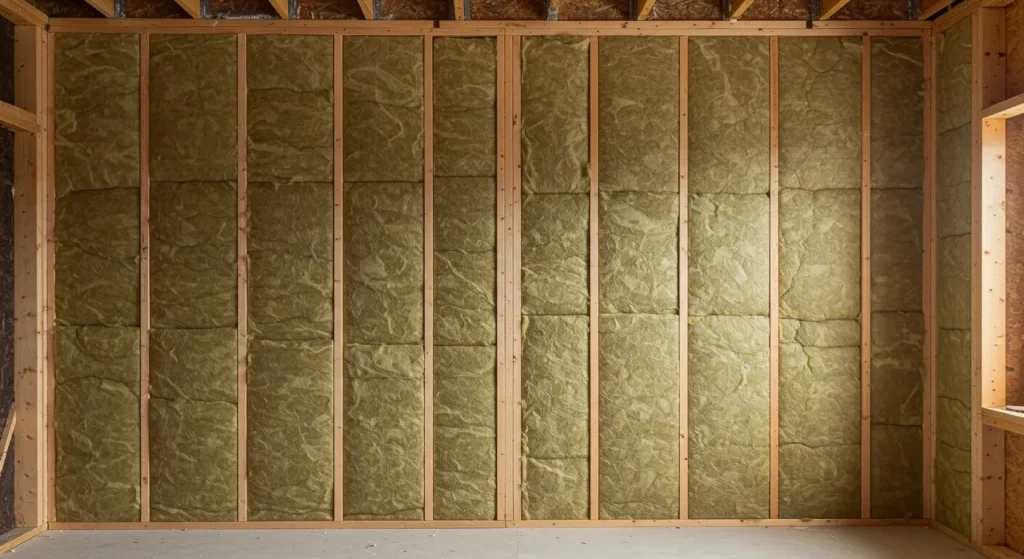
Choosing the right insulation professional matters as much as choosing the right material. Here are the indicators that you are working with a team that will solve the problem correctly:
If your wall insulation is sagging, you are losing heat, wasting money, and potentially setting up moisture problems that get more expensive to fix over time. Our team at Spray-On Foam & Coatings has extensive experience diagnosing and solving insulation failures in homes across Sandy and the surrounding area. We assess your wall cavities, identify where existing insulation has failed, and recommend the right solution, whether that is mineral wool for new construction or spray foam injection for a retrofit.
Request a Free Quote | Schedule an Insulation Assessment
Call us at (360) 667-1993 or email [email protected] to get started. We will help you stop the cycle of sagging insulation and get your walls performing the way they should.
Mineral wool resists settling and holds its shape in wall cavities far better than fiberglass. However, it does not seal air leaks on its own. For a complete solution, mineral wool should be paired with proper air sealing.
Yes, closed cell spray foam can be injected into existing wall cavities through small access holes. It expands to fill voids and bonds to framing, replacing failed insulation without requiring full wall demolition.
Walls facing prevailing wind and rain exposure tend to accumulate more moisture, which accelerates fiberglass breakdown. North-facing and weather-exposed walls in Sandy’s wet climate are the most common problem areas.
Per the Oregon Building Codes Division, wood-framed above-grade walls in Climate Zones 4C and 5 require R-21 cavity insulation or R-13 plus R-3.8 continuous insulation. Both spray foam and mineral wool can meet or exceed these requirements.
Infrared thermography during cold weather can reveal temperature variations that indicate missing or settled insulation. Cold spots on interior walls, especially near ceilings, are a common sign. A professional energy audit can confirm the issue.