
Hiring the right open-cell spray foam contractor directly affects your building’s thermal performance, indoor air quality, and your reputation with clients. The wrong choice leads to inconsistent installations, code failures, callbacks, and potential health hazards from improper chemical handling during application. The right contractor delivers precise R-values, reliable air sealing, and a smooth workflow that keeps your project on schedule. Before signing any agreement, builders need to verify that a contractor has the technical knowledge, safety practices, and track record to handle open-cell spray foam in residential and commercial settings. The seven questions below cover the areas that matter most.
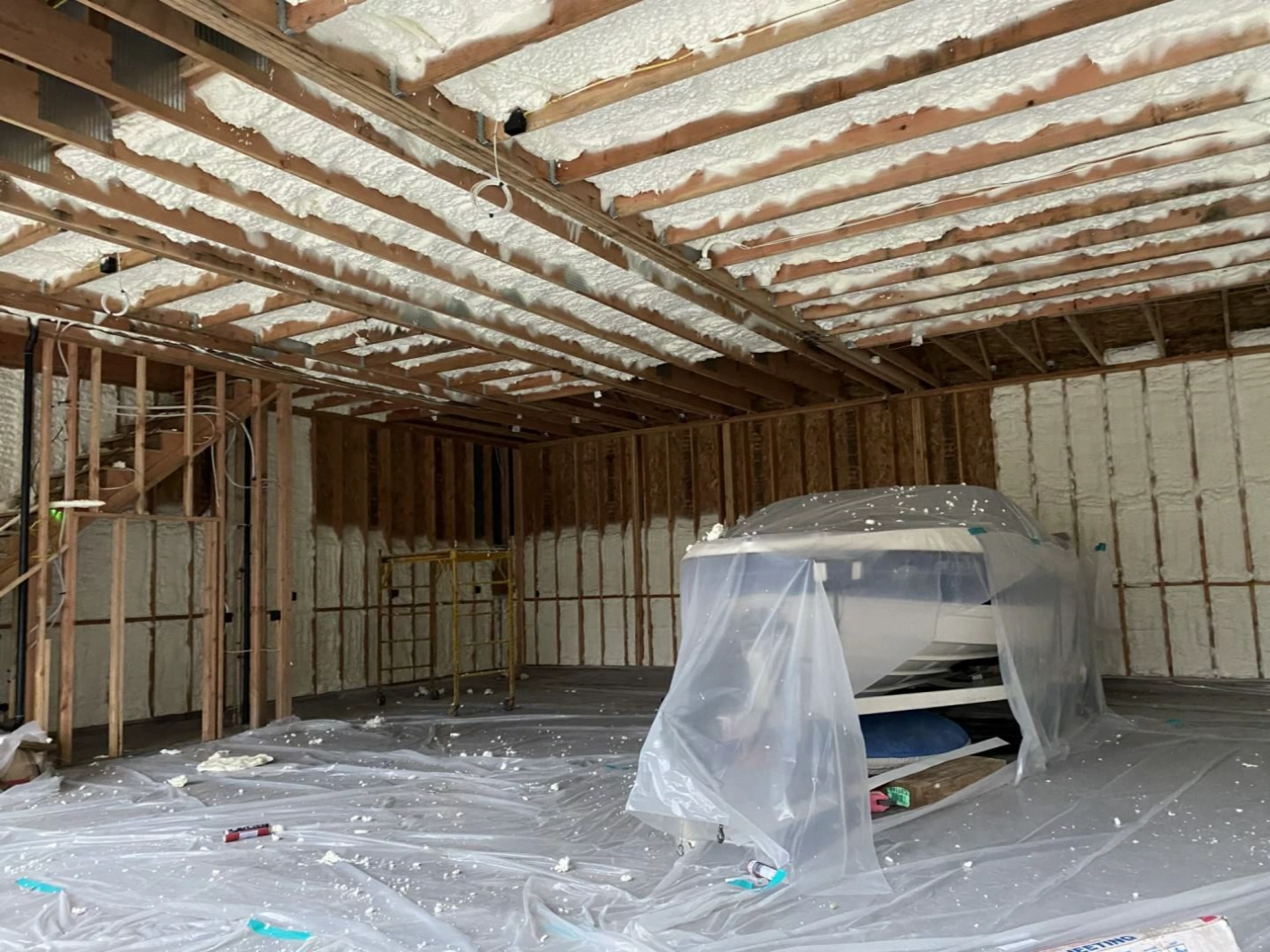
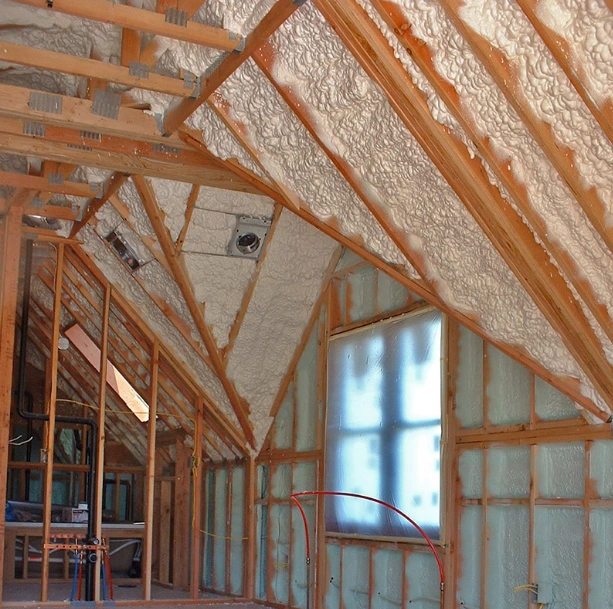
Open-cell spray foam is a low-density, half-pound material that expands aggressively during application and cures to a soft, flexible finish. According to the EPA’s guide to SPF product types, open-cell foam delivers roughly 3.5 R-value per inch, dries soft, and is used for modern insulation solutions including wall cavities, attics, and ceiling assemblies. Because it expands more vigorously than closed-cell foam, it requires experienced hands to apply in controlled passes. A crew that over-sprays can push foam beyond stud cavities, creating extra trimming work and material waste. A crew that under-sprays leaves gaps that compromise the air barrier, defeating one of the primary reasons for choosing spray foam in the first place.
The reactive chemicals in SPF, including isocyanates on Side A and polyol blends with catalysts and blowing agents on Side B, demand careful handling. The EPA notes that SPF contains methylene diphenyl diisocyanate (MDI), a chemical regulated under the Clean Air Act as a hazardous air pollutant. Builders who understand these risks are better positioned to evaluate whether a contractor takes safety seriously on the jobsite.
The Spray Polyurethane Foam Alliance administers the Professional Certification Program (PCP), an industry-recognized credential that tests installers on SPF products, application techniques, and safety practices. The PCP offers four levels within the insulation track: assistant, installer, master installer, and project manager. Each level requires passing a written exam and demonstrating field experience. An assistant-level certification means basic awareness but limited hands-on authority. A master installer or project manager certification means the person has logged significant board-foot experience and passed rigorous testing.
Ask to see current certification cards for every crew member who will be on your jobsite. If a contractor cannot produce them, or if only one person on a multi-person crew holds certification, that is a red flag. The EPA identifies SPFA certification as the primary training pathway for professional SPF installers.
Not all open-cell foam formulations perform the same way. Blowing agents, flame retardants, and catalyst ratios vary by manufacturer, and each product has its own curing profile, R-value rating, and application temperature range. A qualified contractor should name their manufacturer immediately and hand you the Safety Data Sheet (SDS) without hesitation.
The EPA warns that some marketing claims for SPF do not clearly indicate that these products contain hazardous chemicals, including isocyanates and potentially persistent flame retardants. Contractors who dismiss the SDS or downplay the chemical content are not giving you the full picture. The SDS tells you exactly what is being sprayed inside your building, and you have the right to review it before the job starts.
During spraying, workers are exposed to isocyanate vapors and aerosols. Research indicates that inhalation exposures during SPF insulation can exceed OSHA occupational exposure limits, requiring skin, eye, and respiratory protection. A professional crew should arrive with supplied-air respirators, chemical-resistant clothing, nitrile gloves, and eye protection. They should isolate the work area with containment barriers and ventilate the space during and after application.
Per the EPA’s safer workplace practices for SPF installation, building occupants and other trade workers not involved in the installation should vacate the premises during spraying. If a contractor tells you it is fine for your drywall crew or HVAC team to keep working in the next room while they spray, find a different contractor.
Open-cell foam at roughly 3.5 R-value per inch means reaching code-required R-values requires real thickness. Climate zones in the Pacific Northwest generally require R-49 to R-60 in attics and R-13 to R-19 in walls. The contractor should be able to calculate exactly how many inches of open-cell foam are needed to hit those targets and explain how they verify thickness during application.
Avoid contractors who give a vague answer like “we just fill the cavity.” That approach leaves R-value to chance. A competent installer will reference your local energy code, specify the number of passes planned, and describe how they measure foam depth as they work.
SPF curing times vary based on temperature, humidity, foam thickness, and the specific product used. Unpredictable or uncontrolled curing rates can increase exposure risks. The EPA notes that some manufacturers recommend 24 hours after application before re-entry without PPE and before building occupants return, but the actual time may vary depending on site conditions.
A reliable contractor will give you a clear re-occupancy timeline before the job begins and communicate any adjustments based on conditions they encounter on site. If their answer is “a couple hours” for a large open-cell application, that suggests either a lack of experience or a willingness to cut corners on safety.
Ask for references on projects of similar scope and type. If you are building a 2,500-square-foot custom home with open-cell foam in the walls and attic, a reference from a pole barn insulation job does not tell you much. You want to hear from builders who have worked with this contractor on comparable residential or commercial builds.
Also ask about warranty coverage in writing. Does the warranty cover material defects, labor defects, or both? How long does it last? Does it require the contractor to inspect the installation after curing? A contractor who offers only a verbal promise or a one-year labor warranty is not standing behind their work the way a professional should.
Spray foam installation affects scheduling for drywall, electrical, plumbing, and HVAC crews that follow. The work area must be cleared, substrates must be clean and dry, and other trades need to know when they can safely re-enter. A contractor who shows up unannounced or fails to coordinate with your project manager will disrupt your schedule and create friction between trades.
Ask how they communicate timelines, how they protect finished work from overspray, and how they handle change orders if conditions differ from what was expected during the bid. The best contractors treat your jobsite like their own and respect the sequencing of work that keeps the project moving.
| Factor | Open-Cell Spray Foam | Closed-Cell Spray Foam |
|---|---|---|
| R-Value per Inch | ~3.5 | ~6.5 |
| Density | Low (0.5 lb/ft3) | Medium to High (2-3 lb/ft3) |
| Expansion | Aggressive | Moderate |
| Cured Texture | Soft and flexible | Rigid |
| Air Barrier | Yes | Yes |
| Vapor Barrier | No (vapor permeable) | Yes (with sufficient thickness) |
| Best Applications | Wall cavities, attics, crawlspaces, sound dampening | Below-grade, flood-prone areas, structural support needs |
Open-cell foam is the right call when you need an effective air seal and insulation in standard wood-frame assemblies, and when vapor permeability is desirable to allow the wall assembly to dry. It also offers better sound-dampening properties than closed-cell foam, which matters in multi-family or office construction.
| Build Type | Recommended Approach | Key Considerations |
|---|---|---|
| Custom single-family homes | Full open-cell specification with R-value targets per cavity | Builder-client expectations for energy performance are high; documentation matters |
| Production tract housing | Standardized specifications with volume pricing | Consistency across units reduces risk; negotiate board-foot rates |
| Multi-family / commercial | Hybrid approach with open-cell in walls and closed-cell at the roof deck | Fire codes, sound ratings, and compartmentalization requirements change the equation |
| Retrofit / weatherization | Targeted air sealing with open-cell in accessible cavities | Existing conditions, access constraints, and occupant displacement add complexity |
Spray-On Foam & Coatings serves builders across the Pacific Northwest and Portland metro areas with certified open-cell and closed-cell spray foam installation. Our team holds industry-recognized credentials, follows EPA-recommended safety protocols on every jobsite, and provides detailed scopes so you know exactly what to expect before we arrive. Whether you are insulating a custom home, a multi-unit build, or a commercial project, we coordinate with your schedule and deliver consistent results.
Request a Free Quote | Schedule a Free Consultation
Call us at (360) 667-1993 or email [email protected] to discuss your next project.
Open-cell foam is low density, expands aggressively, cures soft, and delivers about 3.5 R-value per inch. Closed-cell foam is higher density, cures rigid, and delivers about 6.5 R-value per inch with vapor barrier properties.
Curing times vary based on thickness, temperature, humidity, and the specific product used. Some manufacturers recommend approximately 24 hours before re-entry and re-occupancy, but site conditions may extend that timeline.
Certification is not legally required in every jurisdiction, but the SPFA Professional Certification Program is the industry standard for validating installer knowledge and safety practices. Builders should treat it as a baseline requirement.
No. Temperature, humidity, and substrate moisture all affect curing rates and foam performance. A qualified contractor will evaluate conditions and advise on the right timing for installation in your climate zone.
No. Open-cell foam is vapor permeable, which allows moisture to pass through the wall assembly. This makes it appropriate for many above-grade applications where drying potential is important.