

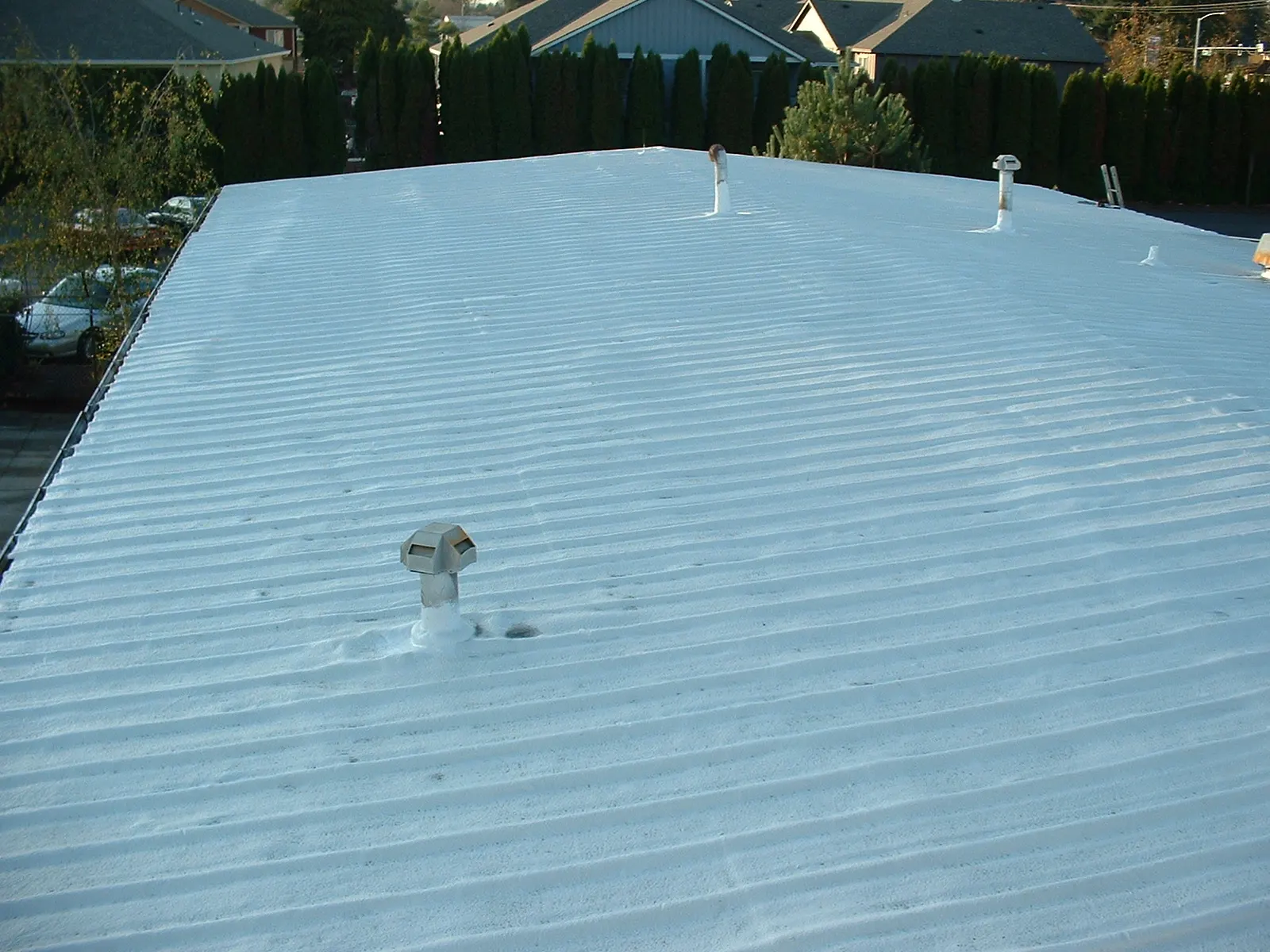
You prevent flat roof drainage problems by keeping water moving toward working drains. Clear debris on a schedule, fix low spots and weak slopes, and make sure a backup outlet exists. Check the roof 24 to 48 hours after rain, and act fast when water is still sitting there.
A flat roof is really a low-slope roof. It relies on gravity and a few outlets, so one blocked drain can turn a normal rain into a pond on your roof.
IKO reports that the National Roofing Contractors Association counts water as ponding once it stays 24 to 48 hours. Left alone, that water can feed algae and moss, wear down spray foam roofing materials, and find its way past flashing.
It’s heavy, too. An inch of water weighs about 5.2 pounds per square foot, according to WoodWorks, so a few inches across a big roof adds real load.
Slope decides whether water reaches the drain or stops short. A roof can look fine when it’s dry and still hold water in dips.
WoodWorks recommends at least 1/4 inch of slope per foot between a drain and any point on the roof, and says that slope should survive long-term deflection. IKO lists the usual causes of ponding: poor installation, clogged drains, compressed insulation, dips near skylights or vents, building settlement, and heavy rooftop equipment.
Tapered spray foam roof insulation fixes slope across a roof. A cricket, which is a small sloped ridge, pushes water around a curb or unit instead of letting it pool behind it.
Most roofs use a mix of outlets. These flat roof drainage solutions usually work best together:
On a sagging roof, a new drain at the low point can relieve ponding. A re-roof is also a good time to add tapered insulation.
Most drain failures start with debris, not design. Leaves, dirt, and grit pack into strainers, and the next storm has nowhere to go.
InspectApedia calls cleaning drain screens and piping once a year the minimum. We suggest spring and fall, plus after any big storm, since that’s when debris lands.
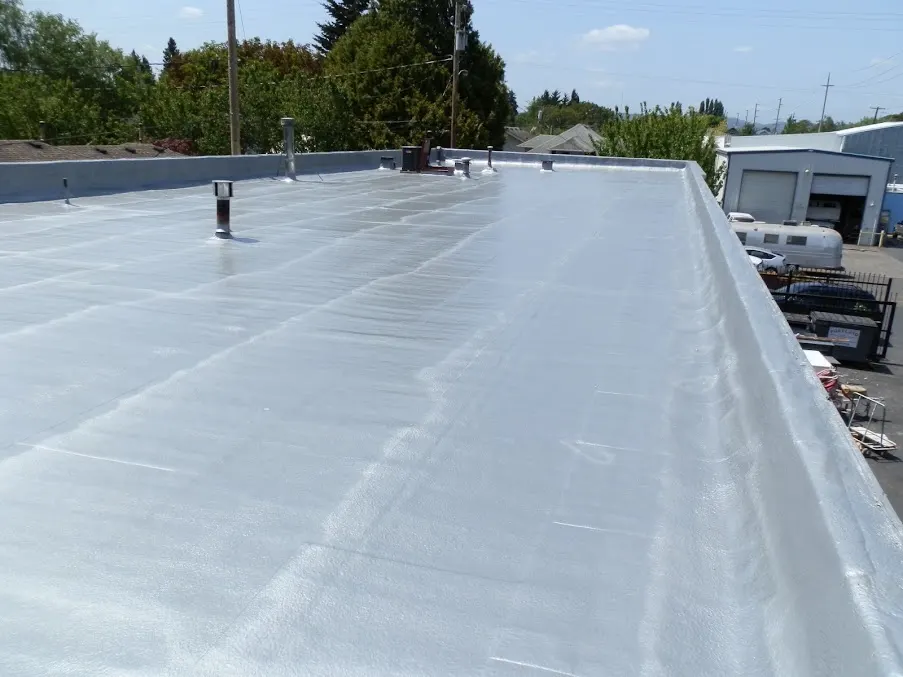
Good flat roof water management doesn’t stop at the roof edge. Water that leaves a downspout and soaks the foundation just moves the problem.
Point downspouts away from walls and footings. Keep heavy items off the roof, because IKO notes that stored loads can compress insulation and leave a new low spot. Check seams and flashing around vents and skylights, since ponded water finds weak spots fast.
A roof drainage system inspection doesn’t need special tools. Stay off a wet or icy roof, and use a ladder or hatch if you’re unsure.
Call when ponding returns after the drains are clear, when the roof sags, or when stains show up inside. Those signs point to slope, structure, or a leaking drain, not just leaves.
IKO says a professional should find the cause first, and that structural damage gets fixed before anything else. We look at the roof, then tell you plainly whether the fix is drainage, slope, or the surface.
If water keeps sitting on your roof, we’d be glad to take a look. Spray-On Foam & Coatings offers a free quote. Call us at (360) 667-1993 or email [email protected].
It depends on roof area and the heaviest rainfall your area sees, so there’s no single number. A roofer or drainage designer sizes the drains for those factors and adds backup outlets.
A coating protects the surface, but it doesn’t create slope or clear a blocked drain. Fix the cause first, then decide whether a coating makes sense.
No. Strainers keep debris out of the drain pipe, where a clog is harder to reach. Trim branches or fit a larger strainer instead.
Yes. Lingering water can grow algae, moss, and lichen, and mosquitoes may breed in it. Algae is slippery, so take care if you walk on the roof.
In cold climates, meltwater can freeze in a drain and block it. A roofer may suggest an electric heat cable to melt the ice, or a snow removal plan that keeps ice from building up.