

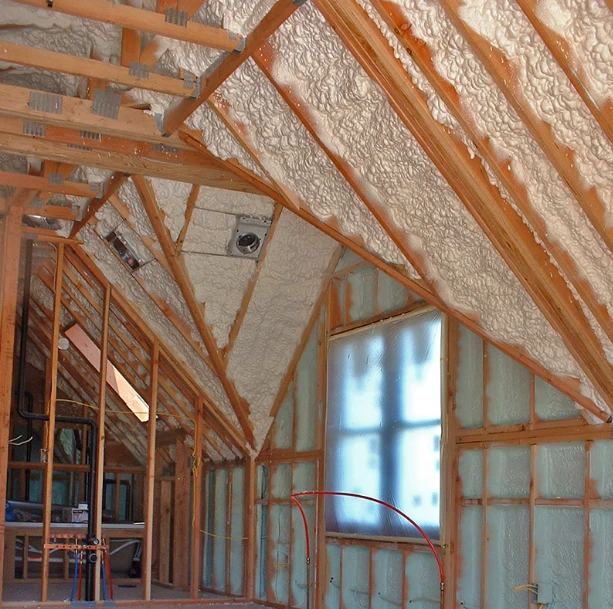
Foam density is the variable that decides how much R-value you get from every inch of open-cell spray foam. Open-cell foam installs at roughly 0.5 pounds per cubic foot, known in the trade as half-pound foam, and delivers about R-3.6 to R-3.8 per inch. In Seattle, WA, which sits in Climate Zone 4C, the marine climate, that number controls whether a wall, attic, or floor assembly meets U.S. Department of Energy targets. The right density and thickness depend on the application: full-cavity wall fills need every inch of a 2×6 bay, attic retrofits need about 13 inches to reach R-49, and interior sound walls need less R-value but still need on-spec density. Below, we break down how density drives R-value, what Seattle’s code requires, where open-cell foam wins, and how to verify you actually got what you paid for.
Density describes how many pounds of cured foam occupy one cubic foot. Open-cell spray polyurethane foam is a light-density, semi-rigid product with a sponge-like structure of millions of connected cells filled with air. Closed-cell foam, by contrast, installs at about 2 lb/ft³ and seals a low-conductivity gas inside each cell, which is why it reaches R-5.1 to R-6.5 per inch while the open cell sits near R-3.8.
That difference explains why density matters differently for each product. In open-cell foam, the insulation value comes almost entirely from the still air held inside the cell structure. The polymer itself conducts heat faster than air, so every extra pound of resin per cubic foot buys rigidity and sound absorption, not a higher R per inch. In closed-cell foam, density relates directly to the sealed gas cells that produce its higher rating. If you compare quotes and one installer promises “denser open cell with better R-value per inch,” that claim should raise a flag. The FTC’s R-Value Rule governs insulation advertising, restricts R-per-inch claims unless test results support them, and requires R-value information based on standard tests, precisely because per-inch numbers can mislead.
The practical takeaway for homeowners: open-cell foam in Seattle, WA specify by target density (half-pound), installed thickness, and total R-value, not by vague promises about density.
Seattle, WA and King County fall in Climate Zone 4C, the marine zone, under the Washington State Energy Code, with a 24°F heating design temperature at SeaTac. Long, damp heating seasons mean your envelope earns its keep in winter, and the code sets clear minimums for Climate Zone 5 and Marine 4:
Do the math with open-cell foam. A 5.5-inch 2×6 cavity filled at R-3.6 to R-3.8 per inch lands around R-20 to R-21. Reaching R-49 in an attic takes roughly 13 inches. Those thicknesses only deliver their rated R-value when the foam cures at its designed density, and density depends on application conditions. NIST research notes that SPF curing is affected by spray pressure, mixing ratio, nozzle temperature, and relative humidity, and that homeowner odor complaints have been linked to misapplication. Western Washington’s damp air makes humidity control a real jobsite variable, not a footnote.
| Attribute | Open-Cell (Half-Pound) | Closed-Cell (Two-Pound) |
|---|---|---|
| Installed density | ~0.5 lb/ft³ | ~2.0 lb/ft³ |
| R-value per inch | R-3.6 to R-3.8 | R-5.1 to R-6.5 |
| Reference rating | R-12.6 at 3.5 in | R-6.5 at 1 in |
| Air barrier | Yes at 5.5 in or more | Yes |
| Vapor behavior | Vapor-open; thin layers are not a vapor retarder | Vapor barrier at required minimum thickness |
| Best Seattle, WA uses | Walls, attic decks, floors, sound control | Rim joists, below-grade, moisture-exposed areas |
| Typical installed price | $0.28 to $0.75 per board foot | $1.20 to $3.00 per board foot |
Pricing data comes from our published rates. Thickness drives cost in both directions: greater open-cell spray foam thickness and higher R-value raise the price, while easy access and flexible scheduling lower it, and larger projects reduce the per-board-foot rate.
| Application in Seattle, WA | Target Thickness | Approx. Total R | Notes |
|---|---|---|---|
| 2×6 exterior wall cavity | 5.5 in | R-20 to R-21 | Pairs with code wall options or the U-factor path |
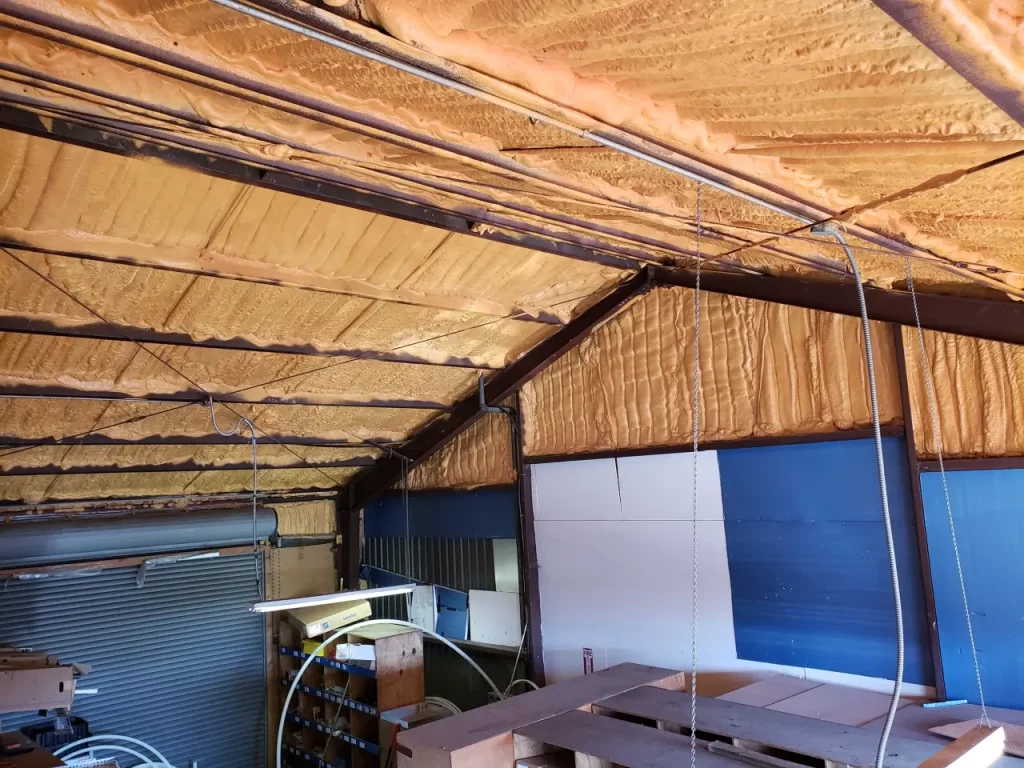
| Attic ceiling retrofit | ~13 in | R-49 | Satisfies the R-60 ceiling requirement under the R-49 exception |
| Floor over crawl space | ~8.5 in | R-30 | Meets the floor requirement; vapor strategy still needed below |
| Interior partition | 3.5 to 5.5 in | R-12 to R-21 | Open-cell density excels at sound absorption |
| Rim joists, slab edges, moisture-exposed decks | Closed cell, ~2 in | ~R-13 | Choose 2 lb foam where water contact is possible |
For most Seattle, WA homes, the smart play is open cell for the large thermal envelope surfaces and closed-cell spray foam for the wet, tight, or below-grade spots. For example, at our average open-cell rate of $0.32 per board foot, a 1,000-square-foot attic deck sprayed 10 inches deep equals 10,000 board feet, and we quote it exactly that way so you can verify every inch.
Washington’s energy code requires that for SPF insulation, the installed thickness and the R-value of that installed thickness be listed on the installer’s certification, posted on the jobsite. We build our process around that standard:
The questions we hear most from Seattle homeowners are open versus closed cell, off-gassing, and energy savings. On off-gassing: cured SPF is inert, and odor problems trace back to application errors, which is exactly why we hold curing conditions to spec.
Foam density is not marketing jargon; it is the number that decides whether your R-value shows up on test day. Our team at Spray-On Foam & Coatings installs open-cell spray foam and closed-cell spray foam at specified densities, handles Crawl space insulation and Air sealing, and certifies installed thickness and R-value on every Seattle, WA job. Call us at (360) 667-1993 or email [email protected] to get numbers you can verify.
Request a Free Quote | Schedule a Density & R-Value Assessment
Open-cell foam installs at about 0.5 lb/ft³, which is why installers call it half-pound foam. Closed-cell foam installs at roughly 2 lb/ft³.
Expect about R-3.6 to R-3.8 per inch when the foam cures on-spec. The DOE lists 3.5 inches at R-12.6 total.
No. R-value comes from the air trapped in the open cells, and polymer conducts heat faster than air. Extra density adds rigidity and sound control, not R-value.
A full 5.5-inch 2×6 cavity at half-pound density reaches about R-20 to R-21. Code wall options are R-20+5 or R-13+10, or the U-factor compliance path.
Cured spray foam is inert, and documented odor complaints trace to misapplication. Curing depends on mixing ratio, pressure, temperature, and humidity, so hire an installer who controls those variables.