
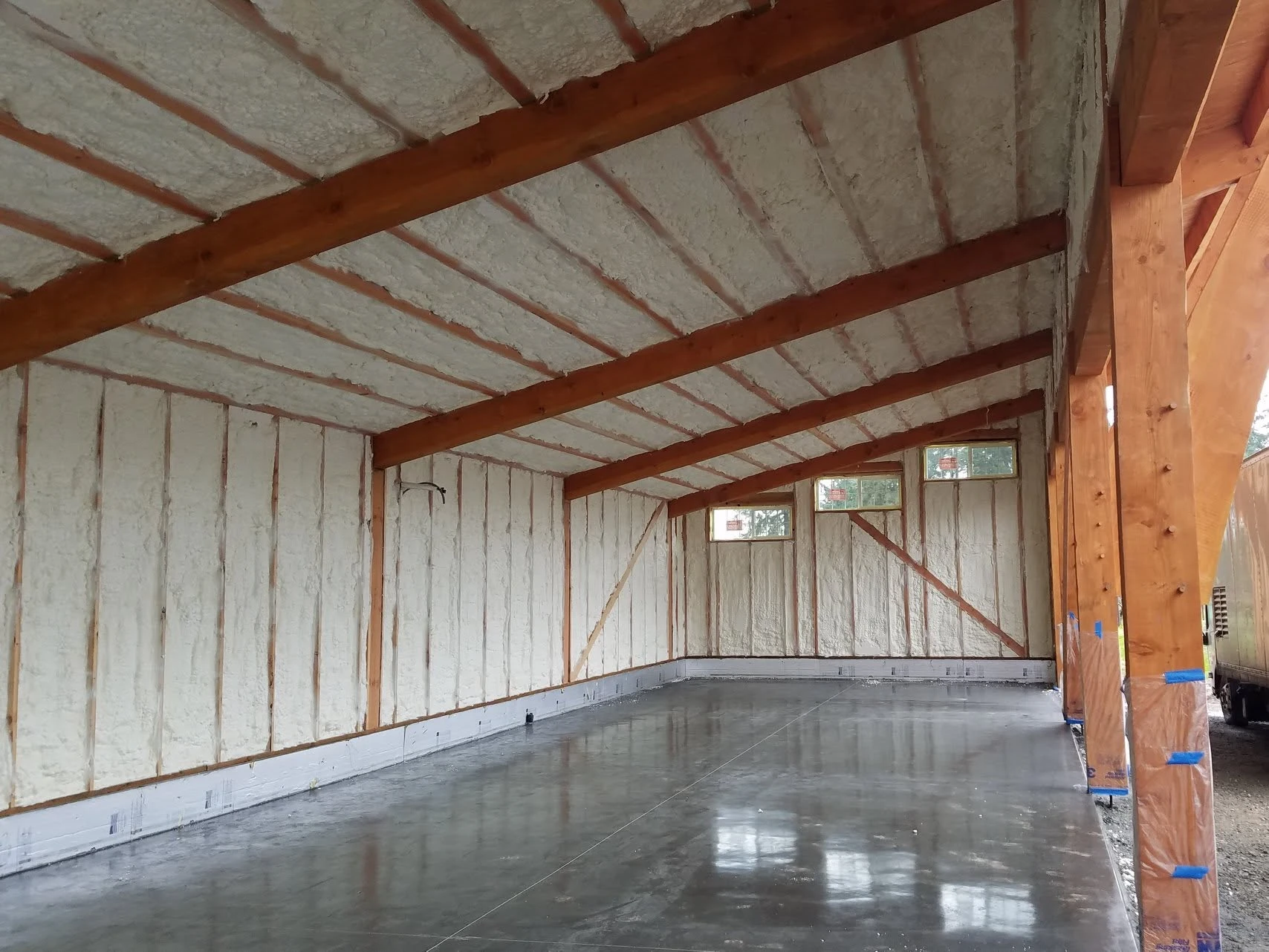
Spray polyurethane foam is not a pre-made product. It is a chemical reaction that happens in real time at the tip of the spray gun, when Side A (isocyanate) and Side B (a polyol blend) meet in a carefully metered ratio, roughly 50/50 by design. Improper foam mixing, whether caused by ratio drift, poor impingement mixing, temperature swings, or moisture contamination, directly degrades spray foam performance: R-value drops, air sealing fails, foam shrinks or stays sticky, and unreacted chemicals can linger in the air. For homeowners, builders, and property managers in the Vancouver, WA and Portland, OR metro area, knowing what off-ratio foam looks like and why it happens is the difference between insulation that lasts decades and a tear-out and re-spray.
Polyurethane forms when isocyanates react with polyols, and the chemistry leaves no room for guesswork. As Wikipedia’s technical overview of polyurethane explains, the stoichiometry of the starting materials must be carefully controlled because excess isocyanate trimerizes into rigid polyisocyanurate structures, changing the foam’s properties. The reaction is also exothermic, generating its own heat as the two sides combine, per the EPA’s breakdown of SPF chemicals and production.
Side B is not just polyol. It carries catalysts, flame retardants, blowing agents, and surfactants that regulate cell size and stabilize the cell structure to prevent collapse and voids. When everything fires in sequence, closed cell foam reaches 5.1 to 6 R-value per inch and functions as an air and vapor barrier, while open cell foam lands near 3.8 per inch and becomes an effective air barrier at 5.5 inches or more, according to Wikipedia’s spray foam insulation reference. Miss the ratio and that entire chain of events breaks down.
| Failure Mode | What Happens | Resulting Foam |
|---|---|---|
| Off-ratio delivery | Metering pumps drift from worn parts, low drums, or blocked lines | Too much iso: dark, brittle, crumbly. Too much resin: soft, spongy, permanently tacky |
| Poor impingement mixing | The two streams fail to collide fully at the gun | Streaks, layering, weak cell structure, hidden voids |
| Temperature or pressure drift | One chemical is colder or thicker than the other | Uneven rise, shrinkage, poor adhesion, cracked surfaces |
| Moisture contamination | Water reacts with isocyanate, producing CO2 and disrupting polymer formation | Over-expanded, blistered, weak and friable foam |
Worn metering pumps, drums running low, or a plugged line quietly push the blend out of balance. Off-ratio spray foam insulation is the most common and most expensive failure because the mistake is baked into every board foot sprayed until someone catches it.
High-pressure systems rely on two streams colliding at extreme force. A worn mixing chamber, wrong tip size, or unbalanced pressure leaves the chemicals only partially blended, which shows up as visible streaking or layered “fishmouth” texture between passes.
Manufacturing spray foam guidance is clear that conditioning equipment exists to hold material temperature steady and improve mix efficiency and cure rate. Cold Side B gets thick and viscous, blends incompletely, and reacts at the wrong speed, so foam rises unevenly and pulls away from framing.
Water is an unintended reactant in this chemistry. It converts isocyanate into CO2 gas and urea byproducts that reshape the foam’s structure, so damp substrates or wet materials produce blistered, weak foam with a compromised cell network.
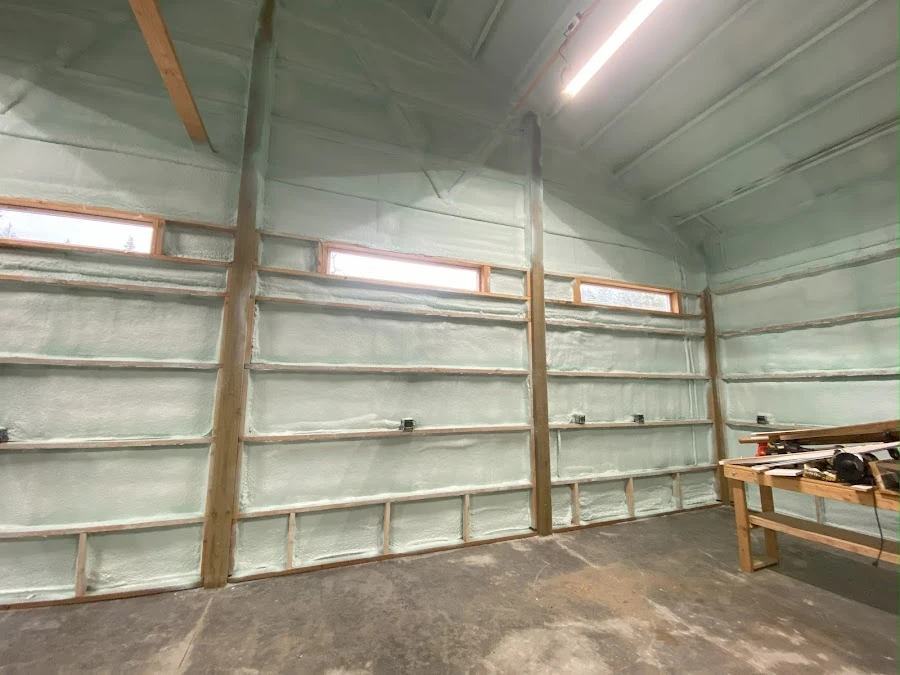
Mixing quality is a discipline, not luck. Every job we run starts with ratio verification and test shots sprayed into a capture box, where we check rise, cure, texture, and color before a single square foot of your space is sprayed. We log heated hose and drum temperatures, verify pressure balance between the A and B sides, and rotate material stock so nothing is sprayed past its shelf life. Application skill matters too: treats 2 lb closed-cell spray foam installation as a licensed trade under the CAN/ULC S705.2 standard, and we hold our applicators to that same standard of training. We also follow the EPA’s contractor safe work practices for ventilation and re-entry timing, and we turn down any job we know is set up to fail.
On one Vancouver, WA crawl space project, we were brought in after another install left tacky, spongy foam throughout. The only fix was full removal and a re-spray with verified ratio and temperatures, which the original owner paid for twice.
| Audience | What to Prioritize | Why It Matters |
|---|---|---|
| Homeowners | Ask for ratio checks, temperature logs, and written re-entry timing | Protects both R-value and your family’s indoor air |
| Builders and GCs | Require morning calibration records and inspect between passes | Catches drift before drywall hides it |
| Property managers | Schedule periodic attic and crawl space checks | Finds shrinkage and odor issues early |
| Ag and outbuilding owners | Control substrate moisture and metal surface temperature | Large steel structures swing temperature and stress adhesion |
The right crew explains Side A and Side B in plain language without being asked. They show you test shots, invite you to check texture and smell the difference between fresh foam and cured foam, and document pass thickness as they go. They follow published ventilation and re-entry guidance instead of rushing you back inside, and they are honest when a substrate or scope is a bad candidate for foam. Transparency about process is the most reliable predictor of performance.
Spray-On Foam & Coatings installs Closed cell spray foam, Open cell spray foam, Air sealing, Crawl space insulation, and Pole barn insulation throughout Vancouver, WA, the Portland, OR metro, and nearby communities. Our crew treats ratio control, temperature management, and cure verification as a daily routine, so your foam performs at its rated value for the life of the building. Call us at (360) 667-1993 or email [email protected] to talk through your project.
Request a Free Quote | Schedule a Foam Assessment
Your building deserves foam that cures right the first time, and our team is ready to prove it on day one.
Too much isocyanate produces foam that is dark, brittle, and cracks or crumbles under pressure. Too much resin produces foam that stays soft, spongy, and tacky well beyond the normal cure time.
Usually no, because the chemical reaction that creates the foam’s structure happened incorrectly, so patching over it traps the problem. Small surface flaws can sometimes be trimmed, but core cure failures require removal and re-spraying.
Professional crews spray test shots into a capture box at the start of each day and check rise, cure, texture, and color against the manufacturer’s expectations. Pressure and temperature readings are logged throughout the day to catch drift early.
Both suffer, but in different ways. Off-ratio closed cell foam loses density, R-value, and vapor resistance, while off-ratio open cell foam stays spongy and fails to deliver its air barrier performance.
Texture and odor problems show up within hours to days, while shrinkage and cracking often appear within the first few weeks. Any chemical smell lasting beyond 24 to 48 hours with proper ventilation is a sign the foam never fully cured.