

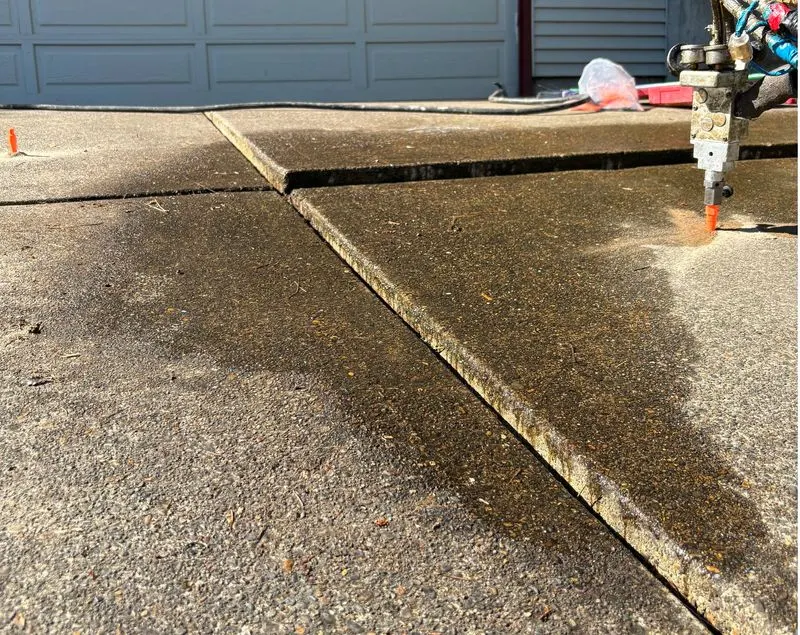
To fix low spots where water collects on concrete, first find out why the spot is low. A shallow “birdbath” left during finishing can be filled with a bonded patch, resurfacer or self-leveler. A slab that has sunk needs concrete slab leveling, which lifts it back into place from below. If the slab is sound but water has no path out, a drainage fix may be enough.
Not every puddle has the same cause, and the right concrete low spot repair depends on which one you have. Most dips come from one of four problems.
A puddle looks harmless, but water that sits on concrete for days causes real damage. Here’s what it can cost you.
Concrete soaks up water, and frozen water expands. The Federal Highway Administration notes that once roughly 87 percent of concrete’s pore space is filled with water, even one freeze-thaw cycle can lead to cracking. That’s why low spots often show scaling and flaking before the rest of the slab does.
Puddles also invite pests. The Centers for Disease Control and Prevention advises homeowners to stop mosquitoes from laying eggs in or near water and to empty water-holding items once a week. A birdbath on your concrete lifting patio refills every time it rains, so you can’t simply dump it.
Standing water also leaves stains, grows algae and turns into a sheet of ice in winter. Near a door or wall, it can push moisture toward your home.
A few minutes with a long straightedge or a 4-foot level tells you most of what you need to know. Lay it across the puddle area after it dries and look at the gap underneath.
| What You See | Likely Cause | Typical Fix |
|---|---|---|
| Dip under 1/4 inch, slab not cracked | Finishing birdbath | Bonded patch or resurfacer |
| Whole slab or section sits lower than its neighbor | Soil settlement | Slab lifting |
| Water pools against a wall or door | Slab tilted the wrong way | Lifting to restore slope |
| Water pools mid-slab, edges sit high | Edge curling | Professional assessment |
| Slab is flat with no fall | Poor original slope | Drainage channel or lifting |
Mark the edges of the dip with chalk as you move the straightedge. Also check joints and cracks. A step between two slabs almost always means settlement, not a surface flaw.
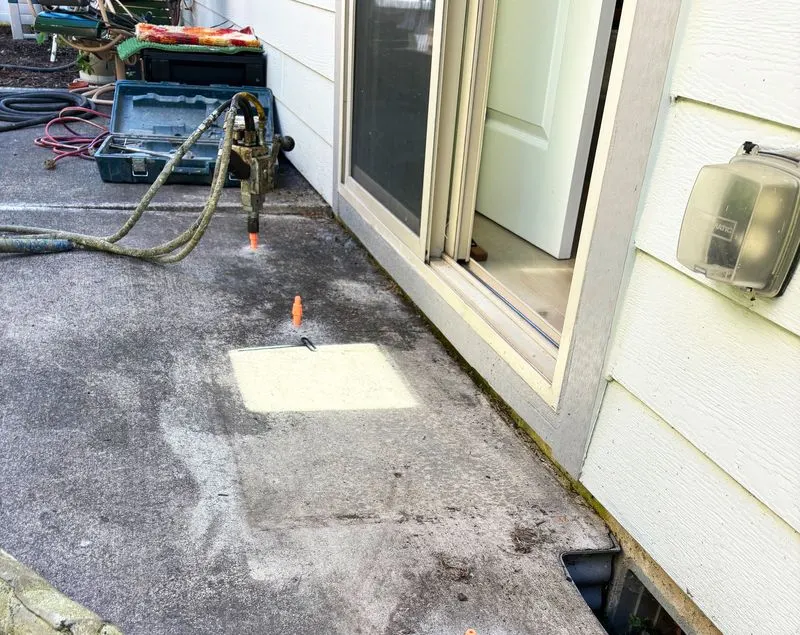
Once you know the cause, you can match it to a fix. These are the concrete leveling solutions we see work, from smallest to largest job.
For a shallow birdbath on sound concrete, clean the area well, remove loose material and grind or etch it so the patch can grip. Then apply a resurfacer or patching compound made to bond to existing concrete, and feather it into the surrounding surface. Plain bagged concrete won’t stick in a thin layer and tends to pop off within a season or two.
Garage and basement floors often take a self-leveling underlayment well. You mix it, pour it into the low spot and let it find its own level. Check the label, because many self-levelers are rated for interior use only.
If the slab itself dropped, a topping only hides the problem while the soil keeps moving. Slab lifting fills the voids underneath and raises the concrete back to grade. Polyurethane foam uses small injection holes and is light, so it adds little weight to soil that already struggled. Mudjacking uses a cement slurry and larger holes. Both can restore slope so water runs off instead of pooling.
When a slab is solid but simply flat, a saw-cut groove or a channel drain can give water a path out. This works best when the water has somewhere safe to go, away from the foundation.
Forums are full of shortcuts that seem easy but cause new trouble. A few deserve a second look before you try them.
Run through these points first so you don’t pay twice for the same puddle.
If your puddle comes from a slab that has sunk or tilted, a topcoat won’t solve it for long. Spray-On Foam & Coatings offers concrete lifting, slab jacking and polyurea coatings for slabs that hold water. We’ll look at the low spot, explain what’s causing it and give you a free quote with no obligation.
Call (360) 667-1993 or email [email protected] to request your free quote.
No. Sealers go on too thin to change the surface level. You need a bonded patch, resurfacer or self-leveler to build the dip up.
Not in a thin layer. Regular concrete doesn’t bond well when feathered out. A common approach is to saw-cut around the dip, chip it out to about 3/4 inch deep and fill it so the patch has enough thickness to hold.
Polyurethane foam sets quickly. Some foam products level concrete in as little as 15 minutes, so most slabs can take foot traffic the same day. Ask your contractor about vehicle traffic.
Yes, but the coating must come off the repair area first. Grind it away, fill the dip with a bonding repair product, then recoat so the finish matches.
It can if the original cause stays in place. If a downspout or poor drainage washed out the soil, fix that water source too, or the slab may settle again.