

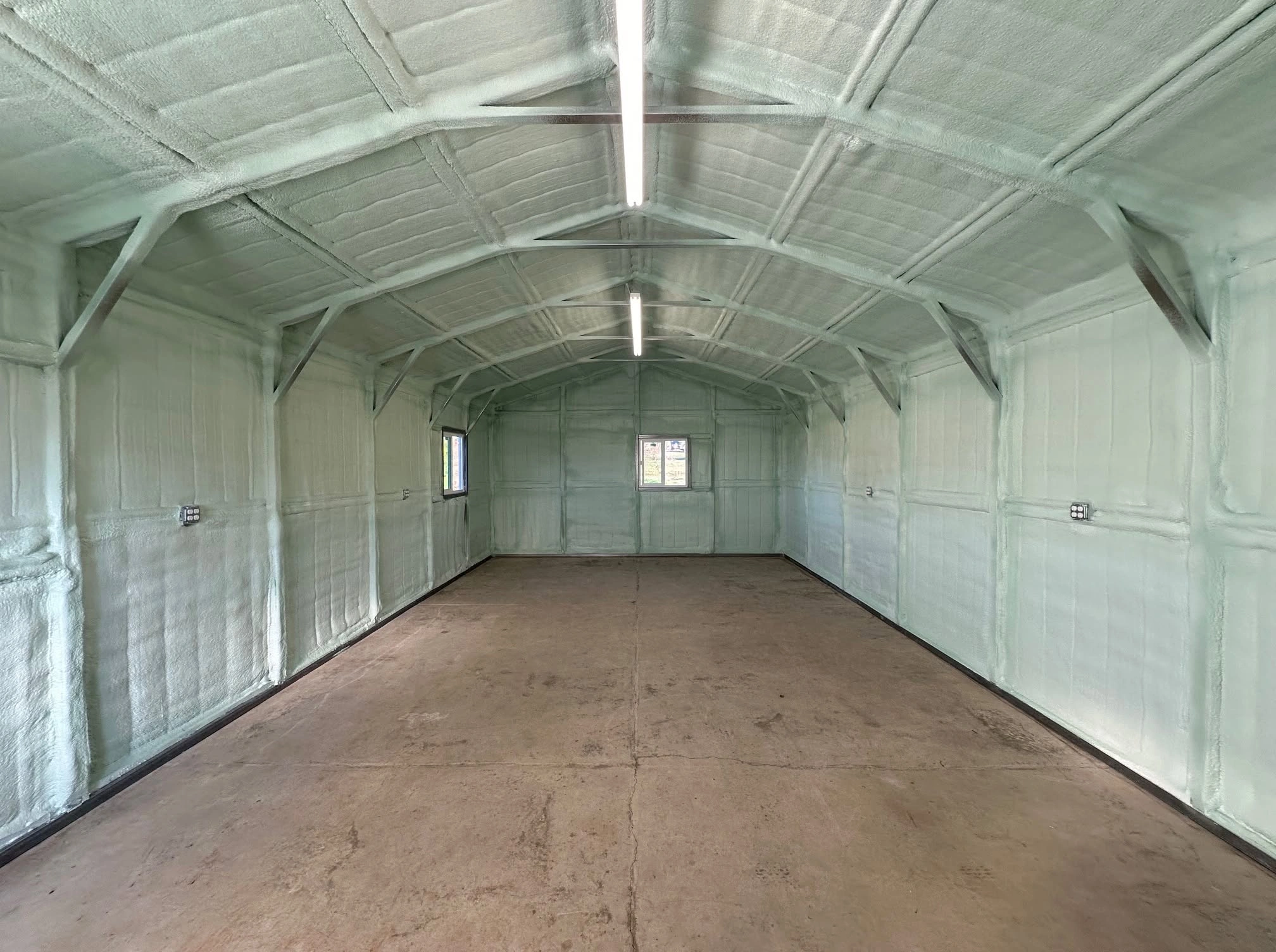
Closed-cell spray foam insulation addresses crawl space moisture by creating an impermeable thermal and air barrier that blocks humid outside air, prevents condensation on floor joists, and seals foundation walls against water vapor transmission. Whether you are dealing with a damp, musty crawl space in a vented home or planning a full encapsulation on a new build, closed-cell foam delivers the combination of insulation, air sealing, and vapor retarder properties that other insulation types cannot match in a single application. The right approach depends on your climate zone, foundation type, existing moisture conditions, and budget.
Most crawl spaces in older homes were built with foundation vents based on the idea that outside air would keep the space dry. In practice, the opposite happens in much of the country. During warm months, humid outdoor air enters through vents and condenses on the cooler floor joists, ductwork, and subfloor above. That condensation soaks into wood framing, creates conditions for mold, and eventually leads to wood rot and structural damage.
The EPA identifies crawl spaces with bare earth floors as common sites of hidden mold growth. Soil wicks moisture upward through capillary action, evaporates into the crawl space air, and raises relative humidity. When relative humidity exceeds 60%, mold growth becomes likely on any organic surface (EPA – A Brief Guide to Mold, Moisture and Your Home). That moisture does not stay contained either. It travels upward through floor penetrations, cracks, and wall cavities into the living spaces above, affecting indoor air quality throughout the home.
Closed-cell spray foam is a two-component mixture that expands and cures into a dense, rigid cellular plastic. Its closed-cell structure gives it a combination of properties that no other insulation material provides in a single product:
| Property | Why It Matters in Crawl Spaces |
|---|---|
| High R-value per inch (R-6 to R-7) | Achieves code-required insulation levels in a thin layer, saving crawl space headroom |
| Class II vapor retarder | Slows water vapor transmission through foundation walls and rim joists, blocking a major moisture pathway |
| Air impermeable | Seals gaps, cracks, and penetrations that would otherwise allow humid air infiltration |
| Does not absorb water | Unlike fiberglass or open-cell foam, closed-cell foam will not wick or hold moisture |
| Adds structural rigidity | Bonds to substrates and adds shear strength to wall assemblies |
When applied directly to the interior surface of crawl space foundation walls and rim joists, closed-cell spray foam simultaneously insulates, air seals, and retards vapor diffusion in one continuous layer. It seals around plumbing penetrations, electrical conduit, and irregular masonry surfaces that would be difficult and labor-intensive to flash and caulk individually.
The DOE’s Building America Solution Center specifically recommends high-density closed-cell spray foam for rim joist areas adjoining the exterior, noting it should be sprayed directly against the rim joist for maximum effectiveness (BASC – Vented to Unvented Crawl Space). This rim joist area is one of the most leaky and moisture-vulnerable locations in any home, making it a priority zone for sealed application.
The building science consensus has moved decisively toward sealed, conditioned crawl spaces. The DOE reports that unvented, insulated crawl spaces reduce the opportunity for condensation on cold surfaces, protect HVAC ductwork and plumbing from temperature extremes, keep floors warmer, and are less likely to harbor pests (BASC – Unvented, Insulated Crawlspaces).
In humid climates specifically, venting a crawl space can actively pull moisture into the home. Warm outdoor air carries more water vapor than cooler crawl space surfaces can hold, so that moisture condenses and accumulates. Sealing the vents, insulating the perimeter walls, and covering the ground with a continuous vapor barrier eliminates this cycle.
The DOE checklist for vented-to-unvented conversions specifies that all rim joists adjoining the exterior shall be insulated with high-density closed-cell foam sprayed directly against the rim joist, and that foundation walls shall be insulated with either spray foam or rigid foam insulation (BASC – Vented to Unvented Crawl Space). A 6-mil polyethylene ground vapor barrier is also required, with seams overlapped and taped to create a continuous seal.
| Feature | Closed-Cell Spray Foam | Open-Cell Spray Foam |
|---|---|---|
| Vapor retarder | Yes, Class II | No, vapor permeable |
| Water absorption | Minimal, does not hold water | Can absorb and retain water |
| R-value per inch | R-6 to R-7 | R-3.5 to R-3.8 |
| Air barrier | Yes | Yes, but moisture can pass |
| Best use | Foundation walls, rim joists, below grade | Above-grade walls, attics, sound control |
Open-cell foam provides good air sealing and sound attenuation, but it is vapor permeable. In a crawl space environment where soil moisture and humid air are constant threats, open-cell foam can allow water vapor to pass through and reach wood framing behind the insulation layer. Closed-cell foam eliminates that pathway, making it the appropriate choice for crawl space perimeter walls and rim joists where moisture resistance is non-negotiable.
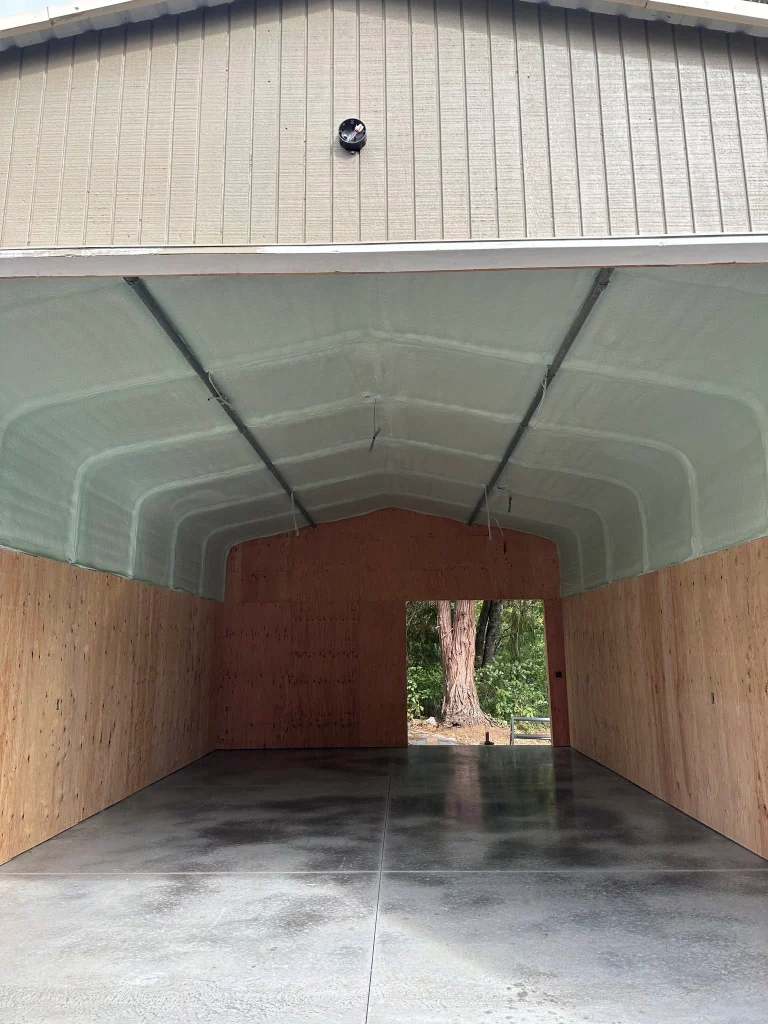
Closed-cell spray foam on walls and rim joists is one part of a proper crawl space encapsulation. For the full system to perform, it needs these complementary elements:
The EPA emphasizes that fixing moisture problems is essential before any insulation work begins. If mold is already present, it must be cleaned and the water problem corrected, or mold will return regardless of what insulation is installed (EPA – A Brief Guide to Mold, Moisture and Your Home).
Pricing for crawl space moisture solutions varies based on size, access, thickness requirements, and existing conditions. Here is what homeowners in the Vancouver and Portland metro area can expect:
| Service | Typical Range |
|---|---|
| Closed-cell spray foam | $1.20 to $3.00 per board foot |
| Crawl space insulation | $1,500 to $35,000 |
| Air sealing | $1,500 to $10,000 |
Factors that increase pricing include greater foam thickness for higher R-values, difficult access conditions, and the need for remediation work before insulation. Projects with easier access and flexible timelines tend to fall on the lower end.
Choosing the right installer matters as much as choosing the right material. Here are indicators that a contractor understands crawl space moisture science and will deliver lasting results:
At Spray-On Foam & Coatings, our team specializes in closed-cell spray foam applications for crawl space encapsulation across the Vancouver, Portland metro, and surrounding areas. We assess every crawl space individually, address existing moisture and drainage issues before any foam is applied, and install complete systems designed to meet or exceed building code requirements. Call us at (360) 667-1993 or email [email protected] to get started.
Request a Free Quote | Schedule a Crawl Space Assessment
Yes, closed-cell spray foam bonds directly to concrete, concrete block, and other masonry surfaces. It should be applied after a ground vapor barrier is in place and any bulk water issues have been resolved.
Not when the system is done correctly. A proper encapsulation includes a ground vapor barrier, sealed vents, wall insulation, and conditioned air supply or a dehumidifier to actively remove any residual moisture.
The required thickness depends on your climate zone and local code requirements. Our team calculates the correct R-value based on your specific location and foundation type.
Closed-cell spray foam has an initial curing odor that dissipates within 24 to 72 hours with proper ventilation. After full cure, it is inert and does not produce ongoing emissions.
For crawl spaces specifically, yes. Closed-cell foam provides insulation, air sealing, and vapor retarder properties in a single step, which no other material can match. It also adheres to irregular surfaces without gaps, seals penetrations automatically, and will not degrade when exposed to moisture.