

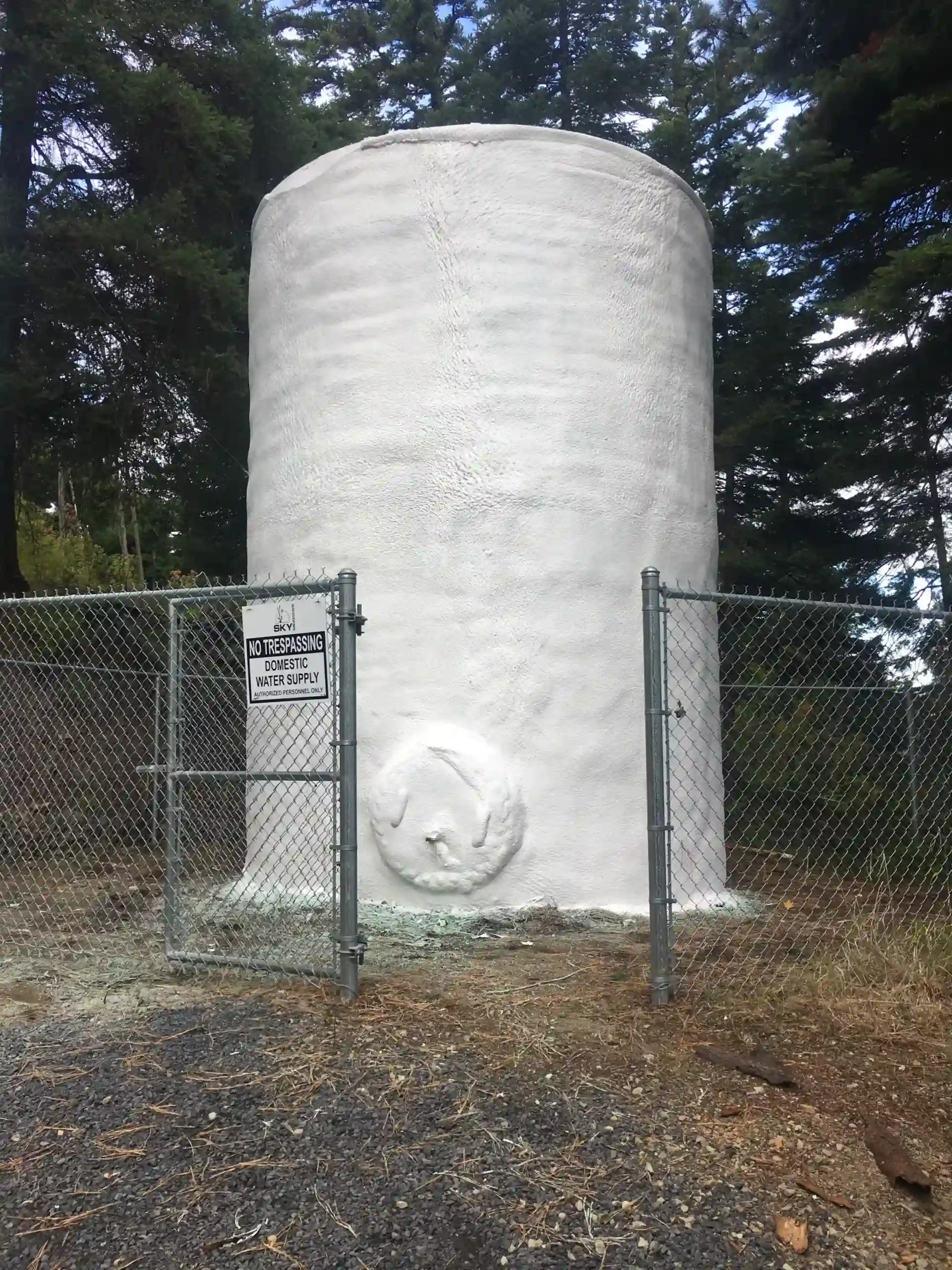
If your water storage tank insulation is showing visible damage, trapping moisture, or failing to maintain temperature stability, it likely needs immediate repair. For facility managers, property owners, and maintenance teams, insulation problems on water tanks are not just an efficiency concern. They signal a real threat to the tank itself, since trapped moisture beneath compromised insulation creates ideal conditions for corrosion under insulation (CUI), a form of localized external corrosion that degrades steel surfaces when water is absorbed or collected in the insulation material. Left unchecked, CUI can lead to wall thinning, leaks, structural failure, and costly emergency repairs. The right response depends on the type of insulation, the tank’s operating conditions, and how long the damage has gone unnoticed. Catching the warning signs early and acting on them is the most effective way to protect your tank and avoid a much larger problem.
Corrosion under insulation (CUI) is one of the most widespread and expensive damage mechanisms affecting insulated steel equipment. According to Wikipedia’s entry on corrosion under insulation, CUI is a severe form of localized external corrosion that occurs when water is absorbed by or collected in insulation material, exposing carbon and low alloy steel to continuous contact with water and oxygen. The corrosion is most active in temperature ranges between 10 and 350 degrees Fahrenheit on carbon steel and between 140 and 400 degrees Fahrenheit on stainless steel.
The danger with CUI is that it develops out of sight. The insulation that is supposed to protect the tank ends up concealing the damage. As Inspectioneering explains in its overview of CUI, these surfaces are generally not accessible for visual examination, meaning the onset of corrosion cannot be easily identified. In extreme cases, severe corrosion with consequential loss of system integrity can occur before anyone notices a problem. The corrosion itself can take several forms: galvanic, acidic or alkaline, and chloride, each driven by different moisture and contaminant conditions.
For water storage tanks, which often operate in outdoor environments with wide temperature swings, the risk is especially high. Thermal cycling causes moisture to condense on the tank surface and get absorbed by the insulation, creating a persistent corrosive environment.
The outer protective layer of your tank insulation system is its first line of defense. When this barrier fails, water enters, and the insulation begins to degrade from the outside in. Look for these specific indicators:
Moisture is the single most destructive force acting on insulated tank systems. When insulation becomes saturated, its thermal performance drops, and corrosion accelerates on the tank surface. Watch for:
Your tank’s insulation is designed to maintain consistent water temperatures regardless of external conditions. When insulation degrades, you will notice operational changes:
Failing insulation does not just reduce energy efficiency. It initiates a chain of deterioration that threatens the structural integrity of the tank itself. As noted in the Inspectioneering CUI resource, CUI represents an inordinately large percentage of global plant maintenance expenditures because the damage progresses silently and is only discovered when insulation is removed, often during an emergency.
The mechanism is straightforward. Once water penetrates the insulation and reaches the tank shell, the steel surface is in constant contact with moisture and oxygen. Depending on contaminants present, the corrosion can progress rapidly. Areas near the tank base, where insulation meets the foundation, are especially vulnerable because water tends to collect there due to gravity. Corner welds where the shell meets the floor are similarly at risk because these areas are prone to moisture accumulation under the insulation cover.
When corrosion progresses far enough, the tank wall thins to the point of failure. At that stage, repairs shift from routine maintenance to major structural work, often requiring tank draining, coating systems replacement, and potentially full sections of shell repair.
Regulatory and industry bodies have clear guidance on how frequently water storage tanks should be inspected. The Illinois EPA’s Storage Tank Inspection and Maintenance page states that a water storage tank should be inspected at least every five years, or more often depending on local conditions. Cleaning and repairs should be addressed based on inspection findings, and additional inspections between maintenance intervals are encouraged.
The U.S. EPA Region 8 Finished Water Storage Tank Inspection/Cleaning Checklist provides a detailed framework for evaluating tank condition, with separate checklists for drains, vents, overflows, hatches, rooftops, and general cleaning. This systematic approach ensures that no component, including the insulation system and the surfaces beneath it, goes unexamined.
For the insulation itself, inspection should focus on both the external condition of the jacketing and barrier system, and on the internal condition of the insulation material where accessible. Probes, moisture meters, and infrared thermography can help identify wet insulation without full removal. When suspicious areas are identified, selective insulation removal for direct visual examination of the tank surface is the most reliable method.
| Inspection Level | What It Covers | Recommended Frequency | Detection Capability |
|---|---|---|---|
| Visual walkthrough | Jacket condition: obvious damage, moisture staining | Monthly | Surface-level issues only |
| Detailed external inspection | Seams, fasteners, drainage, base condition | Annually | Moderate, catches early failure |
| Instrument-assisted survey | IR thermography, moisture meters, and thickness gauging | Every 3 to 5 years | Identifies wet insulation, wall loss |
| Full insulation removal and inspection | Direct visual of the tank surface beneath the insulation | Per condition findings or every 5 to 10 years | Most thorough, confirms CUI presence |
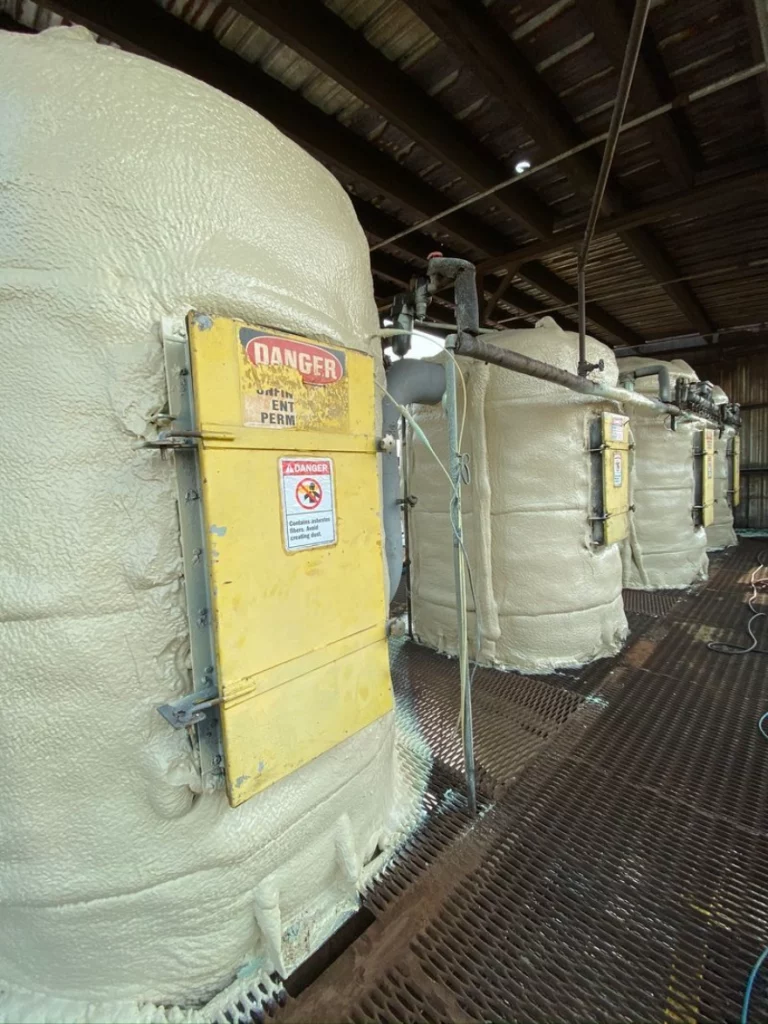
When insulation on a water storage tank needs repair or replacement, the material choice matters. Traditional blanket and rigid board insulation systems rely on mechanical fasteners and separate vapor barriers, creating multiple potential entry points for moisture. Each joint, seam, and penetration is a vulnerability.
Closed-cell spray foam insulation addresses these weaknesses directly. It adheres to the tank surface as a continuous monolithic layer, eliminating gaps, seams, and joints where water could infiltrate. Because closed-cell foam has a closed cellular structure, it resists moisture absorption and does not retain water the way fiberglass or mineral wool can. This significantly reduces the conditions that cause CUI to develop.
The U.S. Department of Energy’s guide on insulation notes that the R-value of insulation depends on its type, thickness, and density, and that moisture accumulation directly reduces insulating effectiveness. Spray foam maintains its R-value over time because it does not absorb and hold moisture like traditional materials. For water storage tanks operating in variable outdoor conditions, this means consistent thermal performance year after year.
| Tank Application | Common Insulation Issues | Recommended Action |
|---|---|---|
| Municipal drinking water | Weather exposure, UV degradation of jacketing, and regulatory inspection requirements | Replace with closed-cell spray foam; maintain inspection schedule per EPA guidelines |
| Agricultural water storage | Physical damage from livestock and equipment, freeze-thaw cycling | Upgrade to spray foam with a protective topcoat for mechanical durability |
| Fire suppression tanks | Long periods of stagnation, temperature sensitivity | Ensure full insulation coverage with no gaps; spray foam provides a continuous seal |
| Industrial process water | Chemical exposure, wide temperature ranges, CUI risk | Closed-cell spray foam with chemical-resistant coating for aggressive environments |
Not every insulation contractor approaches water tank work with the same level of care. Here are indicators that a team is qualified to handle your project:
At Spray-On Foam & Coatings, our team specializes in closed-cell spray foam insulation for water storage tanks across the Pacific Northwest and Portland metro areas. We evaluate your tank’s current insulation condition, identify areas of moisture intrusion or corrosion risk, and recommend the right repair or replacement approach to restore full thermal protection. Every project starts with a thorough assessment so we can match the solution to your tank’s specific needs.
Request a Quote | Schedule an Inspection
Reach us at (360) 667-1993 or [email protected] to discuss your water storage tank insulation needs with our experienced team.
The Illinois EPA recommends inspecting water storage tanks at least every five years, with additional inspections between intervals based on local conditions and visible concerns. Facilities in harsh climates or with aging insulation should consider annual visual checks.
CUI develops when water is absorbed or trapped within insulation material, keeping the metal tank surface in continuous contact with moisture and oxygen. Corrosion can be galvanic, acidic, alkaline, or chloride-driven, depending on contaminants present in the moisture.
Small localized damage to the outer jacketing can sometimes be patched if the underlying insulation is dry and intact. However, once the insulation material itself is saturated or the tank surface shows corrosion, full removal and replacement is the safer approach.
Closed-cell spray foam adheres directly to the tank as a continuous monolithic layer with no seams or joints where water can enter. It resists moisture absorption and maintains its thermal performance over time, reducing the conditions that cause CUI.
Ignoring insulation damage allows moisture to reach the tank surface, initiating corrosion that progresses hidden from view. Over time, wall thinning can lead to leaks, structural compromise, water contamination, and significantly higher repair costs once the damage is finally discovered.