

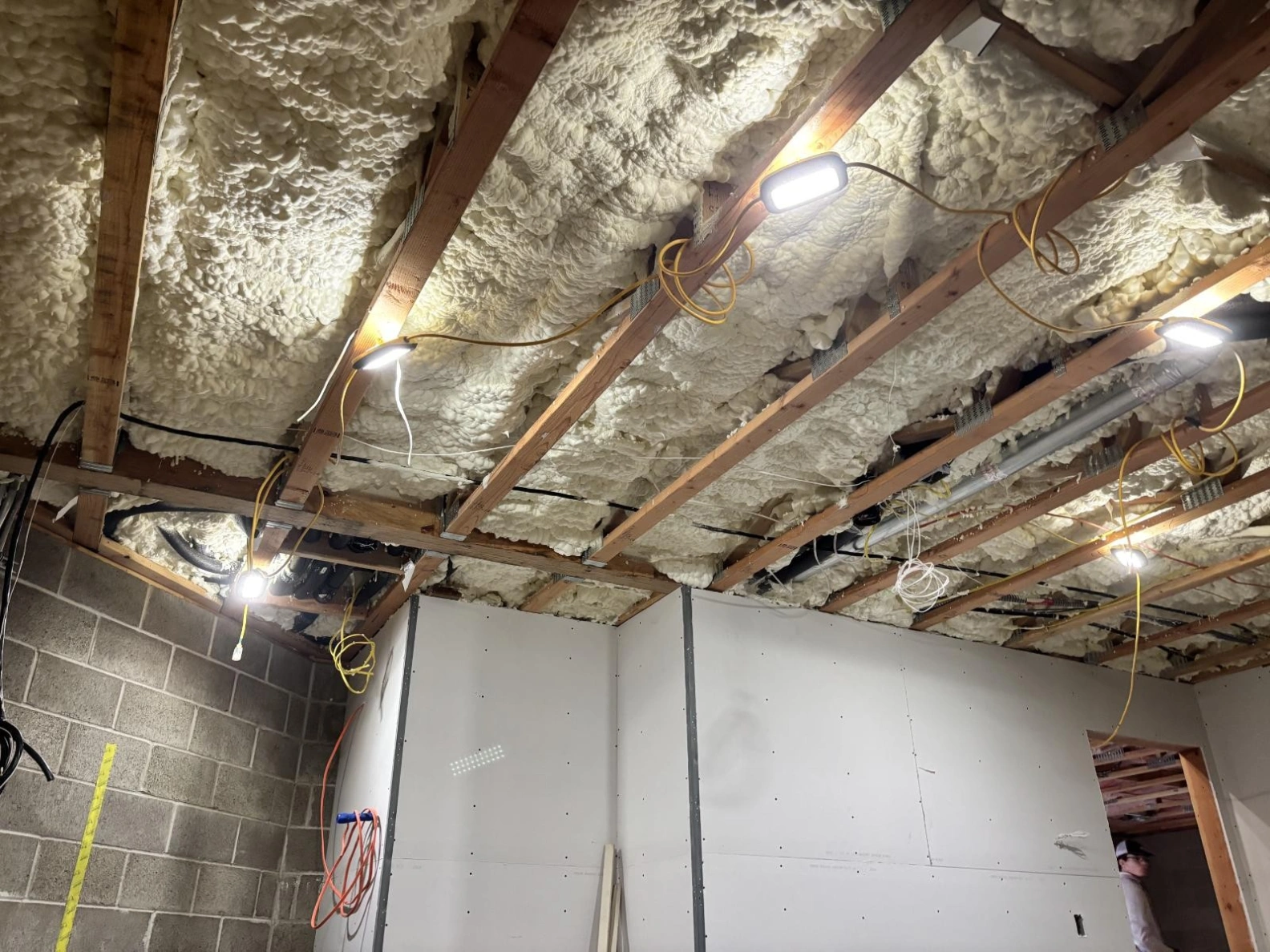
Yes. Spray foam insulation is one of the most effective materials available for reducing air movement through an attic. Unlike fiberglass batts or blown-in insulation that slow heat transfer but allow air to pass through gaps and around edges, spray foam expands on application to fill cracks, crevices, and penetrations, creating a continuous air barrier at the ceiling plane or roofline. The EPA estimates that homeowners can save an average of 15% on heating and cooling costs by air sealing their homes and adding insulation in attics, crawl spaces, and basements ENERGY STAR – Why Seal and Insulate. The right approach, vented or unvented attic, depends on your climate zone, existing construction, and whether your goal is a retrofit or new build.
Understanding why air moves through your attic is the first step toward solving the problem. The primary driver is a physics phenomenon called the stack effect, also known as the chimney effect. The stack effect is the movement of air into and out of buildings through unsealed openings resulting from air buoyancy caused by temperature and moisture differences between indoor and outdoor air.
During winter, warm indoor air is less dense than cold outdoor air. This warm air rises through the building and escapes through any available openings near the top, including gaps around recessed lights, unsealed drywall-to-top-plate joints, plumbing vents, chimney chaseways, and attic hatches. As that air exits, it creates negative pressure at the lower levels of the home, drawing cold air in through doors, windows, and foundation gaps. The taller the building and the greater the temperature difference, the stronger this effect becomes. Our spray foam insulation guide explains how spray foam can help address air leakage and improve the building envelope.
During summer, a reverse stack effect can occur in air-conditioned homes. Cooler indoor air sinks while hot outdoor air pushes down from the roof level, though this effect is typically weaker because the temperature differences are smaller.
The building science team at Building Science Corporation has written extensively about how this air movement affects home durability and energy use. In their analysis of stack effect mechanics, they note that sealing the big holes in the attic ceiling, often called attic bypasses, is essential to prevent moisture-laden interior air from reaching the attic and causing condensation damage. The problem compounds when modern sealed-combustion appliances replace older furnaces with chimneys, removing the natural draft that once helped dilute indoor moisture.
The ceiling plane between your living space and attic is riddled with potential air leakage paths. According to the DOE’s Building America Solution Center, many older homes have numerous air leaks from unsealed drywall-top plate seams, recessed can lights, gaps around vent pipes and wiring, and open soffits that allow conditioned air to escape into the attic continuously Building America Solution Center.
The most common attic air bypasses include:
Each of these openings individually may seem small, but combined, they can equal leaving a window open year-round, as ENERGY STAR points out. That constant air exchange means your heating and cooling system works harder than necessary to maintain comfortable temperatures.
Spray polyurethane foam addresses the problem differently from other insulation materials. When sprayed, it expands to many times its original volume, conforming to irregular surfaces and filling gaps that fiberglass batts or blown-in cellulose cannot reach. The Spray Polyurethane Foam Alliance describes SPF as a product that provides insulation, an air barrier, and a moisture barrier in a single application without additional materials SPFA – Spray Foam Fast Facts.
The key distinction is that spray foam does not just slow convective heat transfer within insulation cavities. It physically blocks air from passing through. Once cured, it creates a rigid, monolithic layer that seals around every penetration, framing member, and irregular surface it contacts.
Two primary types of spray foam are used in attic applications, each with distinct properties:
| Property | Closed-Cell Spray Foam | Open-Cell Spray Foam |
|---|---|---|
| R-Value per Inch | R-6.0 to R-7.0 | R-3.5 to R-3.8 |
| Air Barrier | Yes (Class II vapor retarder at 2 inches) | Yes (vapor permeable) |
| Expansion | Moderate (30-35x original volume) | High, rapid expansion |
| Density | High (denser, rigid) | Low (softer, flexible) |
| Best Attic Application | Attic floor air sealing, roofline insulation | Wall cavities, limited attic floor use |
| Moisture Resistance | Acts as vapor retarder | Vapor permeable, allows drying |
For attic air sealing specifically, the Building America Solution Center recommends closed-cell spray foam insulation as the preferred product for creating a continuous air control layer on the attic floor. Closed-cell foam can be applied in a consistent 1-inch layer without the billowing and void formation that can occur with open-cell products during rapid expansion.
When considering spray foam for your attic, there are two fundamentally different strategies, each suited to specific situations.
This is the most common retrofit approach for existing homes. Spray foam is applied directly to the attic floor, covering the ceiling drywall, top plates, and all penetrations. A minimum of 1 inch of closed-cell foam creates the air control layer, and additional blown-in or batt insulation is installed on top to meet or exceed code-required R-values.
The vented attic approach preserves traditional soffit-to-ridge ventilation and is required by most building codes unless specific unvented attic conditions are met. It is well-suited for older homes where the thermal boundary has always been at the ceiling plane.
Key considerations for vented attic spray foam:
In this approach, the attic is converted to a conditioned space by applying spray foam directly to the underside of the roof deck. Soffit vents are sealed, and the attic becomes part of the home’s thermal envelope.
This approach offers several advantages:
The unvented approach is more common in new construction but can be feasible as a retrofit when the existing roof deck is accessible and in good condition.
The best approach depends on your home’s specific situation:
| Home Scenario | Recommended Approach | Key Reason |
|---|---|---|
| Older home with vented attic, minimal insulation | Closed-cell foam on attic floor + blown-in overlay | Restores air barrier at ceiling, maintains code-required ventilation |
| New construction with ducts in attic | Unvented attic with spray foam at roofline | Protects ductwork, simplifies air sealing, improves HVAC efficiency |
| Home with accessible attic and no flooring | Attic floor spray foam application | Full access allows complete coverage of ceiling plane |
| Home with finished attic space or attic flooring | Unvented roofline approach | Avoids removing finished flooring to access ceiling plane |
| Mixed-humid or cold climate, ice dam history | Roofline spray foam or enhanced attic floor sealing | Eliminates heat loss through ceiling that melts roof snow |
Before investing in spray foam insulation, look for these indicators that air is actively moving between your living space and attic:
If you recognize several of these signs, an attic air sealing project with spray foam is likely to deliver noticeable improvements in comfort and energy costs.
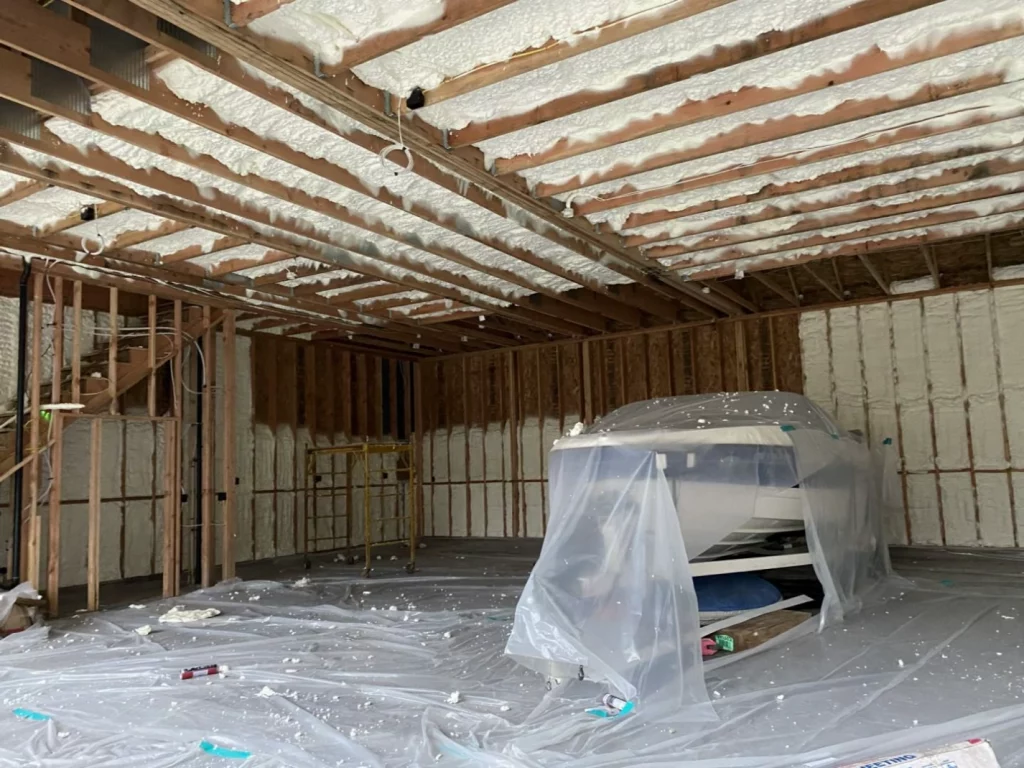
A quality spray foam installation begins with a thorough inspection of the attic space. Our team evaluates existing conditions including roof leaks, knob-and-tube wiring, ventilation configuration, and the presence of hazardous materials like vermiculite insulation. Surface preparation is essential because spray foam must adhere to a clean, debris-free surface to form an effective air barrier.
For closed-cell spray foam installations on the attic floor, our crew applies a minimum 1-inch continuous layer covering the entire ceiling plane, extending over the wall top plates and around all penetrations. This layer serves as the primary air control layer. Additional insulation is then installed above the foam to meet or exceed the R-value requirements for your climate zone.
For unvented attic installations at the roofline, spray foam is applied directly to the underside of the roof deck, sealed at the eaves, and soffit vents are closed off. This brings the attic into the conditioned envelope.
Every project includes verification that the air barrier is continuous and complete. Our professionals are trained to identify and seal all bypasses, including those hidden behind finished surfaces or in hard-to-reach framing cavities.
Spray-On Foam & Coatings specializes in professional spray foam insulation for attics, crawl spaces, and throughout the building envelope. Our experienced team assesses your attic’s specific air leakage points and recommends the most effective approach, whether that is closed-cell spray foam on the attic floor or a full unvented attic conversion at the roofline. We serve homeowners throughout Battle Ground, Vancouver, WA and Portland, OR metro areas with code-compliant installations backed by building science best practices.
Request a Free Quote | Schedule an Assessment |
Contact us at [email protected] or call (360) 667-1993 to get started.
Spray foam creates a continuous air barrier that stops the vast majority of air movement through sealed surfaces. Small intentional openings such as combustion air vents remain, but conditioned air loss through the ceiling plane is effectively eliminated when applied correctly.
No. Existing insulation must be removed so the spray foam can adhere directly to the attic floor surface. Debris, dust, and old material underneath the foam would prevent proper bonding and compromise the air seal.
It depends on the approach. Vented attic applications with foam on the floor maintain existing ventilation. Unvented attic applications at the roofline require sealing soffit and ridge vents, as the attic becomes part of the conditioned space.
By sealing air leaks at the ceiling plane or roofline, spray foam prevents warm indoor air from reaching the roof deck. Without that heat source, snow on the roof is less likely to melt and refreeze at the eaves where ice dams form.
Closed-cell spray foam is generally the better choice for attic air sealing applications. It provides higher R-value per inch, acts as a vapor retarder, and can be applied in a consistent thin layer without the voids that open-cell products may create.