

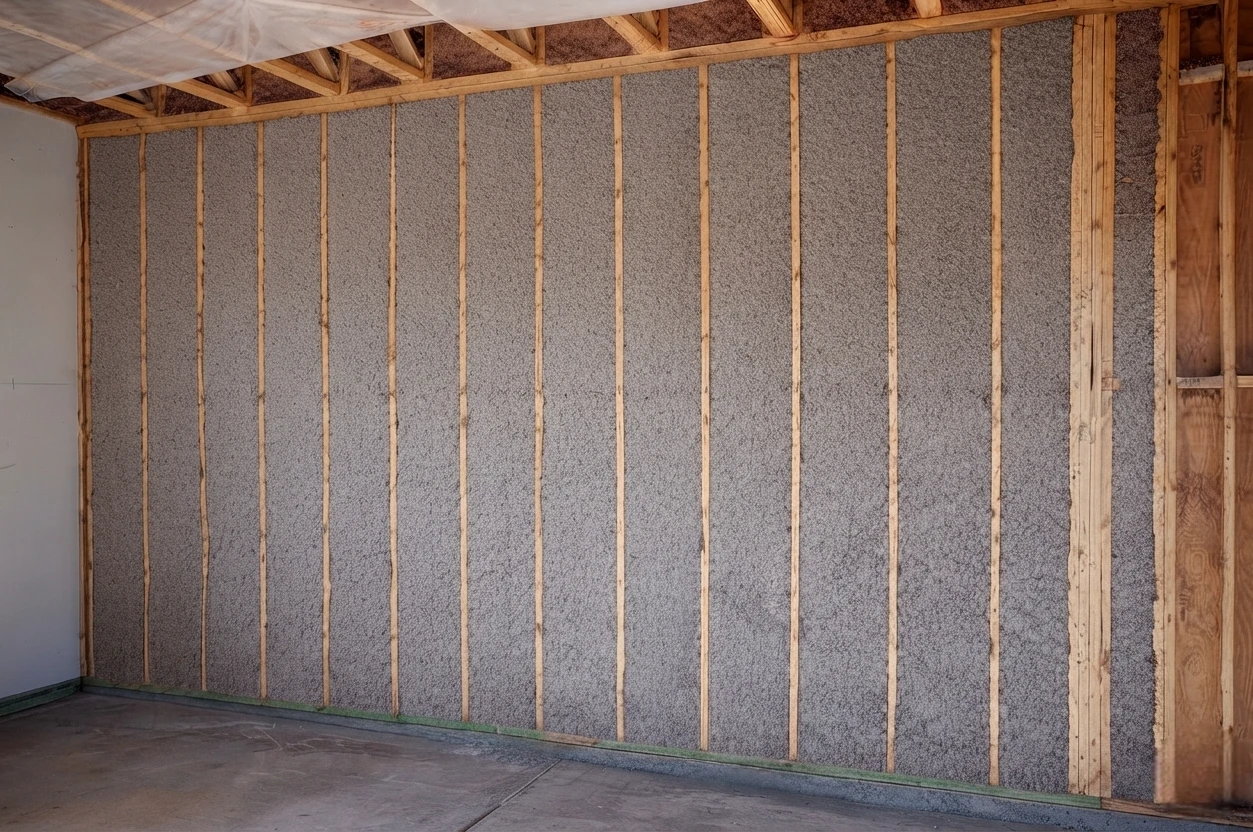
Cellulose home insulation gives Battle Ground homes strong R-value per inch, fills odd gaps and older closed walls well, and uses mostly recycled paper. The trade-offs are settling, water sensitivity, extra weight on ceilings, and dusty installs. In our wet marine climate, it works best in dry, air-sealed attics and walls, not damp crawl spaces.
Cellulose is shredded wastepaper, mostly old newsprint and boxes, treated with chemicals that resist fire and insects. The U.S. Department of Energy notes it must pass Consumer Product Safety Commission fire tests before it’s sold. It goes in three main ways:
Most cellulose home insulation benefits come from how the fibers pack in. They flow around wires, pipes ,and framing where batts leave gaps.
Settled cellulose delivers about R-3.2 to R-3.8 per inch, while loose-fill fiberglass sits near R-2.2 to R-2.7, according to PNNL’s Building America Solution Center. You need less depth for the same target, which helps near low eaves.
Many older homes have empty or half-filled wall cavities. Dense-pack cellulose goes in through small drilled holes, so you don’t tear off drywall or siding. DOE says walls filled at the proper density shouldn’t settle much.
Cellulose turns paper waste into insulation and takes less energy to make than many other types. Its density also slows air movement better than loose fiberglass, cutting small drafts around rafters.
The real cellulose home insulation drawbacks show up over time or during the install. None rules it out alone, but each changes how the job should be done.
Sources differ here. PNNL puts settling at 10 to 20 percent, while the older DOE fact sheet says about 20 percent and advises blowing in that much extra. PNNL’s range is newer, but planning for the higher number protects the R-value you paid for.
For example, a 15-inch layer that settles 20 percent ends up about 12 inches deep.
DOE reports cellulose can soak up 5 to 20 percent of its weight in water. One wetting can dry out with most of its R-value back, but repeated soaking cuts performance sharply and can lead to mold. A slow roof leak or a bath fan venting into the attic is the usual cause.
Settled cellulose weighs 1.5 to 2.0 pounds per cubic foot, compared with 0.5 to 1.0 for loose fiberglass. DOE warns that R-38 of cellulose on 1/2-inch drywall framed 24 inches on center could make the ceiling sag. Deeper layers aimed at R-60 add even more load, so check the ceiling first.
Dry cellulose throws fine dust during install and makes later wiring work messier. It also isn’t an air barrier by itself. DOE recommends sealing leaks with caulk and weatherstripping before insulating.
Battle Ground sits in Clark County, part of Washington’s marine Climate Zone 4C. Winters here are mild and damp rather than bitterly cold, so moisture control matters more than extreme-cold performance.
Local opinion is split. In a Green Building Advisor forum thread, Seattle-area builders called blown cellulose common in Northwest attics, while one homeowner said an installer refused it over water worries. That’s opinion, but it matches DOE’s moisture data: cellulose does fine in a dry, vented, air-sealed attic and poorly where water keeps getting in.
Code matters too. For new homes, the 2021 Washington State Energy Code, enforced since March 15, 2024, raised prescriptive ceiling insulation from R-49 to R-60 in Climate Zone 5 and Marine 4, according to the Insulation Institute.
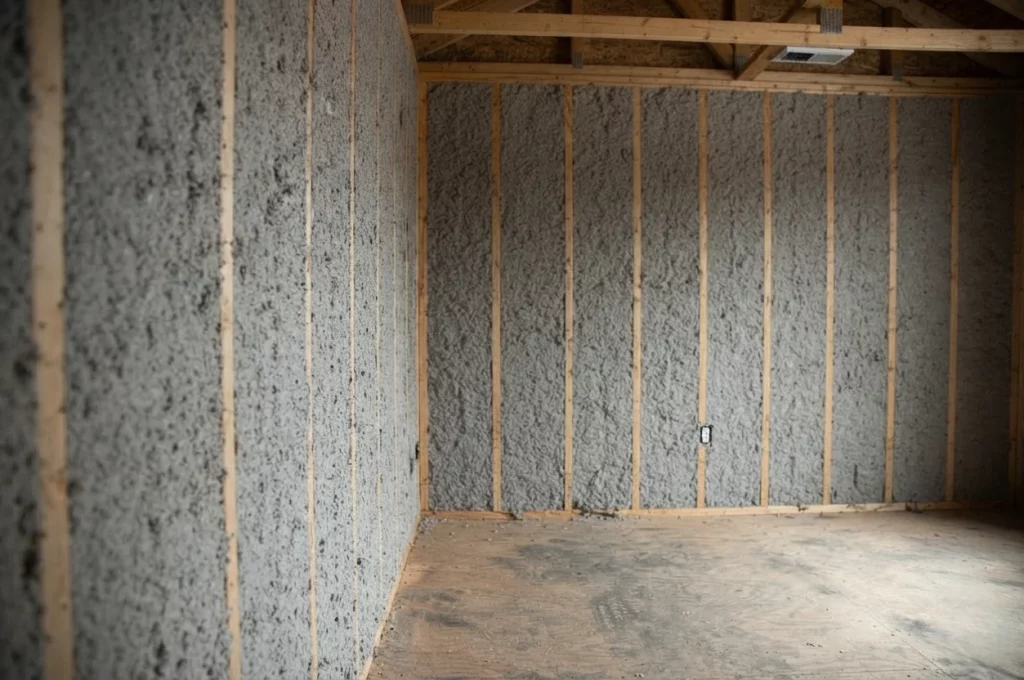
Cellulose and blown fiberglass are the two loose-fill residential insulation options most attic jobs come down to. Here’s how they stack up on the numbers that matter.
| Factor | Cellulose | Loose Fiberglass |
|---|---|---|
| Settled R-value per inch | R-3.2 to R-3.8 | R-2.2 to R-2.7 |
| Settled density (lb/ft³) | 1.5 to 2.0 | 0.5 to 1.0 |
| Typical attic settling | 10 to 20% | About 2 to 4% |
Spray foam is a third route that air seals and insulates in one pass, which suits rim joists where loose fill can’t stay put.
A good cellulose job depends on prep more than the bags. Check these points before anyone fires up a blower.
If you’re weighing cellulose against other materials, our team at Spray-On Foam & Coatings in Battle Ground, WA can look at your attic, walls ,or crawl space and tell you what fits. We offer free quotes, so you can compare options first.
Yes, in most cases, as long as the old layer is dry, mold-free and not vermiculite, which should be tested for asbestos first. Topping up an existing layer is a common way to add R-value without a tear-out.
Kept dry, cellulose can stay in place for decades. Attic layers may need a top-up later if settling drops the depth below your target.
Not reliably. The chemical treatment targets insects, but mice can still tunnel and nest in it, so sealing entry points matters more than the insulation type.
Attic loose-fill can be done with a rented blower, but hitting the right depth and density takes care. Dense-packing closed walls is much harder to get right without pro equipment and experience.
Usually not in Battle Ground’s damp crawl spaces, since loose cellulose can’t hang under a floor and picks up ground moisture. Crawl spaces need a material that stays in place and handles damp air.