

For commercial metal building insulation in Portland, closed-cell spray foam is often the strongest pick because it seals air leaks and resists moisture. Sealed fiberglass is the lower-cost option. Rigid board and reflective foil fit specific needs, and the right choice depends on how you heat and use the building.
Steel moves heat fast, and Portland winters are cool and wet. That mix makes moisture the first problem to solve, not the last.
When warm, humid indoor air touches cold steel panels, water can condense on the metal. That water can soak insulation, cut its performance, and feed rust. Good commercial insulation solutions control air and moisture first, then add R-value on top.
Code adds another layer. The Oregon Building Codes Division lists metal buildings as its own roof and wall category in its energy code checklist, so your assembly gets measured against specific required values.
Five options come up most often for steel buildings. Each solves a different problem, so the right pick depends on how you use the space and what you can spend.
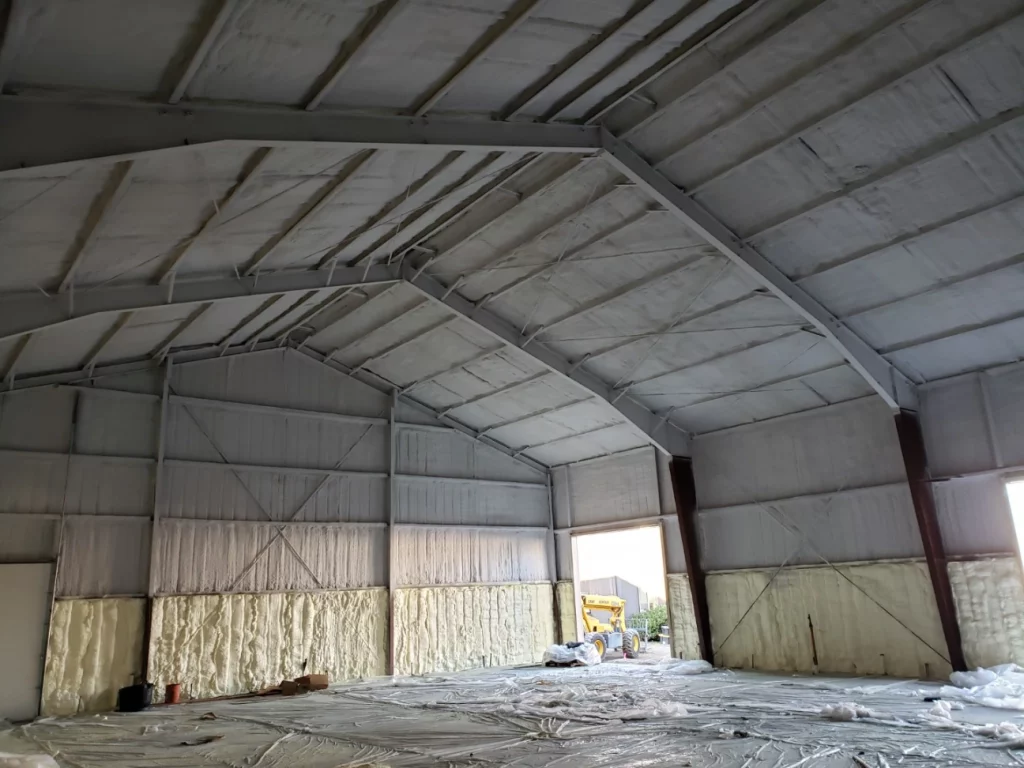
Owners on public forums split on spray foam. Some report no rust after ten years, while others worry that water entering through a fastener can sit between foam and steel. That’s user opinion, not proof, but it’s why any roof leaks should be fixed before foam goes on.
Start with how you use the space. A heated showroom and an open storage shed need very different things.
The DOE Building Energy Codes Program says code treats metal buildings as fully insulated regardless of heating or cooling level, and its R-value method calls for thermal spacer blocks on standing seam roofs. Ask whoever bids your job about both.
Mixed setups work too. Foam on the roof, where heat and condensation hit hardest, with sealed fiberglass in the walls is one combination that suppliers describe. It can trim cost without giving up moisture control where it matters most.
Price depends on the material, thickness, and roof height. We won’t guess at a flat price per square foot, because a quote without thickness and R-value isn’t a fair comparison.
Fiberglass usually costs least up front. Closed-cell foam, foam board, and insulated panels typically cost more. A higher price can pay back through lower energy bills and less moisture damage, but only if you heat or cool the building often enough.
A good material still fails when the details are wrong. Run through this list before anyone starts work.
Not sure which option fits your building? We can walk the space with you, talk through moisture, heat, and budget, and give you a free quote.
Need commercial insulation services Portland OR businesses can book without pressure? Reach out today.
Not by itself, and some owners report none after years. Foam bonds tight to steel, so a leak can hide behind it, which makes regular roof checks worth the time.
Fumes are a fair concern during application. Keep people out of the work area until the manufacturer’s cure and ventilation time passes.
It depends on the R-value you need and the material you pick. Closed-cell foam gives more R-value per inch, so it usually needs less thickness than fiberglass.
Yes. Foam and board can go on the inside face of existing walls and the underside of the roof, though old or wet insulation may need removal first.
Often, yes. Insulation that fills the cavity tends to dampen the drumming sound, and thicker layers usually help most.