

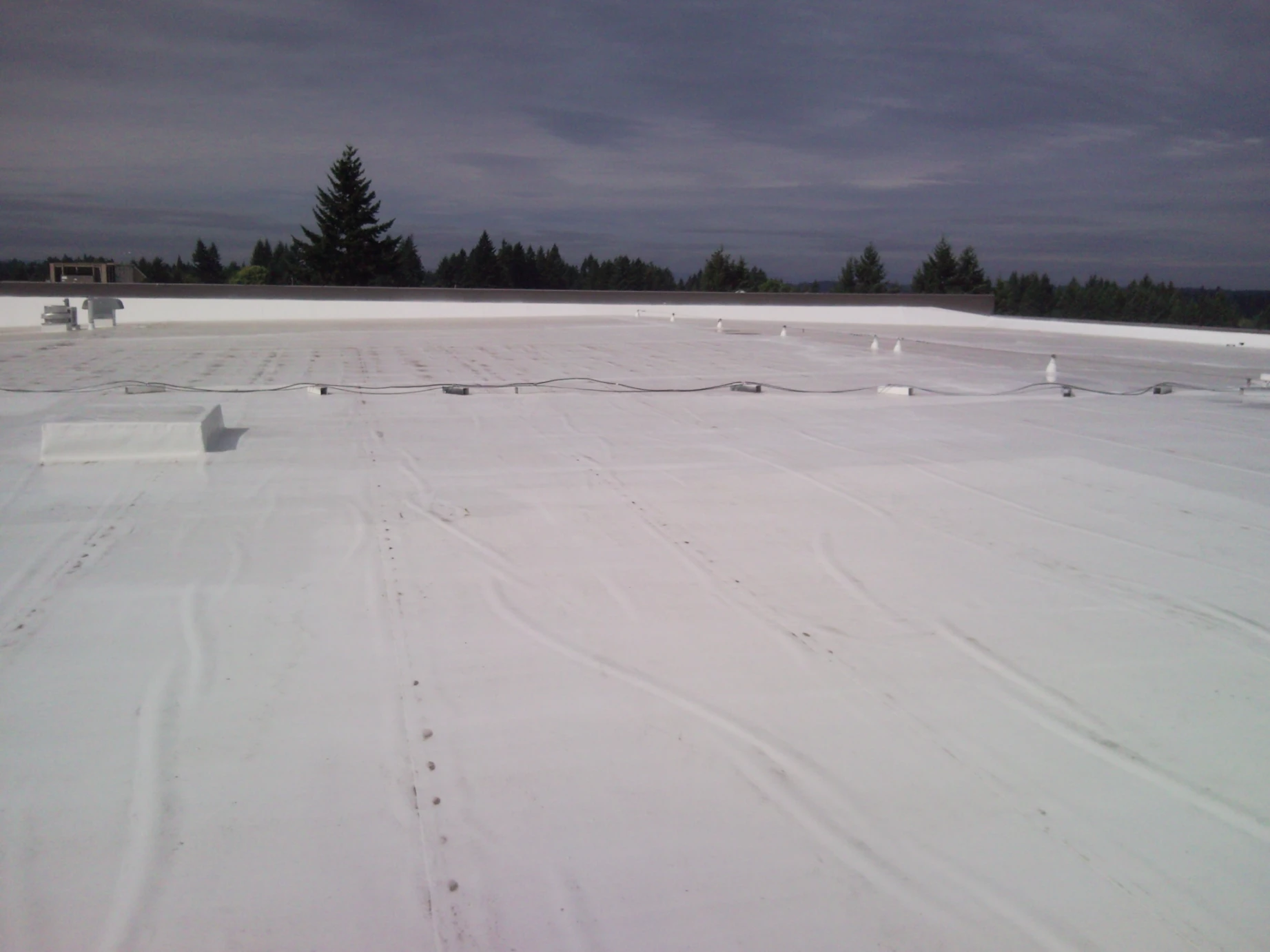
The most useful questions to ask before installing spray foam roofing cover five areas: whether your roof is a good fit, how the crew will prep and apply the foam and coating, how they’ll work around Washougal’s rain and wind, whether the contractor is registered and trained, and what upkeep the roof will need. Clear answers protect your building and your budget.
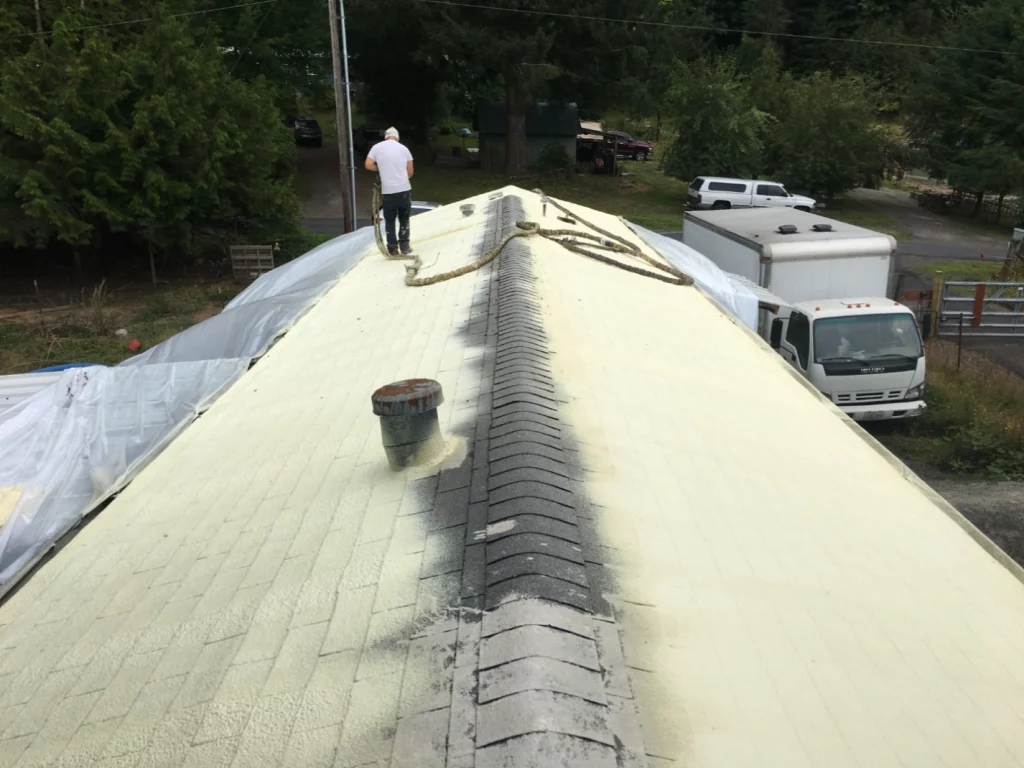
Spray polyurethane foam (SPF) is sprayed on as a liquid, expands, and cures into a hard layer. A protective coating then goes on top. Roofing foam is dense enough to walk on, and because it’s closed-cell, it blocks water and air. It forms one thick layer with no seams, joints or plies, so it will only leak if a hole goes all the way through. That’s why it’s popular on flat and low-slope roofs, where seams and standing water cause most leaks.
Good spray foam roofing installation starts with the roof underneath. These questions show whether a contractor plans to fix problems or just cover them up.
A single-layer roof can often be cleaned, prepped and foamed over, which avoids the mess and cost of a tear-off. When a roof has several old layers, stripping back to the sheathing is usually better because it lightens the load and gives the foam a smoother base. Ask which applies to your roof and why.
Moisture touching the foam during application can throw off the mix of the two components and leave a soft, spongy foam. On a recover job, moisture in the old roof has to be found through a proper moisture check. Ask what method they use, and how they’ll price rotted sheathing if they find some.
Low spots can be built up with extra foam, but only if the contractor maps the high and low areas first. Spraying the same thickness everywhere leaves the low spots in place, so water keeps pooling. If your quote doesn’t mention drainage, ask.
Two numbers matter most on any SPF quote: foam thickness and coating thickness. Get both in writing so you can compare bids fairly.
According to the Journal of Light Construction, roofing foam provides about R-6.5 per inch, and a typical layer is around 1.5 inches, with some areas getting more. Ask for the target thickness and how they’ll prove it was met. Asking the roofer to gauge the foam in several spots and show you the results is a fair request.
Foam breaks down under sunlight, so the coating does the real work against weather. Ask for the coating type, its thickness in mils, and the number of coats. The full foam thickness and the base coat should go on the same day, with large roofs split into sections that can be finished daily.
These details cause many foam roof problems. Ask about new edge metal, raising skylight curbs above the foam, and setting rooftop equipment on proper curbs so it can be replaced without damaging the roof.
Washougal’s wet seasons and Columbia Gorge winds make scheduling a real issue. Weather often decides when spray foam roofing Washougal WA projects can start.
The roof surface needs to be fully dry and above 50°F, with little or no wind, and good applicators shut down when conditions aren’t right. Many specs also say foam and coating shouldn’t go on when air temperature and dew point are within 5°F, and call for windscreens when wind affects quality. Ask what readings they take on job day. Drier summer months usually give the most reliable windows here.
Also ask how they’ll protect cars, siding and neighboring property. Lightweight foam can drift a long way, and it’s hard to clean off.
The crew matters as much as the material. Ask these before you sign anything.
Roofing foam goes on outside, but vapors can still drift in through vents, windows and rooftop units.
The EPA advises that occupants leave during SPF roofing installation and stay out until the foam has cured and the building is aired out. Some manufacturers suggest 24 hours, but times vary by product. Its guidance mainly covers indoor spray foam insulation in Washougal, so ask your contractor how it applies to a roof job, and whether HVAC intakes will be shut off and covered.
The top coating typically needs renewing every 10 to 15 years, and upgraded systems can stretch that to 20. Ask how often they recommend inspections and what to watch for. Some crews tint the base coat so it shows through when the top coat wears thin.
| Topic | Ask This |
|---|---|
| Roof condition | Tear-off or spray over? |
| Moisture | How will you check for it? |
| Drainage | How will you fix ponding? |
| Foam | Target thickness and proof? |
| Coating | Type, mils, same-day base coat? |
| Weather | What stops the job? |
| Contractor | WA registration and SPF certification? |
| Upkeep | Recoat schedule? |
If you’re weighing a foam roof, bring these questions to us. Spray-On Foam & Coatings offers spray foam roofing services for homes and businesses in Washougal, WA. We’ll look at your roof, answer every question on this list, and give you a free quote. Call (360) 667-1993 or email [email protected] to get started.
Yes. Cured roofing foam is firm enough for foot traffic. For areas that get regular traffic, granulated walkways or walk pads are recommended.
It depends on roof size, prep work and weather. The base coat usually cures overnight before the top coat goes on. Rain delays and repairs can add days.
Yes. It works on sloped roofs, but since it doesn’t look like shingles, most owners use it on low-slope roofs where it isn’t seen.
Because coated foam is fully adhered and doesn’t readily soak up water, a cut or puncture usually doesn’t cause a leak. It should still be patched quickly so sun and weather don’t widen the damage.
They can peck at exposed foam. Embedding mineral granules in the top coat helps stop pecking and also adds wear resistance.