
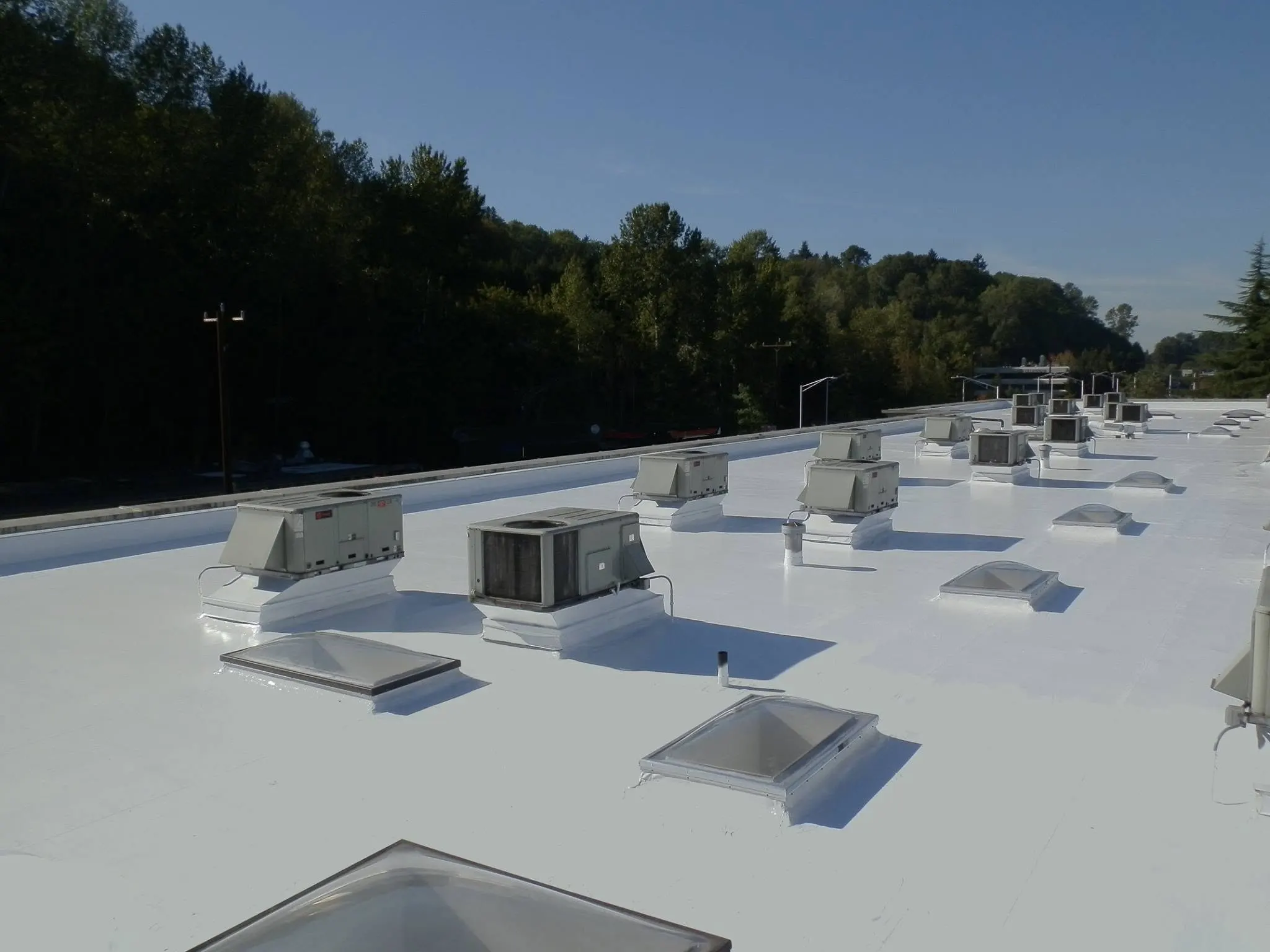
Spray foam roofing materials fall into three main parts: the roof substrate, the sprayed polyurethane foam, and a coating or covering on top. The foam is made on site from two liquids, and granules or chips are often pressed into the wet coating for traction, durability and fire resistance.
Most people picture spray foam as one product. In reality, SPF roofing system work as a stack, and each layer has its own job.
| Layer | Material | Main Job |
|---|---|---|
| Substrate | Concrete, metal, wood deck or old roof | Holds the system |
| Foam | Closed-cell polyurethane | Insulation and waterproofing |
| Top surface | Elastomeric coating, often with granules | UV, weather and foot traffic protection |
If one layer is wrong, the whole roof suffers. Good foam over a wet deck won’t stick, and good foam with a thin coating will weather early.
Polyurethane foam roofing starts as two drums of liquid, not a roll or a panel. The crew heats and pumps both liquids through hoses, and they react the moment they mix.
SPF products are roughly half Side A and half Side B, and Side A holds highly reactive chemicals called isocyanates. For roofing foam, the A component is usually polymeric diisocyanate, known as p-MDI.
According to the U.S. EPA, Side B carries a polyol that reacts with the isocyanate to form polyurethane, plus catalysts to drive the reaction, flame retardants, blowing agents and surfactants. Those polyols come from both petroleum and agricultural sources.
Blowing agents matter more than most owners realize. They create the tiny gas cells that give foam its insulating power. Some newer roofing foams use HFO blowing agents; BASF lists one with a global warming potential below 1.
Not every spray foam belongs on a roof. Wall foam is softer and lighter, while roof foam has to handle rain, foot traffic and hail.
Roofing SPF is a rigid, closed-cell foam that usually runs between 2.5 and 4.0 pounds per cubic foot. The EPA’s product chart lists high-density 3 lb closed-cell foam as the roofing grade, compared with half-pound open-cell foam used for insulation.
Thickness is part of the material spec too. Foam should be at least 1 inch thick and is usually thicker to meet R-value targets and improve drainage. On R-value, GAF puts coated SPF at about R-6.1 to R-7.0 per inch, which is a manufacturer figure, so check your product’s data sheet.
The foam does the insulating, but the coating takes the beating. Skipping or skimping on it is one of the fastest ways to shorten a foam roof’s life.
The IBHS RICOWI Roof Guide explains that sunlight’s UV rays break down exposed foam over time, so SPF roofs get a UV-protective coating or a layer of aggregate. Common coatings over SPF include acrylic, butyl, silicone, polyurethane and polyurea.
Coating thickness is measured in dry mils. One BASF spec, for example, calls for at least two coats of silicone totaling 20 dry miles. Your manufacturer’s spec sets the real number, and warranties often depend on hitting it.
These extras are small line items, but they change how the roof performs. Ask about each one on your quote.
Granules or chips are usually broadcast into the wet coating so they lock in place, adding traction, durability and fire resistance. Some systems skip coating and use stone instead, since aggregate can supplement a coating or serve on its own, using mixed gravel or slag sizes up to about 3/4 inch.
Primers help foam or coating bond to tricky surfaces. They’re often needed when foam sits uncoated too long before topcoating, so timing on the job matters.
The substrate is a material too, and it must be ready before a drop of foam goes down. Foam can be sprayed straight onto a roof deck or onto a properly prepared existing roof membrane.
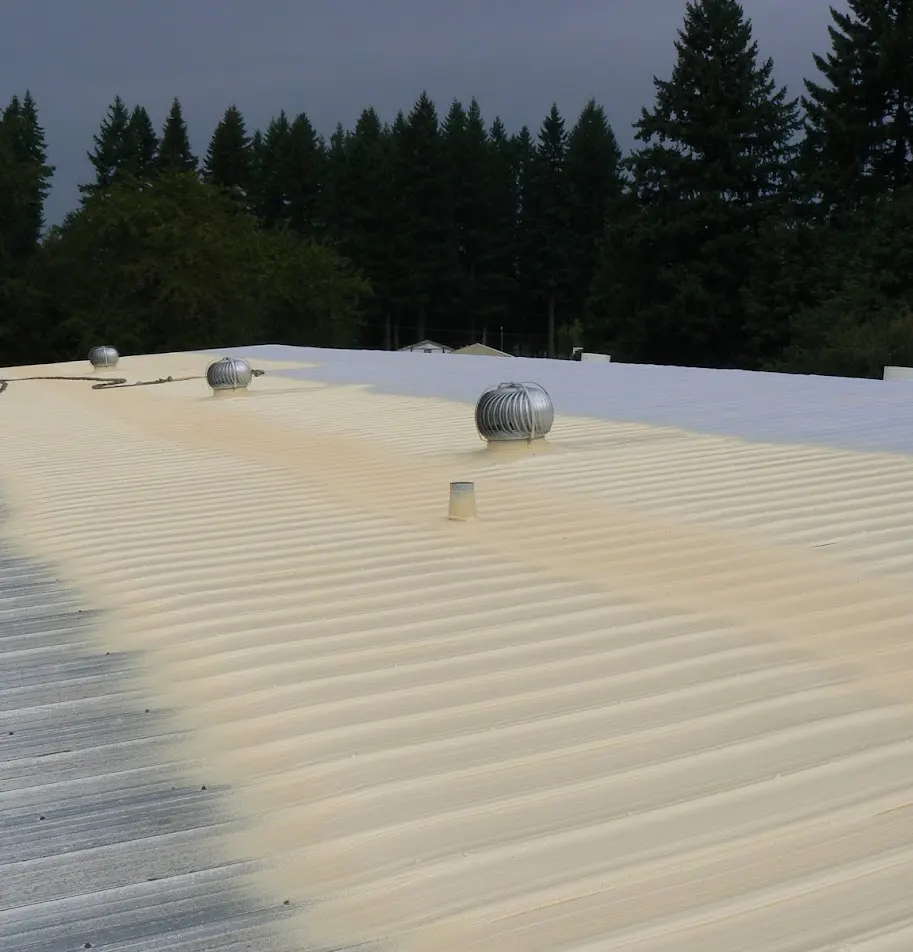
That means clean, dry and sound. Drainage counts as well: the ICC-ES evaluation report ESR-3392 states that the system it covers is sprayed on roofs with a slope of at least 1/4 inch per 12 inches.
Weather limits apply to the materials. One manufacturer spec says foam and coating shouldn’t go down in rain, snow, fog or mist, and never when wind tops 25 mph.
Once cured, foam is a stable plastic. The risk is during spraying, which is why crews wear respirators and keep others away.
The EPA says isocyanate exposure may irritate the skin, eyes and lungs and can trigger asthma and sensitization. People with skin conditions, respiratory allergies, asthma or prior isocyanate sensitization should review product details carefully before an SPF job. Ask your contractor how they’ll handle air intakes, schedules and building occupants on spray days.
Use this list to compare quotes on equal terms:
If you’re weighing foam for a new roof or a recover, the right mix of foam, coating and granules depends on your deck, drainage and how the roof gets used. Spray-On Foam & Coatings offers free quotes and can walk you through each material on your estimate. Call (360) 667-1993 or email [email protected] to set one up.
Life depends mostly on coating upkeep. One supplier quotes 30 to 40+ years with proper maintenance, which usually includes periodic recoating.
Yes. Inspect yearly for blisters, worn coating or exposed foam, and fix damaged spots before water or UV reach the foam.
Often, yes. A prepared existing membrane can serve as the substrate, which can avoid a full tear-off if the old roof is dry and sound.
It’s mixed. Some polyols come from farm sources and newer blowing agents have very low global warming potential, but the base chemicals are still largely petroleum-based.
Yes. Call (360) 667-1993 or email [email protected] to request a free quote for a new foam roof, a recover or a recoat.