
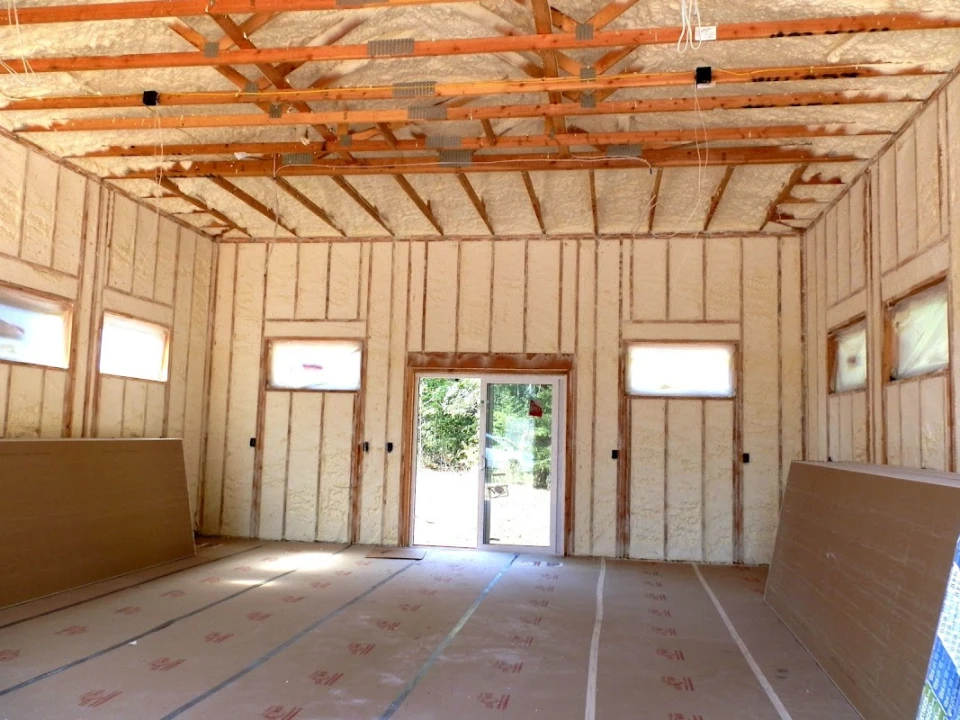
Yes, spray foam insulation is combustible and will burn if exposed to sufficient heat or open flame. However, modern spray polyurethane foam contains built-in flame retardants that slow ignition and limit flame spread. When spray foam is installed correctly and covered with code-required thermal barriers or ignition barriers, it meets strict fire safety standards established by the International Code Council and the National Fire Protection Association. The real risk comes from improper installation, missing barriers, or exposure to extreme heat during or after construction.
Spray polyurethane foam is created through a chemical reaction between two liquid components. The A-side contains methylene diphenyl diisocyanate, while the B-side contains polyols, amine catalysts, blowing agents, surfactants, and flame retardants. Because the finished product is an organic polymer, it behaves similarly to other carbon-based building materials like wood, rubber, or fabrics when exposed to fire. The American Chemistry Council’s Center for the Polyurethanes Industry states that all organic foam insulation, regardless of flame retardant content, should be considered combustible and handled accordingly.
That said, the flame retardants blended into the formulation make a meaningful difference in how the foam performs during a fire. According to the National Institute of Standards and Technology (NIST), flame retardants can constitute up to 12% of the reacted foam by mass. These additives do not make spray foam fireproof. Instead, they raise the ignition temperature and slow the rate at which flames travel across the surface.
The two main types of spray foam differ slightly in fire behavior:
Neither type should ever be left exposed in an occupied space without an approved thermal barrier.
Spray foam products are evaluated using the ICC 1100 standard, which references ASTM E84 (also known as UL 723). This is the standard tunnel test used to measure two key properties of building materials when exposed to flame:
| Property | What It Measures | Typical SPF Range |
|---|---|---|
| Flame Spread Index (FSI) | How quickly flames travel across the surface | 15 to 25 (Class 1/Class A) |
| Smoke Developed Index (SDI) | How much smoke is produced during combustion | 300 to 450 |
A flame spread index of 25 or below and a smoke developed index of 450 or below qualifies spray foam for a Class 1 (also called Class A) rating. This is the highest classification available for spray foam products.
It is important to understand that ASTM E84 is a controlled laboratory test. The Connecticut Building Officials Association notes that these ratings are not representative of actual fire conditions. In a real fire, temperatures, ventilation, and surrounding materials all affect how spray foam behaves. This is exactly why building codes require additional barriers rather than relying on the foam’s standalone fire rating.
When spray foam burns, it produces more than just heat and visible smoke. The EPA warns that fires involving spray polyurethane foam may release isocyanates, hydrogen cyanide, amines, carbon monoxide, carbon dioxide, and nitrogen oxides into the air. Many of these gases are toxic or lethal at elevated concentrations.
This applies to fully cured foam as well. The EPA notes that heat-generating processes such as drilling, welding, soldering, grinding, sawing, or sanding on or near cured spray foam can generate these same airborne chemicals. Maintenance workers, plumbers, and electricians performing hot work near spray foam insulation need to take appropriate precautions.
Fire departments have issued advisories requiring the use of full-supplied air respirators when fighting polyurethane fires, according to EPA guidance. This means that even after a fire is extinguished, the air in a building with burned spray foam can remain hazardous.
Building codes treat spray foam like any other foam plastic insulation and require protective coverings. Understanding the difference between these two barrier types is essential for code compliance and fire safety.
Thermal Barrier Requirements (IBC 2603.4 / IRC R316.4)
A thermal barrier must separate spray foam from all occupied interior spaces. The prescriptive standard is half-inch gypsum wallboard, which covers more than 95% of applications. The barrier must limit the temperature rise on the unexposed foam surface to 250 degrees Fahrenheit after 15 minutes of fire exposure, as tested per ASTM E119 or UL 263. It must also remain in place for at least 15 minutes during large-scale fire tests such as NFPA 286, UL 1715, UL 1040, or FM 4880.
Ignition Barrier Requirements (IBC 2603.4.1.6 / IRC R316.5.3)
In spaces with limited access, such as certain attics and crawlspaces where entry is only for utility service, the code allows a reduced level of protection called an ignition barrier. Prescriptive ignition barriers include materials like one-and-a-half-inch mineral fiber insulation, quarter-inch wood structural panels, or three-eighths-inch gypsum board.
An ignition barrier is not interchangeable with a thermal barrier. The ignition barrier does not provide the same 15-minute thermal protection. The barrier type required depends entirely on the specific application and whether occupants have regular access to the space.
| Barrier Type | Required In | Minimum Prescriptive Option | Key Test |
|---|---|---|---|
| Thermal Barrier | All occupied interior spaces | 1/2″ gypsum wallboard | ASTM E119 (250 degrees F / 15 min) |
| Ignition Barrier | Limited-access attics and crawlspaces | 1.5″ mineral fiber or 1/4″ wood panel | AC-377 Appendix X |
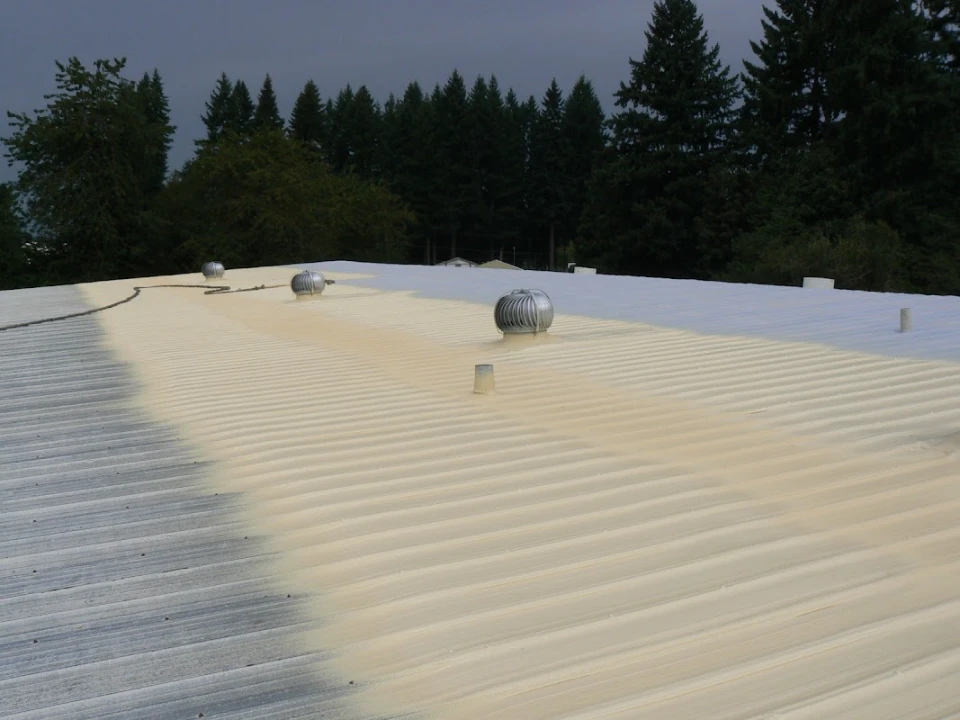
The CPSC recommends that homeowners and building occupants vacate the premises during and for at least 24 hours after spray foam application. This re-occupancy guidance applies to safety during the curing process, but fire safety considerations continue well beyond installation.
During construction, spray foam can be exposed to ignition hazards from welding, cutting torches, and other hot work performed by allied trades. Trades performing hot work near spray foam should comply with NFPA 51B, which governs fire prevention during welding, cutting, and other hot work operations.
After construction is complete and the building is occupied, spray foam should never be in direct contact with or immediately adjacent to combustion equipment such as furnaces, chimneys, or high-temperature process piping unless specifically designed for that application. Any renovation or demolition work in a building containing spray foam should account for the presence of foam insulation and the risks associated with disturbing it.
When evaluating whether an installation has been done correctly, look for these indicators:
| Building Type | Key Fire Safety Concern | Recommended Action |
|---|---|---|
| Residential new construction | Exposed foam in wall cavities before drywall goes up | Ensure thermal barriers are installed before occupancy |
| Crawlspace and attic retrofits | Foam applied in confined, hard-to-reach spaces | Verify correct ignition or thermal barrier per code |
| Commercial buildings | Higher occupancy means more at stake during a fire | Use UL-listed assemblies and follow IBC requirements strictly |
| Agricultural and pole barn structures | May have different code requirements or exemptions | Confirm local code applicability and barrier needs |
Fire safety is not an area to cut corners or guess at code requirements. Our team at Spray-On Foam & Coatings has the training and experience to install spray foam insulation that meets all ICC and NFPA fire safety standards for homes and buildings in the Vancouver, WA, and Portland, OR areas. Every project we complete includes proper thermal and ignition barriers specified by the product’s Evaluation Service Report, so your insulation performs safely for the life of the building. Call us at (360) 667-1993 or email [email protected] to discuss your project.
Request a Quote | Schedule a Safety Consultation
Spray foam is combustible and will ignite when exposed to sufficient heat or open flame, but modern formulations contain flame retardants that slow ignition and limit flame spread. When covered with a code-approved thermal barrier, the assembled system meets rigorous fire safety requirements.
It depends on the type of attic and how it is used. If the attic has limited access and is only entered for utility service, an ignition barrier may suffice. If the attic is used for storage or has a finished floor, a full 15-minute thermal barrier is required between the spray foam and any occupied space below.
Closed-cell foam has a denser structure that may slow combustion in some scenarios, but both types are classified as combustible. Neither type should be left exposed in occupied spaces without an approved thermal barrier, regardless of cell structure or density.
Burning spray foam releases toxic gases, including hydrogen cyanide, isocyanates, carbon monoxide, and nitrogen oxides. Fire departments require full supplied-air respirators when fighting polyurethane fires because of these hazardous combustion products.
Once fully cured, spray foam is considered relatively inert. However, the NIST has documented measurable emissions of flame-retardant chemicals from open-cell spray foam more than two years after application. Proper curing time, ventilation, and barrier coverage all reduce exposure risk.