
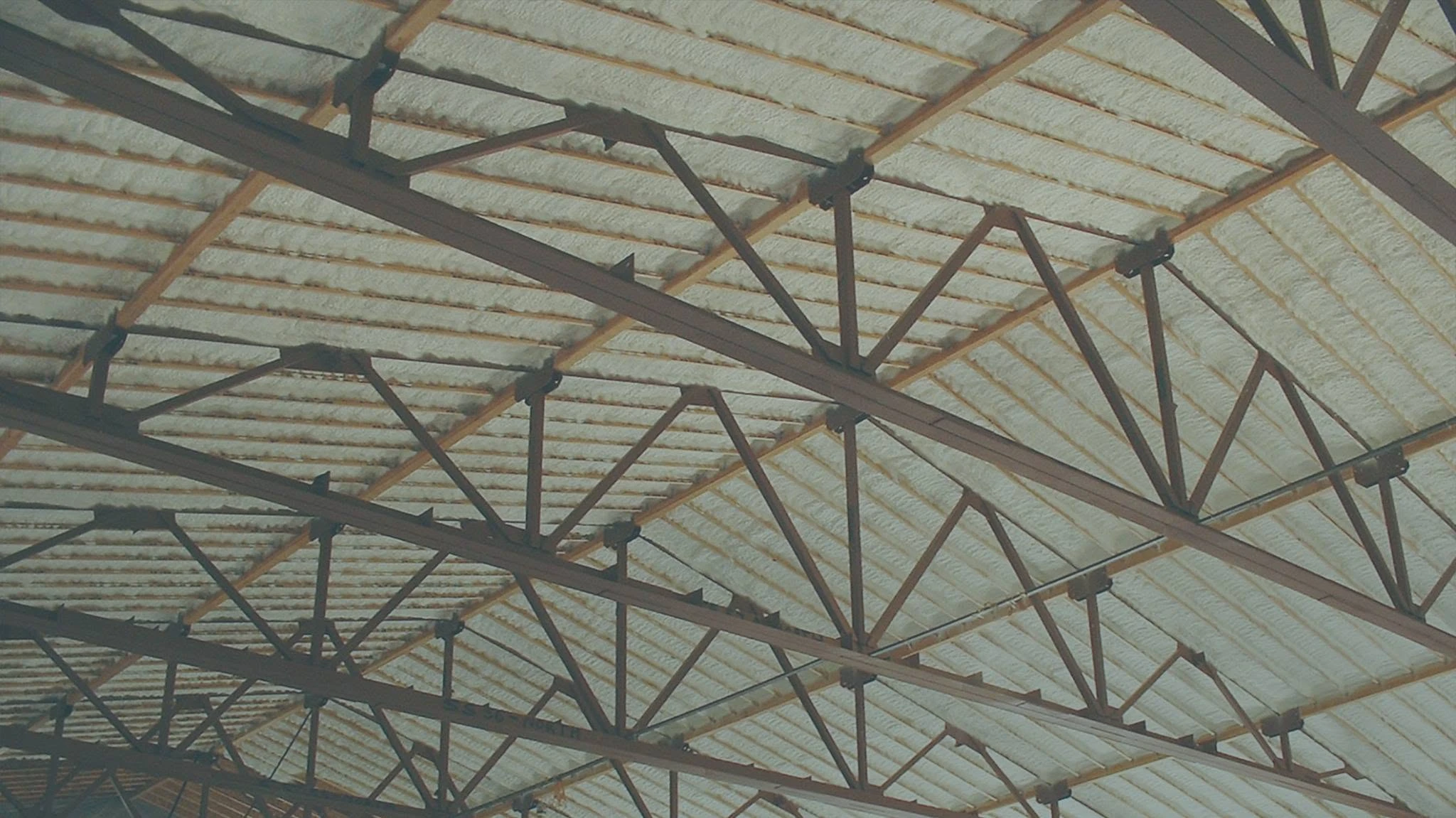
Most homeowners can safely re-enter a room 24 hours after spray foam insulation has been installed, though the actual wait time depends on the type of foam applied, the thickness of the application, the room size, and how well the space is ventilated. Some projects require 48 hours or more before the area is fully safe for unprotected occupants. The EPA advises that no one should re-enter until the product has finished curing and the building has been adequately ventilated and cleaned, and recommends consulting the contractor for specific guidance on your project.
Spray polyurethane foam (SPF) is applied as a liquid mixture of two chemical components. When these components meet, they react, expand, and harden into a solid insulation material. During that reaction, the foam releases vapors, aerosols, and mists that contain chemicals called isocyanates. These chemicals are powerful irritants to the eyes, skin, and respiratory tract and can sensitize workers and building occupants, meaning future exposures could trigger severe asthma attacks even at low levels.
The NIOSH resource on isocyanates notes that both respiratory and dermal exposures can lead to sensitization, and death from severe asthma in sensitized individuals has been reported. This is why the EPA requires all unprotected occupants and other workers to vacate the premises during installation.
Once the foam cures completely and cools to room temperature, it becomes an inert solid. Fully cured spray foam does not release harmful levels of isocyanates under normal conditions. The concern is exclusively during and immediately after application, while the chemical reaction is still underway.
The type of spray foam used on your project has a direct impact on how long you need to stay out. The table below outlines the general timeline differences between the two main spray foam categories.
| Foam Type | Typical Minimum Wait | Full Safety Window | Notes |
|---|---|---|---|
| Open cell | 12 to 24 hours | 24 to 48 hours | Lower density, cures faster, less off-gassing volume |
| Closed cell | 24 hours | 24 to 72 hours | Higher density, thicker application, longer cure time |
| Single-component (DIY cans) | 8 hours | 8 to 24 hours | Smaller volume, but still requires ventilation |
The EPA notes that some manufacturers recommend 24 hours after application for two-component high-pressure professional SPF systems before workers re-enter without protective equipment and before residents return. For single-component foam products (small cans), cure time can be approximately 8 to 24 hours. However, the EPA also states that re-entry time depends on product formulation and factors that affect curing rates, and that more research is needed to account for the potential variability of curing rates.
Several variables determine exactly how long your specific project will take to become safe. Understanding these helps you plan and avoid premature re-entry.
Temperature and humidity are two of the biggest factors. Spray foam cures through a chemical reaction that is temperature-dependent. In cooler conditions, the reaction slows down, extending the cure time. High humidity can also interfere with the curing process, trapping moisture and prolonging off-gassing.
Foam thickness matters because thicker applications contain more chemical material that must react and cure. A 2-inch layer of closed-cell foam in a commercial warehouse will take far longer to off-gas than a half-inch application in a residential wall cavity.
Room size and ventilation play a major role. Smaller, enclosed rooms with limited airflow trap vapors longer than large open spaces with cross-ventilation. The EPA ventilation guidance for SPF explains that properly designed ventilation can reduce airborne levels of aerosols, vapors, and mists, and that ventilation should continue following application until the material has fully cured and vapors have been removed.
Product formulation varies between manufacturers. Each spray foam product has its own specific curing characteristics, and the only reliable source for your exact product’s re-entry time is the manufacturer’s safety data sheet and your contractor’s guidance.
Going back into a space before the foam has fully cured puts you at risk of exposure to uncured isocyanates and other chemical vapors. The Laborers’ Health and Safety Fund of America (LHSFNA) documents that symptoms of isocyanate exposure can include wheezing, shortness of breath, coughing, eye and lung irritation, fever, stuffy nose, sore throat, and chest tightness.
Particularly vulnerable groups include:
Once the foam is fully cured and the space has been ventilated and cleaned, the EPA confirms that polyurethane foam is considered inert and safe for building occupants.
When we install spray foam insulation, we follow a structured process to make sure your home or building is ready for you to return safely. We isolate the work area with proper barriers, maintain ventilation throughout the curing period, and give you a clear re-entry timeline before we start any work. We also review the manufacturer’s safety data sheet for every product we use so we can give you an accurate recommendation rather than a generic estimate.
Our crew cleans the work area thoroughly before allowing re-entry, removing any dust or particles that may contain residual isocyanates. We seal off HVAC openings during installation to prevent chemical migration through your ductwork, and we restart and unseal your system only after confirming the space is safe.
Different spaces in your home or building present different re-entry considerations.
| Room / Space | Typical Wait | Special Considerations |
|---|---|---|
| Attic | 24 to 48 hours | Often isolated from living areas, easier to ventilate through roof vents |
| Crawl space | 24 to 48 hours | Enclosed environment with limited airflow; may require extended ventilation |
| Basement | 24 to 72 hours | Limited natural ventilation; humidity levels can slow curing |
| Exterior wall cavities | 24 hours | Small volume of foam per cavity; lower overall off-gassing |
| Open floor plan | 24 to 48 hours | Large spaces aid ventilation but require more foam material |
| Commercial building | 48 to 72 hours | Thick foam layers and large volumes require longer cure and ventilation |
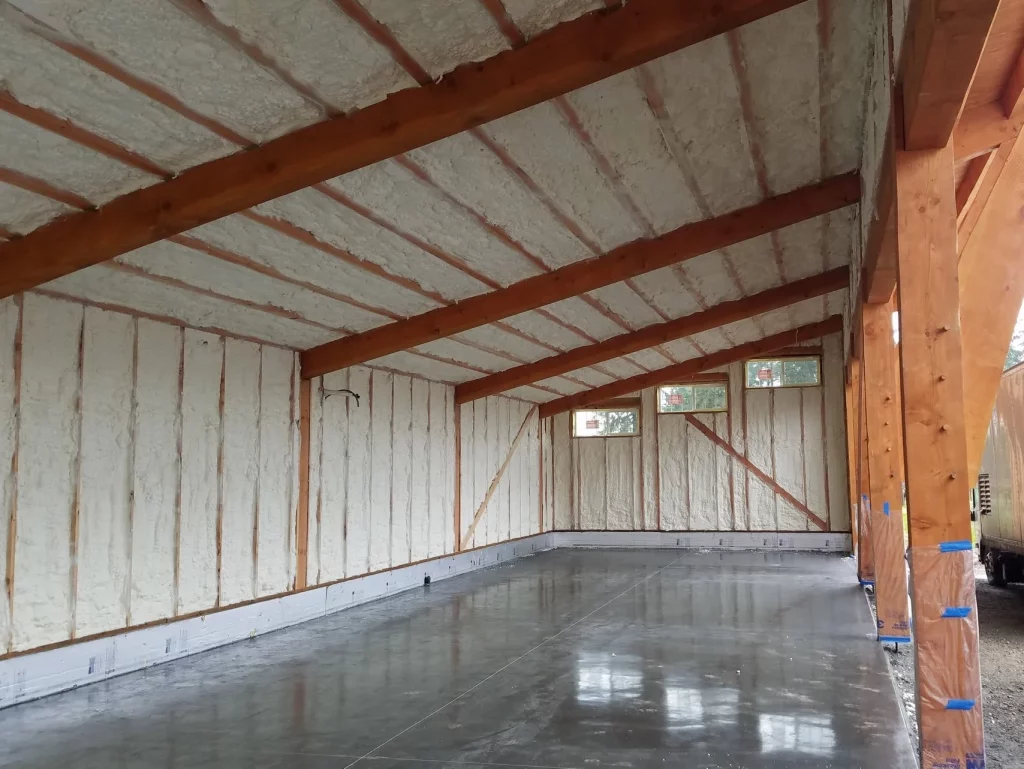
There is no substitute for your contractor’s go-ahead, but a few practical indicators can give you confidence that the space is safe:
If you notice lingering odors after your expected re-entry date, extend the wait and increase ventilation before going back in. Continuing odors may indicate incomplete curing or inadequate ventilation, and you should contact your installer to investigate further.
A qualified spray foam contractor will address re-entry safety well before the installation date. Here is what to look for when evaluating a provider:
These practices indicate a contractor who takes occupant safety seriously and will give you reliable guidance specific to your project.
Planning a spray foam insulation project in the Vancouver or Portland metro area? Our team at Spray-On Foam & Coatings will walk you through every step of the process, including exactly how long you will need to stay out of each treated space and what to expect during curing and ventilation. We handle closed-cell spray foam, open-cell spray foam, pole barn insulation, crawl space insulation, and air sealing for homes and commercial buildings throughout Southwest Washington and the Portland metro area.
Request a quote for your insulation project or schedule a consultation so we can assess your space and provide a detailed plan with accurate re-entry timelines.
Email us at [email protected] or call us at (360) 667-1993 to get started. We will make sure you know exactly when you can safely return to every room in your home or building.
The EPA recommends that all building occupants vacate during installation. Even if only one room is being treated, vapors can migrate through the building, so full vacating is the safest approach.
Most odors dissipate within 24 to 48 hours with proper ventilation. If you still notice a chemical smell after that window, contact your installer before re-entering the space.
Yes. Once the foam has fully cured and the area is ventilated and cleaned, it is an inert material that poses no health risk to babies, pets, or any other occupants.
You could be exposed to uncured isocyanates, which cause eye, skin, and respiratory irritation. Repeated exposure can lead to sensitization and asthma-like symptoms that may be permanent.
You cannot safely accelerate the chemical reaction, but you can improve ventilation to clear fumes faster once curing is underway. Your contractor should set up proper airflow before and after application.