
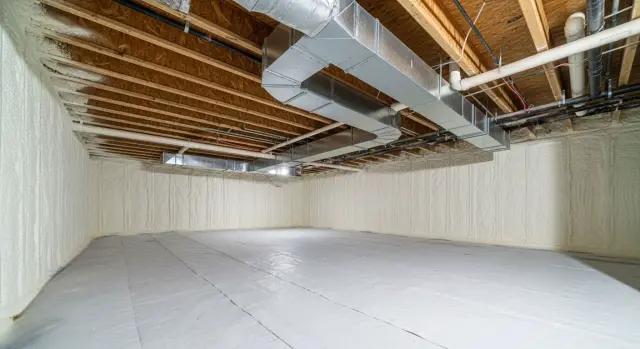
Crawl space insulation in Battle Ground, WA typically ranges from $1,500 for smaller, straightforward projects to $35,000 for large or complex encapsulations and insulation upgrades. Most homeowners in the area pay around $5,500 for a standard crawl space insulation job. Because Battle Ground sits in IECC Climate Zone 4C, a marine climate with cool, wet winters, building codes and energy efficiency standards require specific insulation levels that directly influence the materials, labor, and overall scope of each project. Understanding what drives the price helps you compare quotes accurately and avoid surprises.
Battle Ground, WA, experiences the same marine climate as the broader Portland-Vancouver metro area: cool, wet winters, mild summers, and consistently high humidity levels. The U.S. Department of Energy classifies this region as Climate Zone 4C, which means crawl space insulation must meet specific performance standards outlined in the building code.
Under the 2015 IECC requirements referenced by the Building America Solution Center, crawl space walls in Climate Zone 5 and Marine Zone 4 must achieve R-15 for continuous insulation or R-19 for insulation installed between wall framing. These are minimum code requirements, and many contractors and homeowners choose to exceed them for better comfort and energy performance.
The moisture-heavy climate in Clark County means crawl spaces are particularly vulnerable to condensation, mold growth, and wood rot. The EPA states that moisture control is the key to mold control, and a properly sealed and insulated crawl space is one of the most effective ways to keep humidity from infiltrating your living areas.
Crawl space insulation pricing in Battle Ground is not typically quoted as a flat per-square-foot rate across the board. Instead, spray foam insulation is priced per board foot, which accounts for both the surface area and the thickness of the application. One board foot equals one square foot of surface covered with one inch of foam.
| Insulation Type | Low End | Average | High End |
|---|---|---|---|
| Closed-cell spray foam | $1.20 per board foot | $1.50 per board foot | $3.00 per board foot |
| Open cell spray foam | $0.28 per board foot | $0.32 per board foot | $0.75 per board foot |
A comprehensive crawl space insulation quote from a qualified contractor should cover more than just the foam itself. Here is what a complete pricing breakdown typically includes:
Material costs
Labor and equipment
Code compliance and best practices
Several variables determine where your specific project falls within the pricing range. Understanding these factors helps you evaluate quotes and plan your budget realistically.
Project size and foam thickness: This is the single largest cost driver. Larger projects with higher R-value requirements need more material and labor. However, there is an economy of scale: the bigger the project, the lower the cost per board foot tends to be.
Insulation type selection: Closed-cell spray foam delivers roughly R-6 to R-7 per inch and acts as both an insulation layer and a vapor barrier. Open-cell spray foam delivers roughly R-3.5 to R-3.7 per inch and is less expensive per board foot, but it does not serve as a vapor retarder on its own. In Battle Ground’s humid climate, closed-cell is often the recommended choice for crawl space walls and rim joists.
Access and site conditions: Crawl spaces with limited clearance, uneven terrain, standing water, or obstructed access require additional labor and safety measures. Projects with easy access and straightforward layouts cost less.
Moisture remediation needs: If your crawl space has existing water intrusion, mold growth, or deteriorated insulation, those issues must be addressed before new insulation is installed. Drainage correction, mold cleanup, and vapor barrier installation add to the total.
Scheduling flexibility: Contractors may offer lower pricing for projects with flexible timelines that allow for efficient scheduling alongside other work.
| Scenario | Crawl Space Size | Scope of Work | Estimated Project Cost |
|---|---|---|---|
| Small retrofit home | 400-600 sq ft | Closed-cell foam on walls, air sealing, and a vapor barrier | $3,500 |
| Mid-size family home | 800-1,200 sq ft | Closed-cell foam walls, rim joist sealing, encapsulation | $5,500 |
| Large custom home | 1,500-2,000 sq ft | Full encapsulation, high R-value foam, drainage correction | $10,000 |
| Older home retrofit | 700-1,000 sq ft | Mold remediation, insulation removal, and new closed-cell install | $8,500 |
| New construction | 1,000-1,500 sq ft | Wall and band joist insulation during the build phase | $5,500 |
Good candidates for crawl space insulation:
Situations where crawl space insulation may not be the right fit:
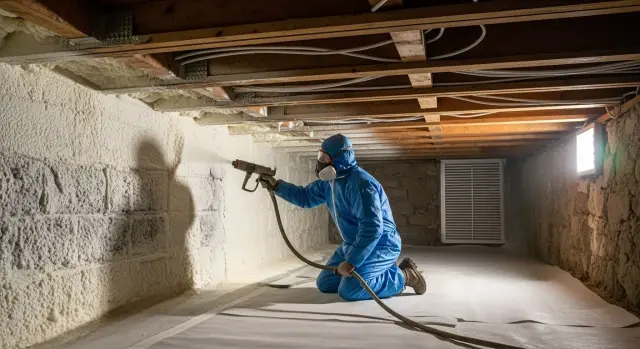
What happens to your home when you delay crawl space insulation in Battle Ground’s climate? Uninsulated or poorly insulated crawl spaces allow persistent moisture infiltration, which the EPA identifies as the direct cause of mold growth indoors. Mold damages building materials, degrades indoor air quality, and can trigger allergic reactions and asthma symptoms for occupants.
Beyond health concerns, an uninsulated crawl space forces your HVAC system to work harder year-round. ENERGY STAR estimates that air sealing and insulating attics, crawl spaces, and basements can save an average of 11% on total energy costs. In a marine climate where heating demands are high for much of the year, those savings compound over time.
Structural damage from moisture, wood rot, and pest activity also accelerates when crawl spaces are left unsealed. The repair costs for framing deterioration, flooring replacement, and mold remediation far exceed the investment in proper insulation upfront.
At Spray-On Foam & Coatings, our team has the experience and local knowledge to assess your crawl space and recommend the right insulation approach for your Battle Ground home. We work with both open-cell and closed-cell spray foam, and we take the time to explain exactly what is included in your pricing before any work begins. Every project starts with a thorough evaluation of your space, so there are no surprises on your final bill.
Reach out to us at (360) 667-1993 or [email protected] to discuss your crawl space insulation needs.
Request a Quote | Schedule a Crawl Space Assessment
Crawl space insulation is typically priced per board foot rather than per square foot. Closed-cell spray foam ranges from $1.20 to $3.00 per board foot, and total projects generally fall between $1,500 and $35,000, depending on size and scope.
Under IECC Climate Zone 4C requirements, crawl space walls need R-15 continuous insulation or R-19 between framing. Many homeowners choose to exceed the minimum code for improved comfort and energy savings.
Closed-cell spray foam is generally recommended for crawl spaces in Battle Ground because it provides a higher R-value per inch and doubles as a vapor barrier, which is important in this humid marine climate.
Most standard crawl space insulation projects are completed in one to two days, depending on the size of the space, the complexity of the work, and whether moisture remediation or old insulation removal is needed.
Yes. ENERGY STAR estimates that homeowners can save an average of 15% on heating and cooling costs by air sealing and adding insulation in crawl spaces, attics, and basements.