

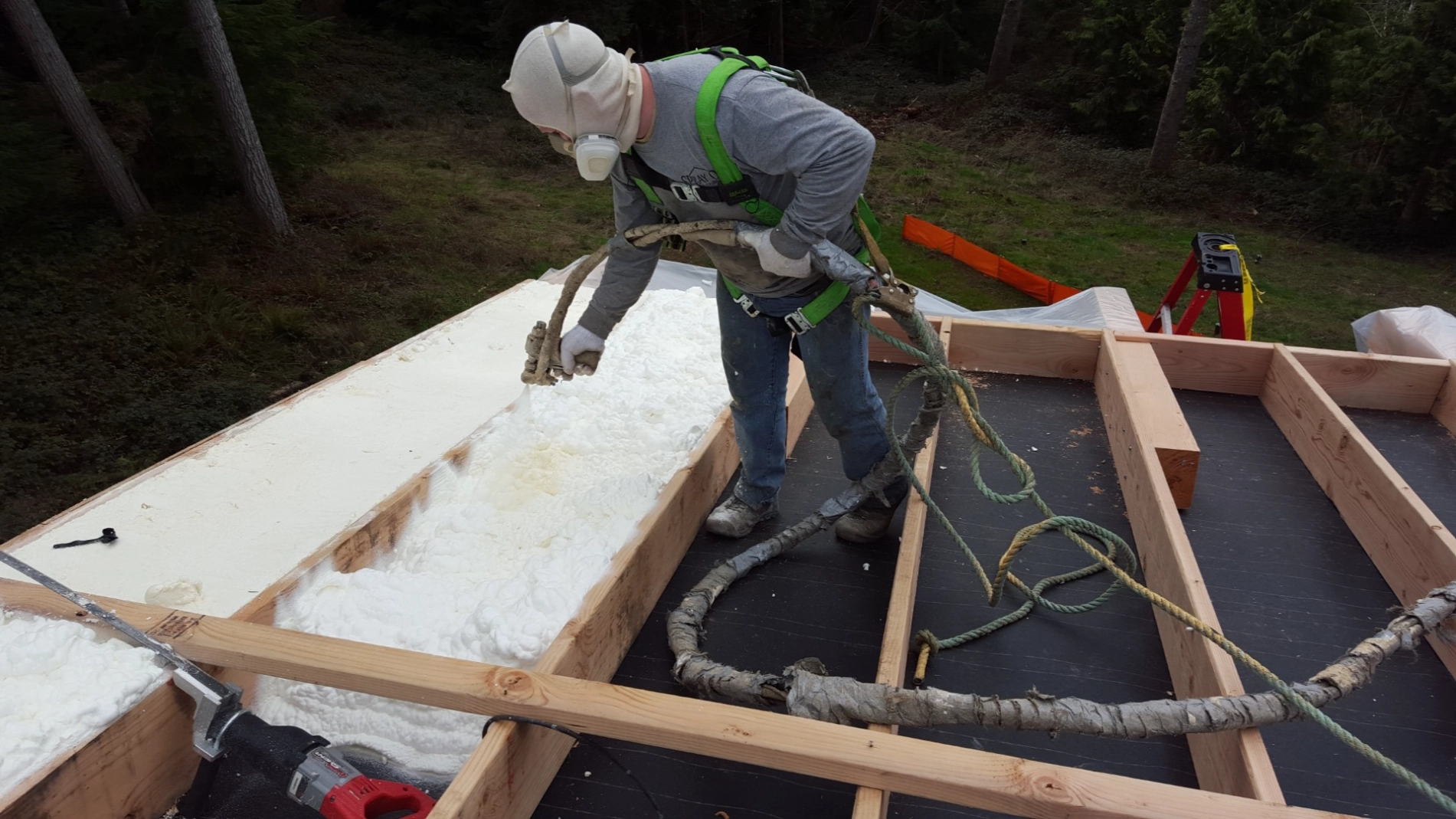
The main spray foam roofing solutions benefits are a one-piece, self-flashing surface that sheds water, strong insulation that can lower heating bills, and a light layer that can often go right over your old roof. In Battle Ground’s long rainy season, those features help flat and low-slope roofs stay dry and warm. The catch is that foam needs dry weather to install and a coating that’s kept in good shape.
Spray polyurethane foam roofing starts as two liquids mixed at the spray gun. They expand into a rigid foam that bonds to the roof deck. Then a protective coating goes on top. Bare foam is damaged by sunlight and freeze-thaw moisture, so it has to be coated to last. The foam does double duty as insulation and waterproofing, and the coating protects the foam.
Here’s what a foam roof actually does for your building and your budget. Each benefit ties back to a problem flat-roof owners run into all the time.
A typical membrane roof has laps, seams and fasteners, and each one is a spot where water can sneak in. Foam goes on as one continuous layer that can bridge cracks and irregularities in the deck, and it seals itself at parapet walls and around projections. That matters most around vents, skylights and HVAC curbs, which is where many flat roofs start leaking.
According to the U.S. Department of Energy Building America guide, typical closed-cell foam rates about R-6 per inch, with over 90% of its cells closed. In a test by Oak Ridge National Laboratory, re-covering a leaky office roof with spray foam raised its measured R-value from about 2 to 13, with roughly 50% heating energy savings and about 10% cooling energy savings. That was one building in Tennessee, so your results will depend on your roof, your current insulation and how you use the space.
Foam systems weigh much less than conventional built-up roofs, and foam can be applied directly to a suitably prepared existing roof. Skipping a full tear-off can mean less debris, less mess and less time with your building exposed. The old roof still has to be sound and dry, so moisture checks come first.
Damaged areas can be cut out and refoamed, and fluid-applied coatings are typically repaired by simply reapplying the coating. That gives you a roof you maintain over time rather than one you rip off and start over.
Our local weather is the reason foam makes sense for a lot of flat roofs here. Rain, not heat, is the main enemy.
Records compiled by Extreme Weather Watch show that Battle Ground averages about 52 inches of precipitation a year based on NOAA data, with November and December each bringing close to 8 inches. On a flat roof, that much water finds every open seam and every low spot.
Foam isn’t right for every roof, and you should know the limits before you get a quote. These are the ones that matter most here.
Run through this quick checklist. If most of these match your building, foam is worth a closer look.
If you’re comparing spray foam roofing Battle Ground WA options, start with an honest look at your current roof. At Spray-On Foam & Coatings, our spray foam roofing services start with checking your deck for moisture, looking at drainage and talking through foam and coating choices. We’ll tell you straight if foam isn’t the right fit.
Call (360) 667-1993 or email [email protected] to set up your free quote. We’re based in Battle Ground, WA.
The foam rises and firms up within seconds of spraying, but the coating needs its own cure time, from hours to a few days depending on the product. The total schedule mostly comes down to roof size, prep work and getting enough dry days in a row.
Yes, for normal maintenance and service visits. Roofing foam is a higher-density mix than wall insulation. Areas around rooftop equipment can get an extra coat with embedded granules to handle regular foot traffic.
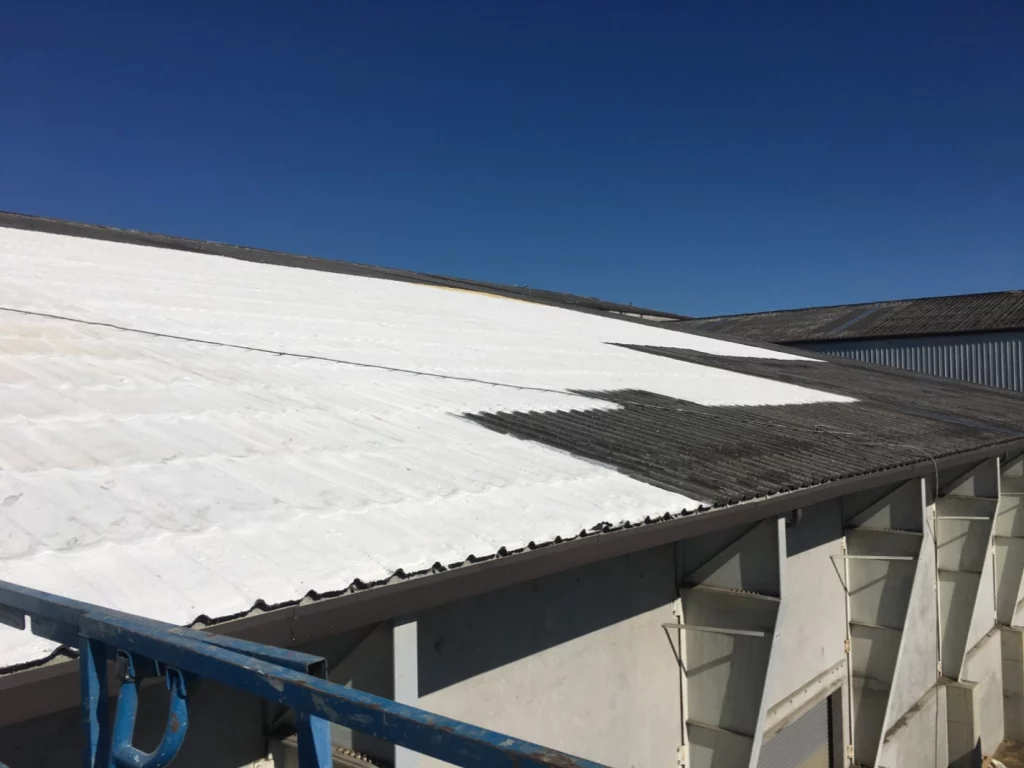
Flat and low-slope roofs are the most common fit, including commercial buildings, shops and ag buildings. Foam has also been sprayed directly onto sloped steel roofs on metal buildings.
There’s no single schedule. It depends on the coating type, its thickness, sun exposure and wear. A yearly inspection, plus a check after major storms, tells you when the coating is getting thin or cracked and needs renewing.
Yes. Coatings can be tinted, and colored granules can be added to the final coat. Many owners pick a light color because it stays cooler under summer sun.