

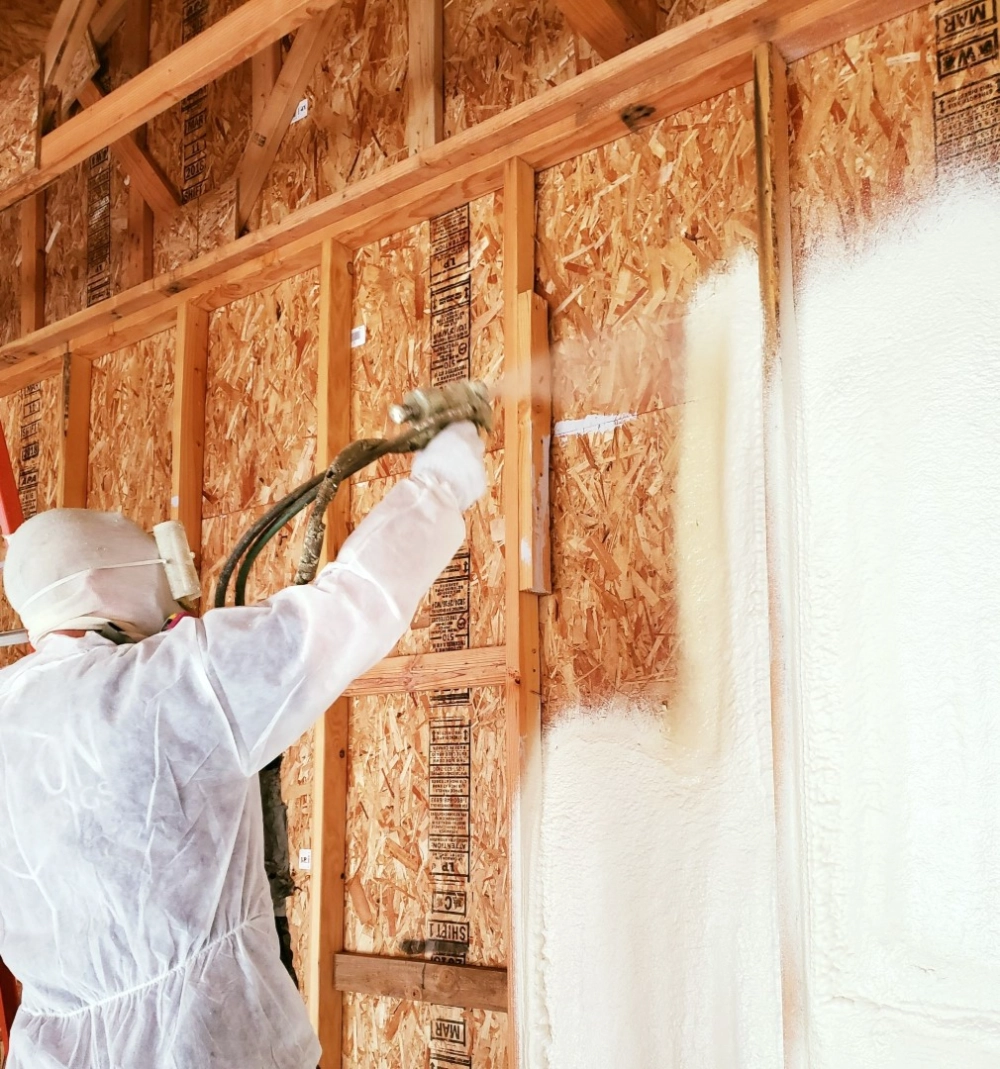
Residential insulation acts as a protective thermal barrier that significantly slows heat movement through your attic, exterior walls, floors, and crawlspace. Installed correctly, it minimizes heating and cooling waste while maintaining steady, comfortable room temperatures year-round. Most homeowners should begin insulating in the attic alongside proper air sealing, as that is where heat escapes first.
Heat is the problem in both seasons. In winter it leaks outward through the roof and walls, and in summer it pushes inward. Your furnace and air conditioner run for hours just fighting that flow, and the Insulation Institute describes insulation as one of the most cost-effective ways to slow it down and cut heating and cooling bills.
Insulation power is measured in R-value, where the R stands for resistance to heat flow. A higher number resists heat better, and the rating gives you an apples-to-apples way to compare fiberglass, foam, and cellulose. Two things trip homeowners up here. The rating only holds when the material is installed right, with no gaps, compression, or voids, and the number you need depends on your climate zone, not on what your neighbor used.
Walk down the insulation aisle and every product belongs to one of four families: batts and rolls, blown-in loose fill, spray foam, and rigid foam board. These home insulation types each fit different spaces, so most attics get batts or blown-in cellulose, while spray foam earns its keep on rim joists, crawlspaces, and roof decks where air sealing matters most.
Under those methods sit the raw home insulation materials: fiberglass, cellulose made largely from recycled paper, mineral wool spun from rock and furnace slag, and plastic foams such as polyurethane and polystyrene. The material you pick shapes fire resistance, sound control, and how the product handles moisture, not just the price.
| Option | R-Value Per Inch | Best For | Watch Out For |
|---|---|---|---|
| Fiberglass batts | About R-3 | Open walls, floors, accessible attics | Gaps and compression cut performance fast |
| Blown-in loose fill | About R-3 to R-4 | Attic floors, filling enclosed wall cavities | Needs a blower machine and a practiced hand |
| Open-cell spray foam | About R-3.5 to R-4 | Roof decks, sound control, odd-shaped cavities | Lets vapor through, so skip damp areas |
| Closed-cell spray foam | About R-6 to R-7 | Rim joists, crawlspaces, damp basements | Highest price per board foot |
| Rigid foam board | About R-4 to R-8 | Basement walls, continuous exterior sheathing | Seams need taping and indoor installs usually need a fire-rated cover |
| Mineral wool | About R-3 to R-3.5 | Fire-prone areas, noisy rooms | Heavier and pricier than fiberglass |
No single product wins everywhere, by the way. The best results usually mix them: foam on the rim joist, batts between studs, and blown-in material on the attic floor.
Since spray foam raises more questions than anything else, here’s the short version. Open-cell foam is lighter and softer, it dampens sound well, and it costs less, but it lets water vapor pass through. Closed-cell foam is dense, stiffens the surface it sticks to, blocks moisture, and delivers roughly double the R-value per inch, which is why it’s the choice for damp spaces and thin cavities.
Start with your climate zone, which runs from Zone 1 in southern Florida and Hawaii up to Zone 8 in the coldest parts of the northern US. ENERGY STAR’s recommendations call for R30 to R49 in warm-climate attics and R60 in cold ones, R13 to R38 under floors over unheated spaces, and R5 to R15 on basement or crawlspace walls. That guidance is drawn from the 2021 International Energy Conservation Code, and states adopt different versions, so let your local code have the final word.
There’s a fast way to judge your own attic. Look across the floor at the insulation. If the tops of the joists sit above the material, you’re short, because those boards stand roughly eight inches tall and can’t hold much more than R30 even when completely buried.
Whole-house insulation isn’t realistic for most budgets, and it isn’t necessary either. Our team prioritizes jobs in this order because it puts dollars where heat actually moves.
Air sealing deserves equal billing. ENERGY STAR reports that sealing leaks and adding insulation together can save up to 10% on annual energy bills, and the worst offenders are usually attic hatches, recessed lights, duct chases, and wiring holes. Deal with those first, then insulate over them.
The lower bill gets all the attention, but residential insulation benefits reach further. Rooms that used to swing hot and cold hold a steady temperature. The bedroom above the garage becomes usable. The second floor stops baking in July because far less heat pushes through the roof. Dense materials such as cellulose and mineral wool also dampen sound between floors and from busy streets, which matters more than people expect until they’ve lived with it.
Moisture control saves real money on repairs too. The right material in the right place, such as closed-cell foam in a damp crawlspace, resists the wet conditions that ruin fiberglass and grow mold. In snow country, a sealed and well-insulated attic also cuts down the melting and refreezing at the roof edge that creates ice dams and the water damage that comes with them.
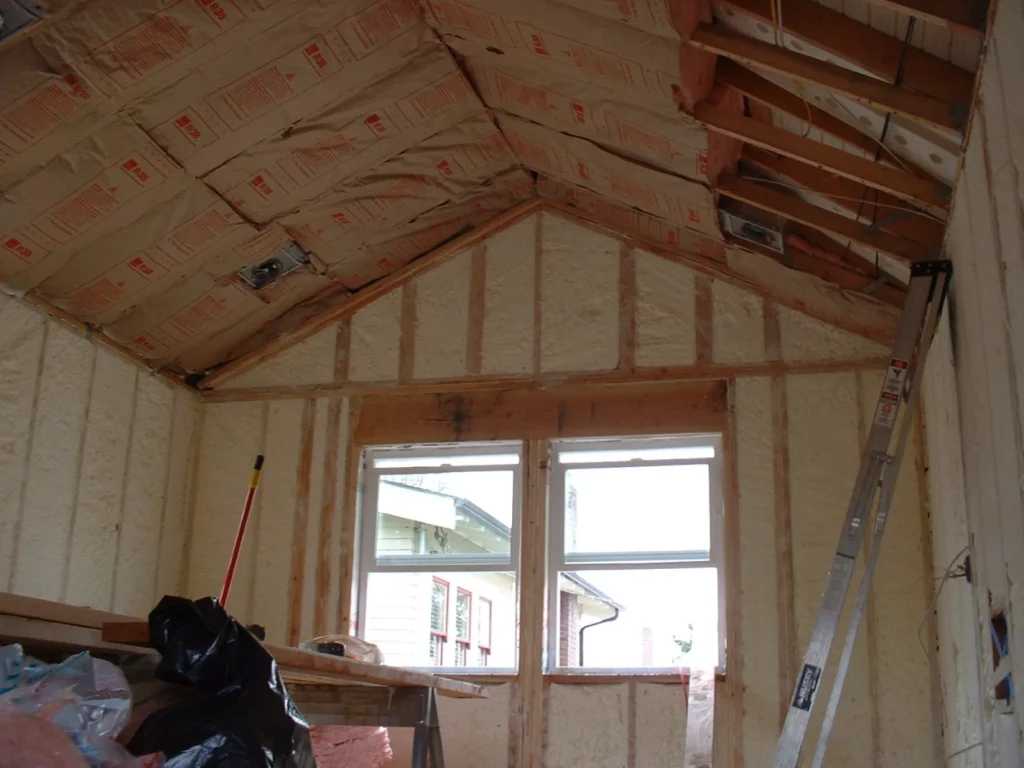
National averages are only a starting point, but they help you spot an inflated quote. Angi’s 2026 data puts professional installation at an average of $1,860, with most homeowners paying between $1,071 and $2,650 depending on material, square footage, and location in the house. Attic projects commonly run $1 to $7 per square foot, or $1,500 to $6,000 for the whole job.
A few other numbers belong in your budget. The materials themselves range from about $0.25 to $6.75 per square foot, with fib her than the square foot, and closed-cell usually costs about double open-cell. Your region and the condition of your house will move all of these figures, so treat every number here as a ballpark.
Honest limits matter here, because home insulation installation isn’t equally friendly to beginners across products. Batts and rolls in an open attic or basement ceiling are the classic weekend job, as long as you wear gloves, long sleeves, goggles, and a respirator, and you don’t compress the material into corners. Rigid foam board on a basement wall is another manageable DIY task.
Everything else usually pays for a professional. Spray foam mixes two chemicals on site and demands training, ventilation, and the right gear, and it’s permanent once it cures. Blown-in wall cavities need a machine plus the judgment to know when a cavity is actually full. And if your older home has vermiculite or any material you can’t identify, get it tested before you disturb it.
Signs show up long before a bill does, so walk your own house with this list. Catching them early saves you another season of waste.
Want proof before you spend? A blower-door test or an infrared camera scan shows exactly where the envelope leaks, and some utilities include these checks in their efficiency programs. One sign points to a leak or a thin spot, but two or more usually means the house is ready for a proper look.
If these signs sound familiar, our team can check your attic, walls, and crawlspace and tell you exactly where your heat is going. Spray-On Foam & Coatings offers a free quote, so you’ll see clear numbers before anything gets scheduled. Call us at (360) 667-1993 or email [email protected], and we’ll walk the space with you, lay out the options in plain language, and leave the decision entirely up to you.
Usually no. If the old material is dry, intact, and pest-free, new insulation can go right on top of it. Removal makes sense when it’s wet, moldy, crushed, contaminated, or when you’re switching to spray foam.
Most materials keep their R-value for decades when they stay dry and undisturbed. Moisture, pests, and compression shorten insulation life, not age by itself.
Extra R-value brings smaller returns with each added layer, and attic piles that block soffit ventilation or trap moisture cause real problems. Match the level to your climate zone instead of chasing maximum thickness.
It often is where you need insulation and air sealing in one step, such as rim joists, crawlspaces, and roof decks. For open, easy-to-reach areas, batts or blown-in material usually do the job for less money.
A single-area project commonly finishes within a day. Industry data puts blown-in and spray foam installs at roughly two to five hours and batt projects at five to twelve, depending on access and square footage.