

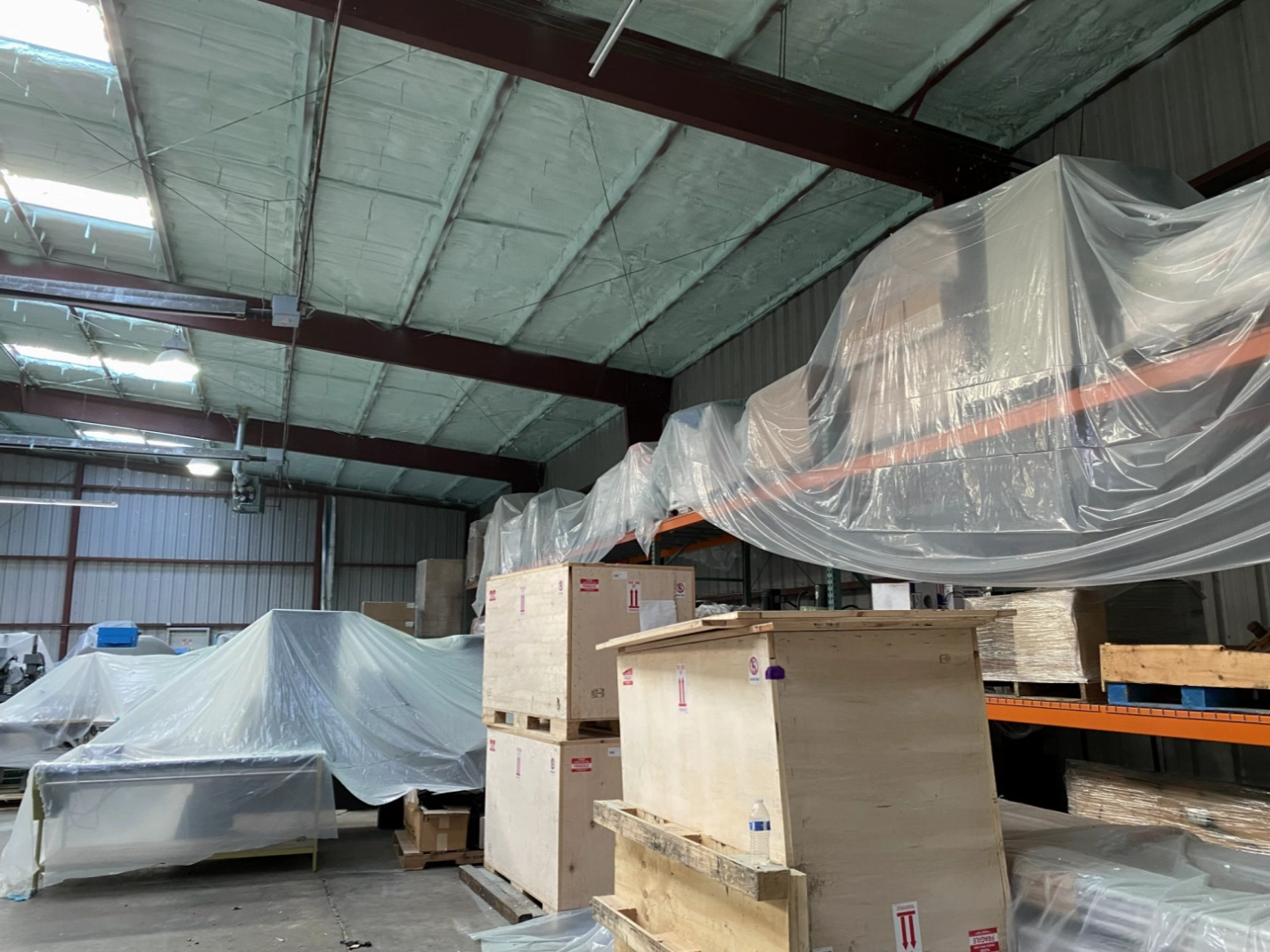
The cost to insulate a pole barn in Battle Ground, WA, typically ranges from $3,500 on the low end to $50,000 for large or heavily insulated projects, with the average pole barn insulation project landing around $8,500. These figures cover professional spray foam insulation installation and depend heavily on the size of your building, the type of foam selected (closed cell vs. open cell), and the thickness required to meet local energy code standards. Battle Ground sits in Clark County, which falls under IECC Climate Zone 5, meaning walls need an R-20 rating and ceilings need R-38 to meet code minimums. Closed-cell spray foam delivers roughly R-6.5 per inch, so reaching those targets is very achievable in a metal or wood-framed pole barn.
Based on our project data for the Battle Ground area, here is what you can expect to invest in at different project scales:
| Project Level | Estimated Cost | Typical Scope | Best For |
|---|---|---|---|
| Small | $3,500 | Single-wall or partial insulation on a small barn | Workshops, storage sheds |
| Average | $8,500 | Full walls on a standard 1,200-1,800 sq ft pole barn | Hobby farms, garages |
| Large | $50,000 | Full walls and ceiling on a large barn with high R-values | Commercial operations, livestock, and heated workshops |
Spray foam is priced by the board foot, which equals one square foot of area at one inch of thickness. Our closed-cell spray foam runs $1.20 to $3.00 per board foot, with an average of $1.50 per board foot. Open-cell spray foam is more affordable at $0.28 to $0.75 per board foot, averaging $0.32 per board foot.
The reason for the wide range is straightforward: larger projects receive better per-board-foot rates, while smaller or harder-to-access projects sit at the higher end. According to the Spray Foam Alliance’s performance data, closed-cell foam starts at R-5.7 per inch, and open-cell foam starts at R-3.6 per inch. That means a 3-inch layer of closed-cell foam delivers approximately R-17 to R-19.5, getting you close to code requirements for walls in a single application.
| Building Type | Location | Project Size | Estimated Cost |
|---|---|---|---|
| 24×30 hobby workshop | Battle Ground, WA | Walls only, 2″ closed cell | $3,500-$5,500 |
| 40×60 livestock barn | Battle Ground, WA | Full walls, 2.5″ closed cell | $8,000-$12,000 |
| 50×80 commercial shop | Yacolt, WA | Walls + ceiling, 3″ closed cell | $20,000-$35,000 |
| 30×40 storage barn | Brush Prairie, WA | Walls only, 1.5″ closed cell | $4,500-$7,000 |
| 60×100 agricultural building | Ridgefield, WA | Full envelope, 3″+ closed cell | $35,000-$50,000 |
Choosing between open-cell vs. closed-cell foam is one of the first decisions you will face when planning pole barn insulation. Each has distinct advantages for metal and post-frame buildings.
Closed-cell foam is the go-to choice for most pole barns in the Battle Ground area. It offers the highest R-value per inch (starting at R-5.7), acts as a built-in vapor retarder, and adds structural rigidity to your walls. It also resists moisture, which is a major consideration in the Pacific Northwest’s wet climate. The Department of Energy’s Building America program recommends climate-specific assemblies for each zone, and closed-cell foam consistently meets or exceeds the performance requirements for Zone 5.
Open-cell foam expands more during application, making it effective at filling irregular cavities and hard-to-reach spaces. It costs less per board foot but delivers a lower R-value per inch. An open cell is also vapor-permeable, meaning it allows moisture to pass through. In a metal pole barn, this can be a drawback because condensation on the interior face of metal panels is a common problem. For most pole barn applications in our region, closed-cell is the stronger choice.
Several variables affect what you will pay to insulate your pole barn in Battle Ground:
| Factor | How It Affects Price |
|---|---|
| Building size | Larger barns cost more overall but less per board foot |
| Foam thickness / R-value | Greater thickness directly increases material and labor costs |
| Insulation type | Closed-cell costs more per board foot than open-cell |
| Access and prep work | Hard-to-reach areas or cluttered spaces add labor time |
| Scope of work | Walls only vs. walls + ceiling makes a big difference |
| Scheduling flexibility | Flexible timelines can unlock better pricing |
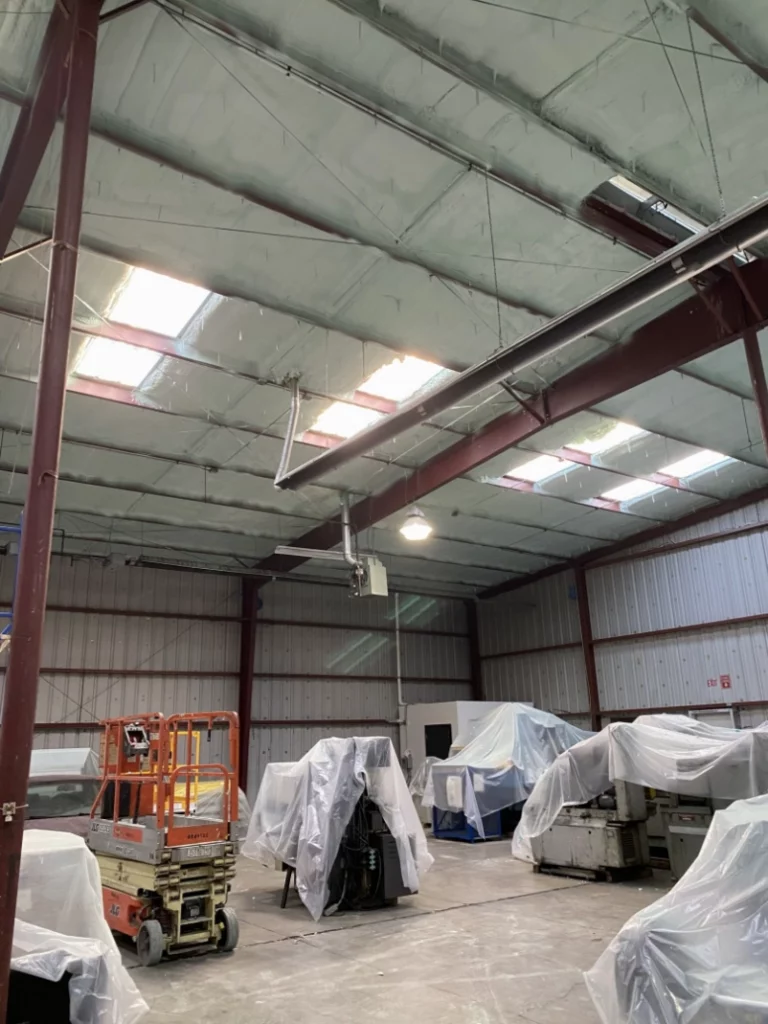
The single biggest factor in our pricing is project size. The bigger the project, the less we charge per board foot. On the flip side, higher R-values and greater foam thickness are the main drivers that push costs up, and for good reason: they deliver measurable energy performance improvements.
The real question is not just what you pay to insulate your pole barn. It is what you lose when you do not. In IECC Climate Zone 5, which covers all of Clark County, an uninsulated metal building loses heat rapidly through its walls and roof. Metal has an R-value close to zero, meaning it transfers heat almost freely between inside and outside. Every winter, an uninsulated pole barn bleeds energy, drives up heating costs, and invites condensation that rusts tools, damages stored items, and promotes mold growth.
Over a few years, the accumulated cost of higher energy bills, damaged equipment, and potential structural repairs from moisture damage can exceed what a proper insulation job would have cost from day one. Spray foam insulation also acts as an air barrier, sealing the gaps and cracks that let cold air, moisture, and pests into your building. That is not something fiberglass batts or blown-in insulation can do on their own.
At Spray-On Foam & Coatings, we have been insulating pole barns across Battle Ground, Clark County, and the greater Southwest Washington region for years. Our team understands the local climate, the building codes, and the specific challenges that come with insulating post-frame and metal buildings in the Pacific Northwest. We use professional-grade closed-cell and open-cell spray foam products, and we tailor every project to your building size, intended use, and budget. Whether you have a small backyard workshop or a large agricultural building, we will give you an honest assessment and a straightforward quote.
Call us at (360) 667-1993 or email [email protected] to get started.
Request a Free Quote | Schedule an On-Site Assessment
Do not wait until condensation damage or energy losses force your hand. Reach out today and let our team help you protect your building investment.
Spray foam insulation does not sag, settle, or degrade over time the way fiberglass does. When properly installed, it can last the lifetime of the building with no maintenance required.
Yes, partial insulation is an option and keeps initial costs lower. However, heat rises, so skipping the ceiling means significant energy loss. Many property owners start with walls and add ceiling insulation later.
Closed-cell spray foam acts as a Class II vapor retarder, which significantly reduces moisture transmission. Applied directly to the interior of metal panels, it eliminates the cold surfaces where condensation forms.
Yes. Closed-cell spray foam at appropriate thicknesses meets or exceeds the IECC Zone 5 requirements for walls (R-20) and ceilings (R-38) in Clark County. We account for current codes on every project.
Spray foam cures within minutes of application and is fully set within 24 hours. You can resume normal use of your building the next day with no off-gassing concerns.