

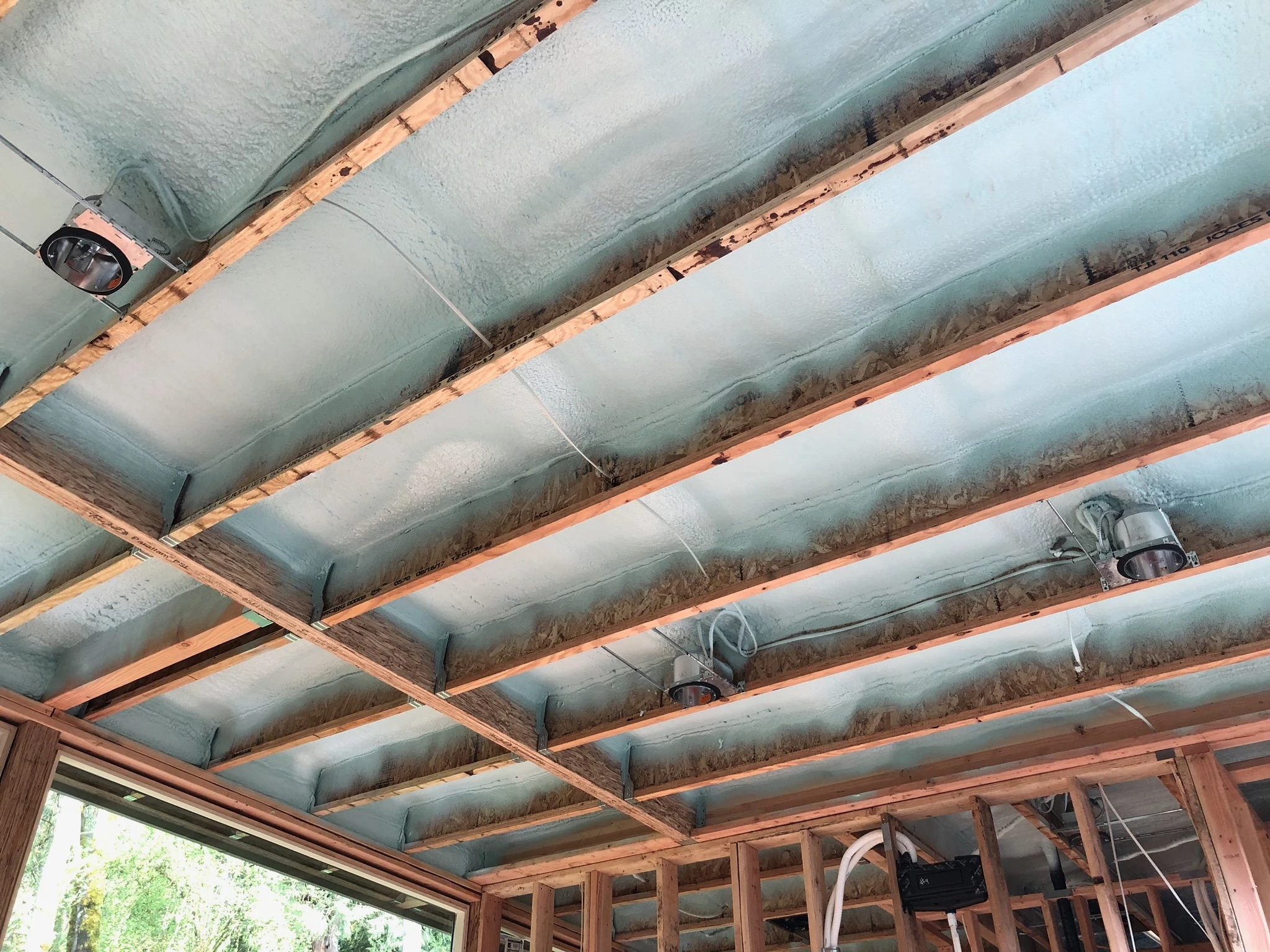
For contractors and property owners in Washougal, WA, selecting the right spray foam insulation means weighing thermal performance against budget, moisture concerns, and application requirements. Open-cell and closed-cell spray foam deliver excellent results, but they serve different purposes depending on your project scope, climate conditions, and long-term goals.
Closed-cell spray foam provides superior R-value (R-6 to R-7 per inch) and acts as a moisture barrier, making it ideal for exterior walls, crawlspaces, and high-humidity areas common in the Pacific Northwest. Open-cell spray foam offers better soundproofing and costs less upfront (approximately $1 to $3 per square foot versus $2 to $4.50 per square foot for closed-cell), but it allows moisture vapor to pass through, which requires careful consideration in Washington’s damp climate.
For Washougal’s Climate Zone 4C, closed-cell foam often performs better for exterior applications due to moisture resistance, while open-cell foam works well in interior walls where budget and sound control take priority.
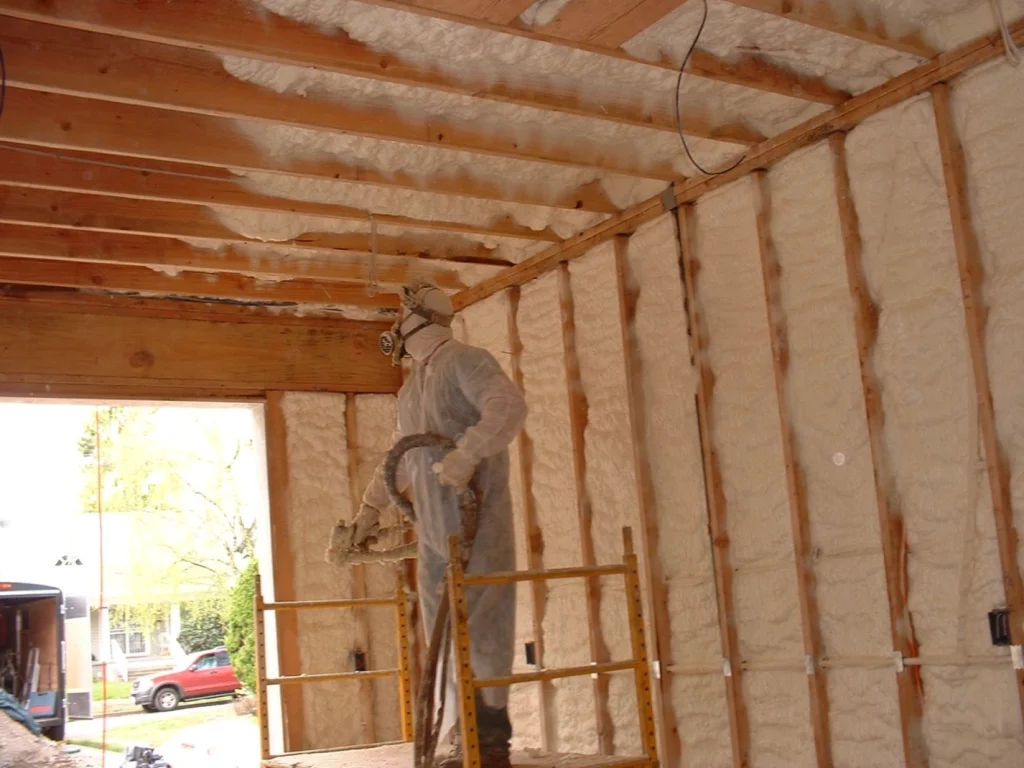
The fundamental distinction between open-cell and closed-cell spray foam lies in their cellular structure. Open-cell foam contains cells that remain intentionally open, trapping air within the material rather than gas. This creates a softer, more flexible texture similar to firm sponge rubber. Closed-cell foam contains cells that are completely sealed, filled with gas that expands during the curing process, resulting in a dense, rigid material.
Both types are typically made from polyurethane, as detailed in this guide to open cell vs closed cell spray foam. Department of Energy notes that closed-cell foam has insulation values of up to R-6.5 per inch, while open-cell foam provides approximately R-3.6 per inch. This difference directly impacts how much insulation thickness you need to achieve your target R-value.
For contractors working in Washougal, understanding this distinction helps when specifying materials for different building assemblies. A wall cavity that would need 6 inches of open-cell foam to achieve R-21 would only require 3 inches of closed-cell foam to reach the same thermal resistance.
Washougal sits in Climate Zone 4C, characterized by moderate temperatures, high humidity, and significant rainfall throughout the year. The Energy Star recommended insulation levels for this zone call for R-30 insulation in floors and R-49 to R-60 in attics. These requirements directly influence which spray foam product performs more efficiently for specific applications.
Closed-cell spray foam’s higher R-value per inch becomes particularly valuable in attic applications where space constraints may limit insulation thickness. A contractor can apply 5 inches of closed-cell foam and achieve approximately R-32.5, meeting floor requirements while using minimal space. Open-cell foam would require roughly 8 to 9 inches to achieve the same thermal resistance.
However, thermal performance extends beyond R-value alone. Both spray foam types create an effective air barrier when properly installed, reducing air leakage that accounts for significant energy loss in Pacific Northwest homes. This air-sealing capability often provides greater energy savings than the raw R-value difference between the two products.
| Factor | Open-Cell Spray Foam | Closed-Cell Spray Foam |
|---|---|---|
| Cost per Board Foot | $0.45 – $1.00 | $1.00 – $2.00 |
| Cost per Square Foot (3-inch) | $1.00 – $3.00 | $2.00 – $4.50 |
| R-Value per Inch | R-3.5 – R-4 | R-6 – R-7 |
| Material Cost for R-30 Floor | $7.50 – $15.00/sq ft | $4.50 – $9.00/sq ft |
| Installation Complexity | Moderate | Higher (requires certification) |
The initial material cost for open-cell spray foam runs approximately 30 to 50 percent lower than closed-cell foam. However, achieving equivalent R-values often narrows this gap. For a typical 2,000 square foot home in Washougal, a complete open-cell installation might cost $8,000 to $15,000, while closed-cell could range from $12,000 to $22,000, depending on application areas and depth.
Long-term energy savings partially offset the higher upfront investment of closed-cell foam. The superior R-value means less heat transfer year-round, potentially reducing heating costs during wet Pacific Northwest winters and cooling expenses during occasional summer heat events. Many contractors report payback periods of 5 to 10 years for the closed-cell premium through reduced energy bills.
The Pacific Northwest experiences approximately 37 inches of annual rainfall, with humidity levels frequently exceeding 70 percent. These conditions make moisture management a critical consideration when selecting insulation materials. Poor moisture handling leads to mold growth, wood rot, and degraded indoor air quality, all common problems in this region.
Open-cell spray foam allows moisture vapor to pass through its cellular structure freely. This permeability makes it unsuitable for below-grade applications or areas directly exposed to moisture. If open-cell foam becomes saturated, it can lose thermal performance and potentially develop mold issues within the wall cavity. Open-cell foam has water absorption rates of approximately 4 to 6 percent by volume, significantly higher than closed-cell alternatives.
Closed-cell spray foam creates an effective vapor barrier when installed at appropriate thicknesses. Its sealed cellular structure prevents moisture from penetrating the insulation layer, protecting structural components from moisture damage. This characteristic makes closed-cell foam the preferred choice for crawlspace encapsulation, foundation walls, and exterior wall applications in humid climates.
The Department of Energy Building America program emphasizes that moisture control strategies must match the insulation type selected. Consult this Building America Solution Center guide for technical spray foam guidance. Open-cell foam works best in above-grade interior wall applications where interior vapor barriers control moisture movement. Closed-cell foam performs effectively in exterior applications where it prevents moisture from entering wall cavities while allowing the wall assembly to dry appropriately.
For Washougal contractors, this means matching product selection to the specific building assembly. Interior walls separating conditioned and unconditioned spaces may use either product effectively, but exterior walls benefit from closed-cell foam’s moisture resistance. Crawlspaces and basements should receive closed-cell applications only.
Open-cell spray foam provides approximately twice the soundproofing performance of closed-cell foam in normal frequency ranges. The softer, more flexible cellular structure absorbs sound waves effectively, reducing airborne noise transmission through walls and ceilings.
For residential clients in Washougal, open-cell spray foam offers significant advantages in home theaters, music rooms, bedrooms adjacent to noisy areas, and multi-family housing where sound isolation matters. Closed-cell foam, while still providing good sound dampening, performs more like a solid barrier than an absorber due to its rigid density.
Commercial applications in the area, such as office buildings and retail spaces, may prioritize closed-cell moisture resistance over sound performance. However, interior partition walls in commercial buildings can still benefit from open-cell foam when acoustic privacy is a project requirement.
| Scenario | Property Type | Recommended Option | Estimated Cost (1,500 sq ft area) |
|---|---|---|---|
| New home construction, exterior walls | Single-family residential | Closed-cell (moisture barrier) | $9,000 – $13,500 |
| Attic insulation upgrade | Existing home | Closed-cell (high R-value, space efficiency) | $6,000 – $10,500 |
| Interior wall soundproofing | Home office, media room | Open-cell (sound absorption) | $2,250 – $4,500 |
| Crawlspace encapsulation | Older home with moisture issues | Closed-cell (vapor barrier, rigidity) | $4,500 – $7,500 |
| Metal building insulation | Commercial workshop | Closed-cell (structural support, moisture resistance) | $12,000 – $18,000 |
A Washougal contractor working on a 1990s-era home with moisture problems in the crawlspace would benefit from specifying closed-cell foam for the crawlspace walls and rim joist area. The moisture barrier properties prevent ground moisture from entering the home, while the high R-value improves energy performance. An interior remodel project adding a home theater would favor open-cell foam for the surrounding walls due to superior sound absorption.
Closed-cell spray foam adds measurable structural strength to wall assemblies. The rigid, dense material bonds to sheathing and framing components, creating a unified structural element. This characteristic proves valuable in high-wind areas and for buildings requiring additional lateral bracing.
Open-cell foam provides no structural enhancement and remains flexible after curing. While this flexibility prevents cracking in certain applications, it does not contribute to building strength. For standard residential construction in Washougal, this difference rarely impacts material selection, but contractors working on metal buildings or structures in wind-prone areas often specify closed-cell foam specifically for its structural benefits.
Both spray foam products require professional installation by certified contractors. The chemicals used in spray foam applications demand proper safety equipment, training, and ventilation protocols. Installation temperature, surface preparation, and curing time differ between products.
Closed-cell foam typically requires warmer application temperatures (above 50 degrees Fahrenheit) and cures more slowly than open-cell alternatives. The higher density also means more material is needed by volume to achieve equivalent coverage areas. Professional installers in Washougal must account for these factors when scheduling projects, particularly during cooler months.
Open-cell foam expands more aggressively after application, filling cavities quickly and thoroughly. This expansion characteristic makes it excellent for hard-to-reach areas and irregular cavities, but requires careful application to avoid overfilling and damaging building components.
For most exterior applications in the Pacific Northwest, closed-cell spray foam delivers superior performance due to its moisture barrier properties, higher R-value per inch, and structural benefits. The humid climate, frequent rainfall, and Washington State Energy Code requirements make closed-cell foam the practical choice for walls, crawlspaces, and attic applications where space is limited.
Open-cell spray foam excels in interior applications where soundproofing takes priority, budget constraints limit options, and moisture exposure is not a concern. Interior wall cavities between living spaces, interior ceiling assemblies, and above-grade interior applications all work well with open-cell foam.
The best approach for many Washougal projects involves combining both products strategically. A comprehensive specification might include closed-cell foam in exterior walls and crawlspaces, while using open-cell foam for interior partitions requiring acoustic separation. This hybrid approach optimizes performance while managing costs effectively.
Project Location Within the Building
Budget Constraints
Moisture Exposure Risk
Sound Control Requirements
Structural Requirements
Best Suited For:
Not Ideal For:
Choosing between open-cell and closed-cell spray foam for your Washougal project requires understanding your specific performance needs, budget parameters, and moisture exposure risks. Spray-On Foam & Coatings brings decades of combined experience to residential and commercial insulation projects throughout the Pacific Northwest.
Our team evaluates each property’s unique requirements, climate considerations, and long-term performance goals to recommend the optimal spray foam solution. Whether your project demands closed-cell moisture barriers for crawlspace encapsulation or open-cell soundproofing for interior walls, we deliver professional installation backed by quality materials and workmanship guarantees.
Contact us today for a comprehensive project assessment and detailed free estimate. Reach our team at (360) 667-1993 or email [email protected] to discuss how spray foam insulation can improve your property’s energy efficiency, comfort, and durability.
No. Open-cell spray foam is not appropriate for below-grade applications in the Pacific Northwest. The region’s high humidity and moisture exposure would compromise the open-cell foam’s performance over time. Closed-cell spray foam should be used in crawlspaces and basements due to its vapor barrier properties and moisture resistance.
Spray foam insulation costs approximately 2 to 3 times more upfront than fiberglass batt insulation. However, spray foam provides air sealing that batt insulation cannot achieve, often reducing energy bills by 15 to 25 percent. Many property owners recover the additional cost within 5 to 10 years through energy savings.
Closed-cell spray foam (2 inches or thicker) acts as its own vapor barrier and does not require additional installation. Open-cell spray foam does not serve as a vapor barrier and may require separate vapor barrier installation depending on the application location and climate zone requirements.
Professionally installed spray foam insulation lasts for the lifetime of the building when properly specified and installed. Unlike cellulose or fiberglass, spray foam does not settle, degrade, or lose R-value over time. The material maintains its performance characteristics for decades without replacement.
Spray foam insulation should not be used to solve existing moisture problems. Moisture issues must be addressed before installing spray foam, as the material will seal in existing moisture and potentially cause mold growth or structural damage. A thorough moisture assessment should precede any spray foam installation in the Pacific Northwest.