
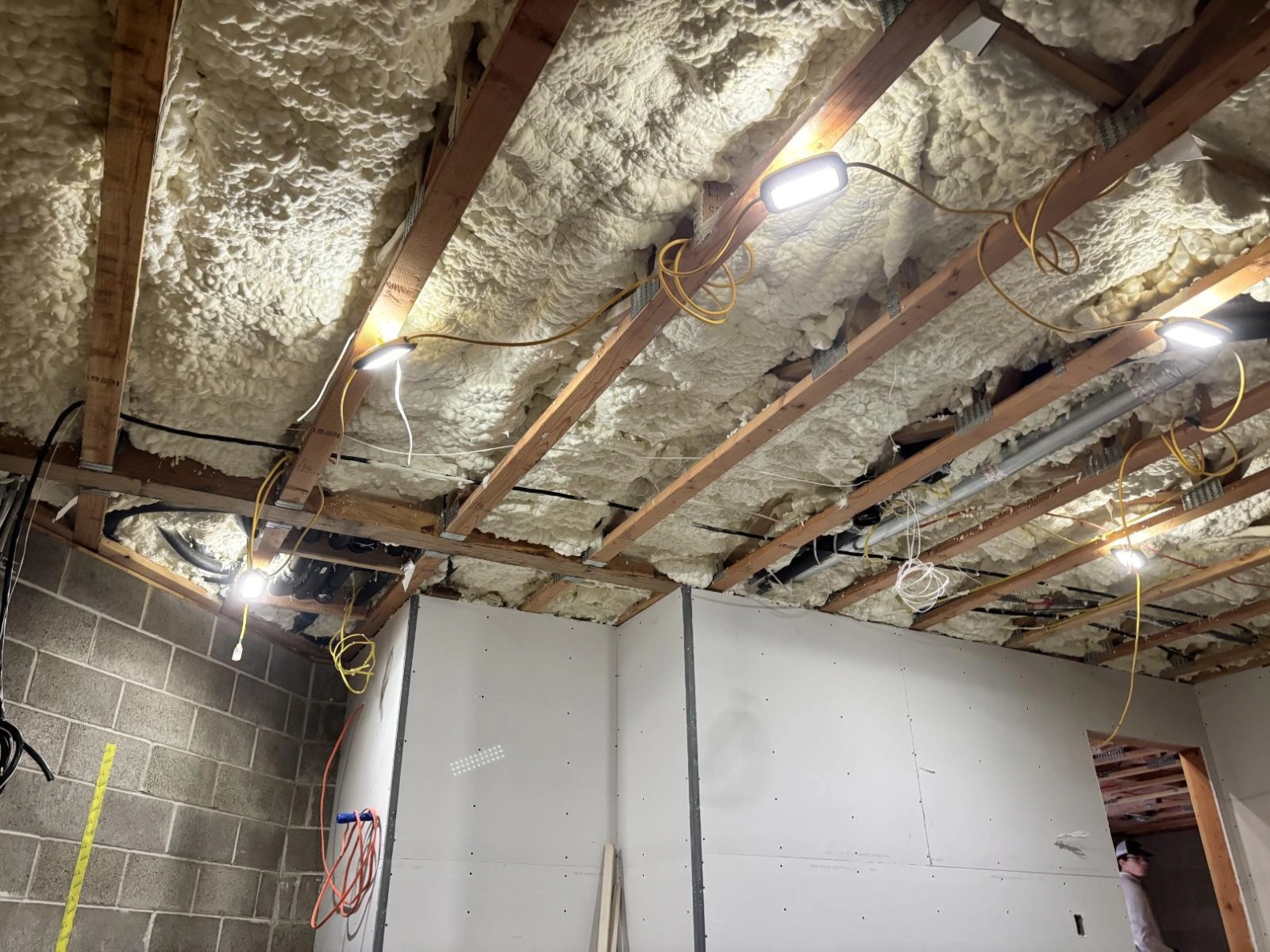
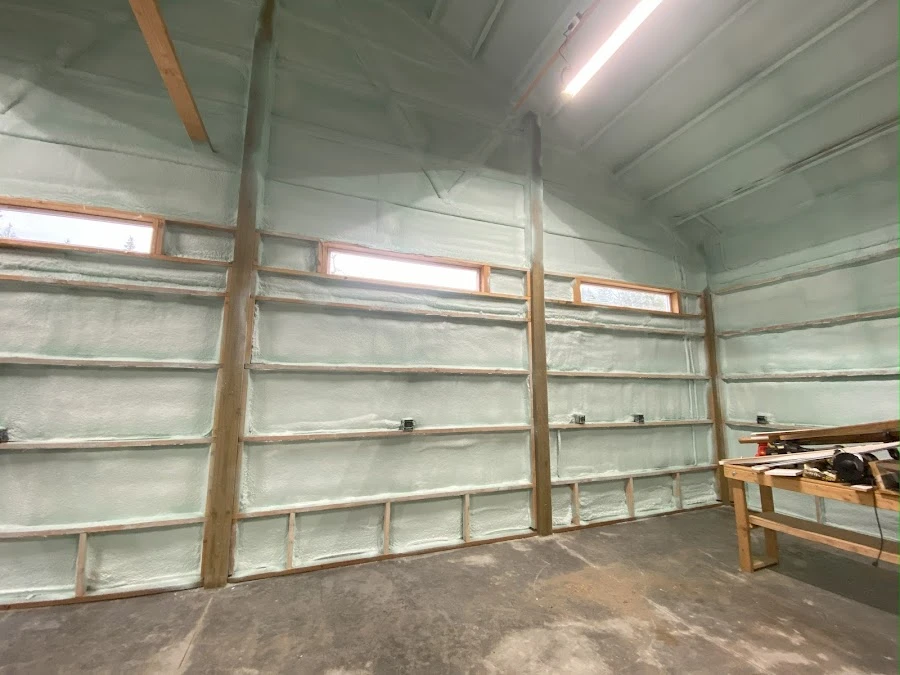
Spray foam insulation is one of the most effective ways to seal a building envelope, but installation errors can lead to wasted money, reduced energy efficiency, and structural damage. The most common mistakes involve incorrect foam selection for climate zones, improper chemical mixing, insufficient thickness, and poor surface preparation. Avoiding these errors requires understanding spray foam guide and working with trained professionals who follow manufacturer specifications and code requirements.
Spray polyurethane foam (SPF) provides air sealing, thermal resistance, and moisture control in a single product, but its performance depends entirely on proper installation. When mixed incorrectly, applied in adverse conditions, or installed at insufficient thickness, foam fails to perform its basic functions.
The chemical reaction between isocyanate and polyol resin generates heat as the foam expands and cures. If the ratio is off, the foam becomes brittle, chalky, or sticky, rather than achieving the closed-cell structure that provides high R-value and moisture resistance. According to the U.S. Environmental Protection Agency, proper chemical mixing ratios and ventilation during application are essential for both product performance and occupant safety.
The Spray Polyurethane Foam Alliance also offers extensive industry resources on safety standards, ventilation guidance, and best practices for professional SPF installation.
Temperature plays a critical role in spray foam performance. When applied in cold weather, foam does not fully expand and may not bond properly to surfaces. When applied in excessive heat, the chemical reaction accelerates, causing sagging or voids. Building Science research indicates that substrate temperatures below 40 degrees Fahrenheit compromise adhesion and expansion, while extreme heat causes rapid cure that prevents proper filling of cavities.
One of the most frequently encountered installation mistakes involves applying foam too thickly in a single pass. The rule for spray foam application is to spray in lifts, typically 1.5 to 2 inches per pass, allowing each layer to cure fully before applying the next. This ensures complete filling without voids or weak spots caused by exothermic heat buildup that can char the foam.
Contractors who rush the process by applying multiple passes without adequate cure time create a situation where the inner foam never fully expands. The result is a dense crust with unexpanded foam beneath, creating cold spots and potential condensation within the wall assembly.
The decision between open-cell and closed-cell spray foam is not simply a matter of cost. Each type has specific applications where it performs well, and using the wrong type leads to moisture accumulation, structural issues, and failed insulation performance.
The Building America Spray Foam Guide provides a research-based analysis of the performance benefits and limitations.
Open-cell spray foam has an R-value of approximately 3.5 to 3.7 per inch and is permeable to water vapor. It works well in Climate Zones 1 through 4, but can create problems in cold climates where it may allow moisture to reach structural elements. Closed-cell foam provides an R-value of 6.0 to 7.0 per inch, acts as a vapor barrier at sufficient thickness, and is preferred for below-grade applications and cold-climate roof assemblies.
According to Building Science research, high-density closed-cell spray foam is preferred in IECC Climate Zones 5 and higher and meets code requirements for both condensation control and vapor retardation. Using open-cell foam without proper vapor retarders in these climates can trap moisture within wall cavities, leading to mold growth, wood decay, and structural damage over time.
Spray foam insulation achieves its published R-value only when applied at the correct thickness throughout the entire surface area. Gaps, thin spots, and voids dramatically reduce the thermal performance of the system, allowing heat transfer through those weak points.
The International Residential Code specifies minimum thickness requirements for spray foam based on climate zone and application. For unvented attics in Climate Zone 5, at least 5.5 inches of closed-cell foam is required, while Climate Zones 7 and 8 require 7.5 inches or more. Open-cell foam in vented attics requires different configurations with supplemental insulation in some assemblies.
Common thin spots occur around penetrations for electrical wiring, plumbing, and ductwork. These areas require careful detailing to ensure complete fill while maintaining fire clearance requirements for burning wires and hot ducts. Corners, rim joists, and band joists are frequent problem areas where foam may be applied too thin due to access constraints or operator convenience.
| Application | Climate Zone | Minimum Closed-Cell Thickness | Notes |
|---|---|---|---|
| Exterior wall sheathing | 5 | 2 inches | Requires additional cavity insulation |
| Exterior wall sheathing | 6 | 2 inches | Verify with local code |
| Exterior wall sheathing | 7-8 | 3 inches | May qualify as sole insulation |
| Unvented attic roof deck | 5 | 5.5 inches | IRC Table R806.5 |
| Unvented attic roof deck | 6 | 5.5 inches | Verify with local code |
| Unvented attic roof deck | 7-8 | 7.5 inches | IRC Table R806.5 |
| Basement walls interior | 5-8 | 2 inches closed cell | Over a concrete foundation |
The following scenarios illustrate common spray foam mistakes and their consequences:
A contractor in the Pacific Northwest applied open-cell foam to the interior of a vented crawlspace in a home with seasonal high groundwater. The foam did not prevent vapor transmission from the damp soil, and moisture accumulated in the floor framing above. Within two years, the joists showed signs of decay requiring thousands of dollars in structural repairs. The correct approach for vented crawlspaces in all climate zones is high-density closed-cell spray foam applied to the floor framing.
A homeowner in Minnesota attempted to insulate their rim joists with a DIY foam kit, applying a single pass that measured roughly 1 inch thick. The foam did not fully expand due to cold temperatures in the unconditioned garage, creating gaps that allowed cold air infiltration. Heating bills remained high, and the homeowner discovered that their rim joists were not fully sealed. Professional installation with proper temperature monitoring and multi-pass layering would have achieved the required thickness.
A renovation contractor in Colorado sprayed foam over old cellulose insulation in an attic without removing the existing material. The cellulose created an uneven surface that prevented complete adhesion, and the combined depth exceeded the structure’s capacity to support the weight. Settling created voids within the foam layer, reducing the effective R-value significantly. The International Residential Code requires that cavities be clear of existing insulation and debris before spray foam application.
An HVAC contractor in Ohio drilled supply and return duct chases through a wall that had been insulated with spray foam, then sealed the penetrations with canned spray foam. The canned foam was not rated for air sealing at that thickness, and the joints leaked air despite the wall appearing to be insulated. Proper air sealing with approved materials and techniques around all penetrations is essential for maintaining the air barrier system.
Several key variables influence spray foam insulation success in any application:
Moisture Management: Spray foam controls moisture through its air-sealing ability and, for closed-cell formulations, its vapor resistance. However, it cannot address moisture that originates from bulk water entry, plumbing leaks, or capillary moisture from soil. The building must be designed to manage these water sources independently.
Air Barrier Continuity: Spray foam creates an effective air barrier only when it is continuous across the entire building envelope. Breaks at joist ends, window frames, and penetrations allow air leakage that bypasses the insulation. All transitions between assemblies require careful detailing to maintain continuity.
Thermal Bridging: In some assemblies, spray foam is applied over structural elements that conduct heat around the insulation. Hybrid assemblies using spray foam in conjunction with cavity insulation can address this, but the spray foam thickness requirements vary by climate zone and framing configuration.
Code Compliance: Building codes specify minimum foam thickness, vapor retarder requirements, and thermal barrier protection for different climate zones and applications. Installations that do not meet these requirements may fail inspection and could create legal liability for the contractor.
Contractors and homeowners can prevent spray foam installation failures by following these practices:
Spray foam requires substrate and ambient temperatures above the manufacturer’s specifications to properly expand and bond. Most manufacturers specify minimum temperatures of 40 degrees Fahrenheit for both the surface being sprayed and the surrounding air. Cold-weather applications may require heated workspaces and specialized product formulations.
Cure times vary by product type and ventilation conditions. One-component spray foam typically requires 8 to 24 hours before re-entry without PPE, while two-component systems may require 24 to 72 hours before re-occupancy. The U.S. Environmental Protection Agency recommends following manufacturer guidelines and ensuring adequate ventilation throughout the curing process.
DIY spray foam kits are designed for small-scale applications and require careful attention to temperature, surface preparation, and application technique. Professional installation typically achieves better coverage, proper thickness, and code compliance while maintaining manufacturer warranties. Large-scale insulation projects almost always benefit from professional installation.
Applying foam too thickly prevents proper heat dissipation during the exothermic cure reaction. This can cause scorching, charring, or voids within the foam mass. It can also create adhesion failures as the foam pulls away from substrates. The solution is always multi-pass layering with adequate cure time between applications.
Building codes require that foam plastic insulation be separated from the interior of a building by an approved thermal barrier. For residential applications, this is typically 1/2 inch gypsum board. Some intumescent coatings are approved as alternatives, but they must meet specific fire test requirements.
Spray foam insulation provides exceptional performance when installed correctly, but the margin for error is narrower than with traditional insulation materials. Our team at Spray-On Foam & Coatings understands the building science requirements for every climate zone and application. We maintain proper temperature monitoring, follow manufacturer specifications precisely, and ensure code compliance from start to finish.
Contact us for an assessment of your insulation needs. Our experienced team evaluates every project for proper foam selection, thickness requirements, and air barrier continuity. We provide detailed documentation and stand behind our installations with professional guarantees. Reach us by email at [email protected] or call (360) 667-1993 to discuss your project and receive a comprehensive free quote.