


Open-cell spray foam works best in deep, open framing cavities like walls and rafters, and we handle open-cell spray foam installation Vancouver, WA homes need, from the first quote to the final trim. It seals air leaks and dampens sound, but it gives less R-value per inch than closed-cell foam, and it isn't a vapor barrier, so placement matters. At Spray-On Foam & Coatings, we've been doing this work since 1973.
It depends on where the foam goes and how much depth you have to work with. We sort that out at the first visit, before anyone talks about price. Open-cell foam is light and soft. Johns Manville lists it at about R-3.8 per inch and says it works as an air barrier at 3.75 inches or more, while Fine Homebuilding puts it at R-3.5 to R-3.6. Products vary, so we plan around the spec sheet for the foam we're spraying.
Roof decks deserve extra care. Fine Homebuilding says a separate vapor retarder or vapor-retarding paint should go over open-cell foam sprayed under roof sheathing in cold climates. We'll tell you straight if closed-cell is the safer call for your roof.
The National Weather Service 1991-2020 normals for the Vancouver Pearson Airport station, inside the city, show 37.47 inches of precipitation a year. December is the wettest month at 6.07 inches, and November follows at 5.51, while July gets just 0.42. That long damp season means attic, wall, and crawl space framing sits through months of high outdoor moisture. Because open-cell foam lets vapor pass, we focus on stopping air leaks that carry indoor moisture into cold framing, and we look hard at roof deck jobs before recommending open-cell there.
The same normals count 4,400 heating degree days a year against 399.5 cooling degree days, and the January average low is 34.4°F. July and August average highs reach 80.9°F and 81.6°F. Heating demand is far greater than cooling demand here, so leaky walls and ceilings cost the most in winter. Open-cell foam fills the gaps in framing that batts often leave, which is why we use it in deep cavities. Savings depend on your home, and we won't promise a number.
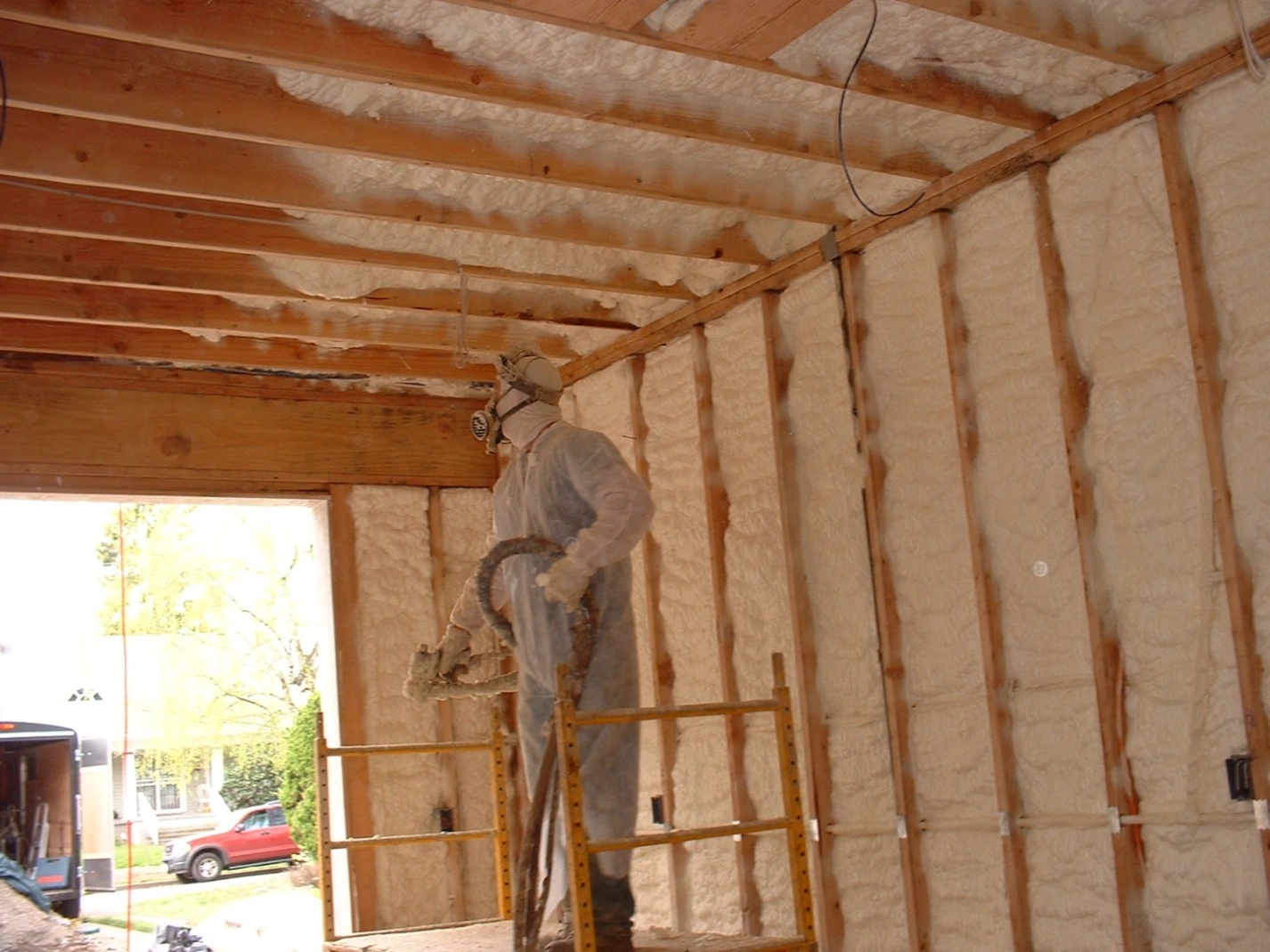
Price depends on the job, so we quote on site rather than publish a flat rate. A good open-cell insulation contractor should walk you through each of these before you sign.
| Factor | Why it matters |
|---|---|
| Thickness and R-value goal | Open-cell needs more inches than closed-cell to reach the same R-value. |
| Area to cover | More square footage means more material and more time. |
| Access | Tight attics and crawl spaces slow the work. |
| Old insulation | Removal adds labor before spraying starts. |
| New build or finished home | Open framing is easier to spray than a closed-in wall. |
Need an open-cell foam insulation contractor Vancouver, WA homeowners can call today? Tell us where the foam is going, what's on the walls or roof deck now, and any moisture you've noticed. We'll recommend open-cell, closed-cell or a cheaper option, and give you a free quote.
Call Spray-On Foam & Coatings at (360) 667-1993 or email [email protected].
It depends on your R-value goal, and open-cell needs more inches than closed-cell to get there. We set the depth on site.
No. It isn't a vapor barrier or a liquid-water barrier, so we fix leaks before spraying.
Often, yes, because Johns Manville says its porous structure performs better for sound than closed-cell.
When old insulation is damaged or in the way, we offer Insulation Removal before spraying.
Yes, we offer a free quote on open-cell spray foam and our other insulation services.