
Builders in Longview, Washington, operate in a competitive residential and commercial market where energy codes are tightening, and client expectations for comfort and efficiency continue to rise. Longview sits in IECC Climate Zone 4C, a marine climate that demands careful attention to both insulation R-values and moisture management. Choosing the right spray foam insulation partner is not just about finding someone to fill wall cavities. Builders need a contractor who understands local building codes, coordinates seamlessly with construction schedules, communicates clearly, and delivers consistent quality that passes inspection the first time. The right partner depends on several factors, including project type (new construction, retrofit, or commercial), the specific insulation requirements of the building envelope, and the builder’s timeline and budget constraints.
Builders juggle multiple subcontractors, tight schedules, and inspection deadlines. A spray foam insulation partner who creates friction, rather than removing it, becomes a liability on the jobsite. Here is what builders in Longview consistently tell us they need:
Construction schedules in southwest Washington are often compressed by weather. Rain delays framing, which pushes every downstream trade, including insulation. Builders need a spray foam contractor who can adapt to shifting timelines without sacrificing quality. That means showing up when promised, completing the work within the quoted timeframe, and being flexible enough to accommodate schedule changes. Our team coordinates closely with builders to align our installation dates with framing completion and pre-drywall milestones.
Washington adopted the 2021 State Energy Code, which imposes stricter requirements than many builders experienced under previous code cycles. For Climate Zone 4C, prescriptive wall assemblies must meet R-20 cavity insulation plus R-5 continuous insulation, or alternative combinations that achieve equivalent performance. Ceilings require R-60 insulation in most cases. The Pacific Northwest National Laboratory Building America Solution Center documents specific assembly designs for this climate zone, showing how closed-cell spray foam can serve as both the air control layer and vapor control layer in wall and rim joist assemblies. A knowledgeable insulation partner helps builders navigate these requirements without costly change orders.
Spray foam installation involves chemicals that require careful handling. The EPA notes that spray foam application generates isocyanate vapors and aerosols that can exceed occupational exposure limits, requiring proper personal protective equipment and jobsite ventilation. Builders expect their insulation partner to manage these risks professionally, protect other trades from exposure, maintain a clean jobsite, and observe recommended curing and re-entry times. Our crew follows manufacturer-recommended protocols for ventilation and cleanup so that other trades can return to work safely and on schedule.
Builders need to match the right foam type to the right application. Here is how the two primary types compare:
| Property | Closed-Cell Spray Foam | Open-Cell Spray Foam |
|---|---|---|
| R-Value per inch | R-6.5 to R-7 | R-3.5 to R-3.8 |
| Air barrier | Yes | Yes (at sufficient thickness) |
| Moisture barrier | Yes (low permeability) | No (vapor permeable) |
| Best applications | Exterior walls, crawlspaces, rim joists, and basements | Interior walls, attic floors, sound-dampening |
| Structural benefit | Adds racking strength to walls | Minimal |
| Density | High (dense, rigid) | Low (spongy) |
| Pricing (per board foot) | $1.20 to $3.00 | $0.28 to $0.75 |
Closed-cell foam is the go-to choice for builders in the Longview area who need maximum thermal resistance in limited cavity depths, plus moisture protection in crawlspaces and basements. Open-cell foam works well for interior applications where sound dampening and cost savings matter more than moisture resistance.
Vague quotes are a red flag. A reputable spray foam contractor should provide a written estimate that specifies the foam type, thickness, R-value, total board footage, and total price. Our approach is to walk the project with the builder, review the plans, and deliver a line-item quote that accounts for every insulated area. Builders tell us this level of detail helps them compare bids accurately and avoid surprise charges mid-project.
The DOE states that the maximum thermal performance of insulation depends heavily on proper installation. Spray foam must be applied at the correct temperature and humidity, with the proper ratio of chemical components, to achieve its rated R-value. Builders should expect their partner to:
Builders need answers fast when conditions change on site. A spray foam partner who returns calls promptly, provides clear timelines, and proactively communicates about potential issues saves the builder time and money. Our team prioritizes direct communication with every builder we work with, from the initial bid through the final walkthrough.
| Project Type | Recommended Approach | Key Considerations | Expected Outcome |
|---|---|---|---|
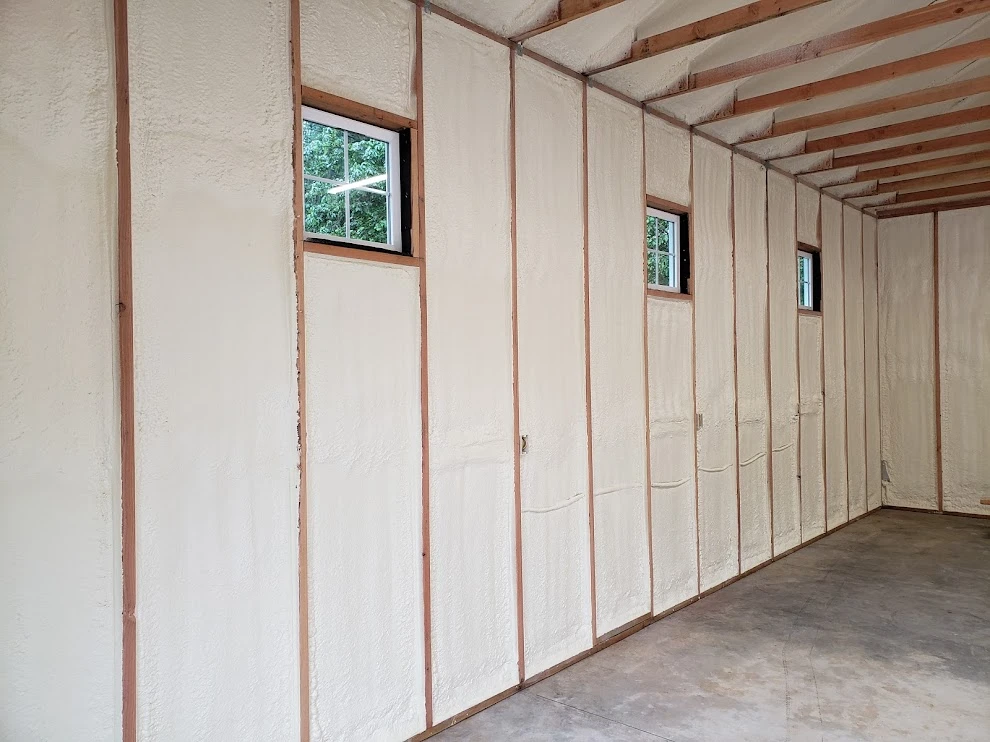
| New residential construction | Closed-cell foam in walls, crawlspaces, and rim joists; open-cell in attic floors | Must meet 2021 WSEC requirements; coordinate with framing and HVAC schedules | Code-compliant envelope with air sealing in a single step |
| Retrofit homes | Closed-cell in crawlspaces and basements; open-cell in attic upgrades | Access limitations may affect pricing; existing moisture issues need assessment first | Reduced energy costs, improved comfort without major disruption |
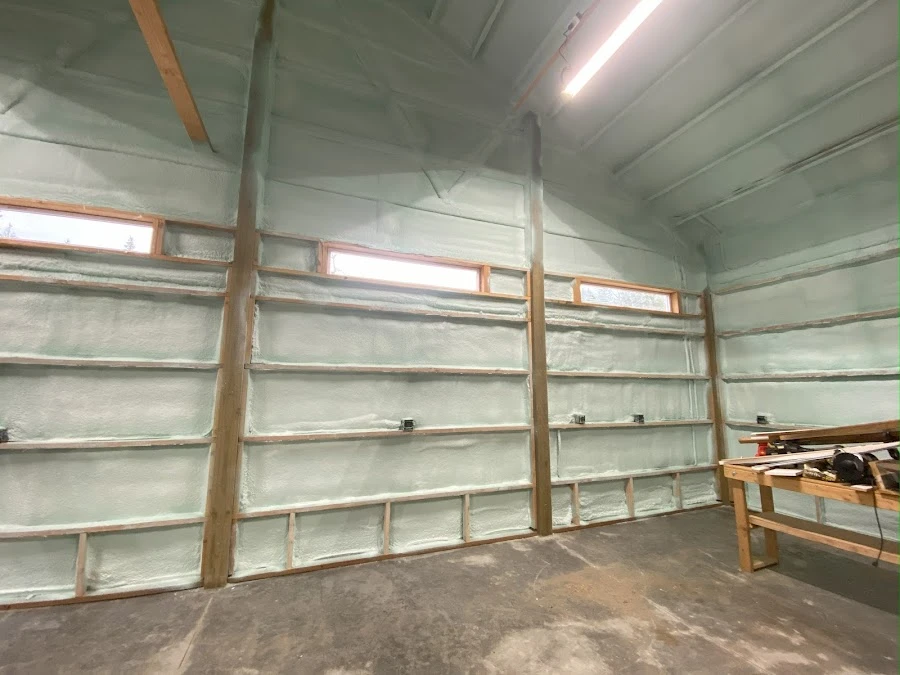
| Pole barns and metal buildings | Closed-cell spray foam on metal walls and ceilings | Condensation control is the primary driver; proper surface prep is essential | Condensation eliminated, temperature regulation improved |
| Commercial buildings | Closed-cell for exterior walls and roofing; open-cell for interior partitions | Fire rating requirements may need additional thermal barriers | Energy-efficient envelope that reduces long-term operating costs |
Builders who have worked with reliable insulation contractors consistently point to several indicators of a strong partnership:
We understand what builders in Longview and the surrounding Cowlitz County area need from an insulation partner because we have been working alongside them for years. Our crew shows up on time, communicates clearly, and installs spray foam that meets the Washington State Energy Code on the first pass. Spray-On Foam & Coatings offers closed-cell and open-cell spray foam, pole barn insulation, crawl space insulation, and air sealing services tailored to new construction, retrofit, and commercial projects throughout the Longview area.
Request a Free Quote or Schedule a Jobsite Assessment by calling us at (360) 667-1993. We will walk through your project, review your plans, and deliver a detailed free quote that holds up from bid to final inspection.
We recommend scheduling at least two to three weeks before your target insulation date, especially during peak building season. Earlier coordination allows us to align with your framing and pre-drywall milestones.
The building should be dried in, with framing complete and rough-ins for electrical and plumbing finished. Windows and doors should be installed, and any surfaces that need protection from overspray should be clearly marked.
Yes. We provide documentation of installed foam type, thickness, and R-value for each insulated area, which builders can use to satisfy insulation inspection requirements under the Washington State Energy Code.
Application temperatures matter for proper curing. We monitor ambient and substrate conditions on site and will reschedule if conditions fall outside manufacturer specifications rather than risk a failed install.
We work on projects ranging from small crawlspace jobs to full commercial building envelopes. Our typical projects include new residential construction, retrofit homes, pole barns, and commercial buildings throughout Longview and southwest Washington.