
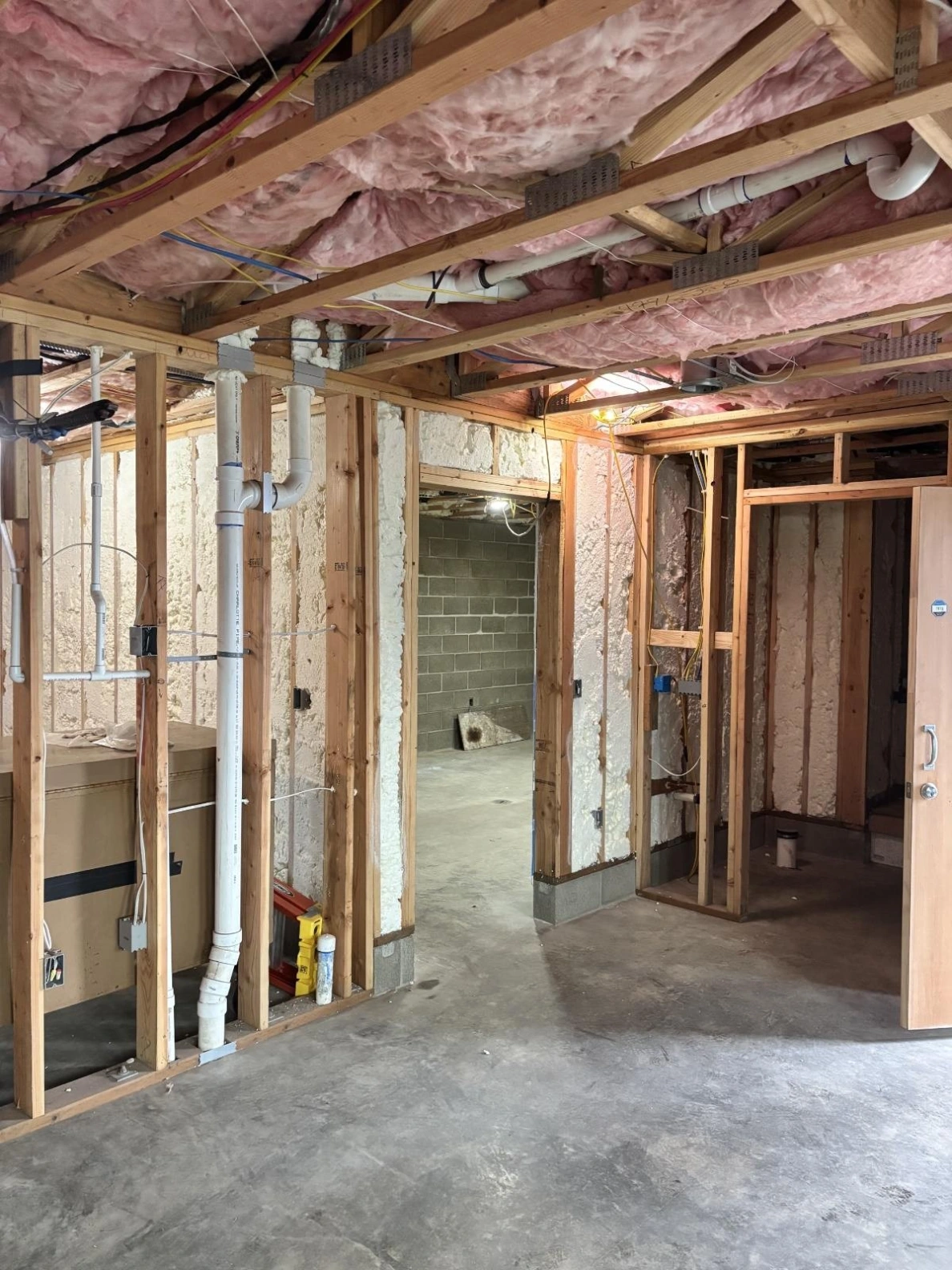
Building energy codes are tightening faster than ever, and spray foam insulation has become one of the most reliable tools for builders who need to meet or exceed those requirements without overcomplicating their builds. The 2024 International Energy Conservation Code (IECC), published by the International Code Council, raises the bar on insulation R-values, air leakage limits, and thermal envelope performance across residential and commercial construction. Spray foam helps builders satisfy these stricter standards because it combines two functions, insulation and air sealing, into a single application, eliminating the gap-and-crack problems that plague traditional insulation materials. Whether you are building in Climate Zone 4 or Zone 8, choosing between open-cell and closed-cell formulations, or deciding which IECC compliance pathway to follow, spray foam gives you design flexibility and verified performance in fewer steps.
To better understand insulation types, applications, and performance benefits, explore this comprehensive spray foam insulation guide.
The IECC is updated every three years and serves as the model energy code adopted by states and municipalities across the country. According to the U.S. Department of Energy, the 2021 IECC already brought significant increases to ceiling insulation requirements (R-60 in Climate Zones 4 through 8) and introduced stricter air leakage criteria for the building envelope. The 2024 edition continues that trajectory.
For builders, each code cycle means rethinking wall assemblies, attic insulation strategies, and how to achieve continuous air barriers. The prescriptive R-value tables alone demand more from insulation materials than they did even six years ago. In Climate Zone 5, for example, a 2×4 wood-frame wall now requires either R-20 cavity insulation plus R-5 continuous insulation, or R-13 cavity plus R-10 continuous. Traditional fiberglass batts in a standard 2×4 cavity max out around R-13, which no longer meets code on their own in many climate zones.
Spray foam insulation addresses two code requirements at once: thermal resistance and air barrier performance. The U.S. Department of Energy notes that air sealing reduces the amount of air leaking in and out of a building, cutting heating and cooling costs, improving durability, and creating a healthier indoor environment (DOE Energy Saver). Spray foam achieves both goals in one step because it expands on application to fill cavities, seal around penetrations, and bond directly to framing members.
This dual functionality matters because the IECC treats air leakage and thermal resistance as separate but related requirements. Builders using fiberglass or cellulose typically need to add house wrap, tape seams, caulk penetrations, and apply separate vapor barriers to meet air leakage thresholds. Spray foam skips most of those secondary steps, reducing labor, material waste, and the risk of inspection failures.
| Property | Closed-Cell Spray Foam | Open-Cell Spray Foam |
|---|---|---|
| R-Value Per Inch | R-6.0 to R-7.0 | R-3.5 to R-3.8 |
| Air Barrier | Yes | Yes (at sufficient thickness) |
| Vapor Retarder | Class II at 1.5 inches or more | No (requires a separate vapor retarder in some zones) |
| Moisture Resistance | High (low water absorption) | Low to moderate |
| Best Applications | Exterior walls, crawlspaces, rim joists, and basements | Attics, interior walls, sound-dampening assemblies |
| Code Strength | High R-value in tight spaces; meets continuous insulation requirements | Cost-effective for large cavities where depth is available |
Closed-cell foam is the go-to choice when you need maximum R-value in a limited cavity depth. A 2-inch application of closed-cell foam in a 2×4 wall cavity delivers roughly R-12 to R-14, and when combined with continuous exterior insulation, it easily satisfies the stricter wall assembly requirements in Climate Zones 4 and above. It also acts as a Class II vapor retarder, which is critical for below-grade assemblies and crawlspace applications where moisture control is a code concern.
Open-cell foam works well in attic assemblies and interior wall cavities where you have more depth to work with and where vapor permeability is actually beneficial. In unvented attic assemblies, open-cell foam applied at the roof deck creates a conditioned attic space, which eliminates the thermal bypass issues that traditional vented attics introduce under the IECC.
The 2024 IECC gives builders three primary routes to compliance, and spray foam plays a role in each one.
This is the simplest pathway. You follow the R-value and air leakage tables in the code. Spray foam helps here because it is easier to hit prescriptive targets when your insulation also seals the building. Closed-cell foam in walls, rim joists, and crawlspaces gets you to the required R-values with less total material thickness compared to fiberglass or cellulose.
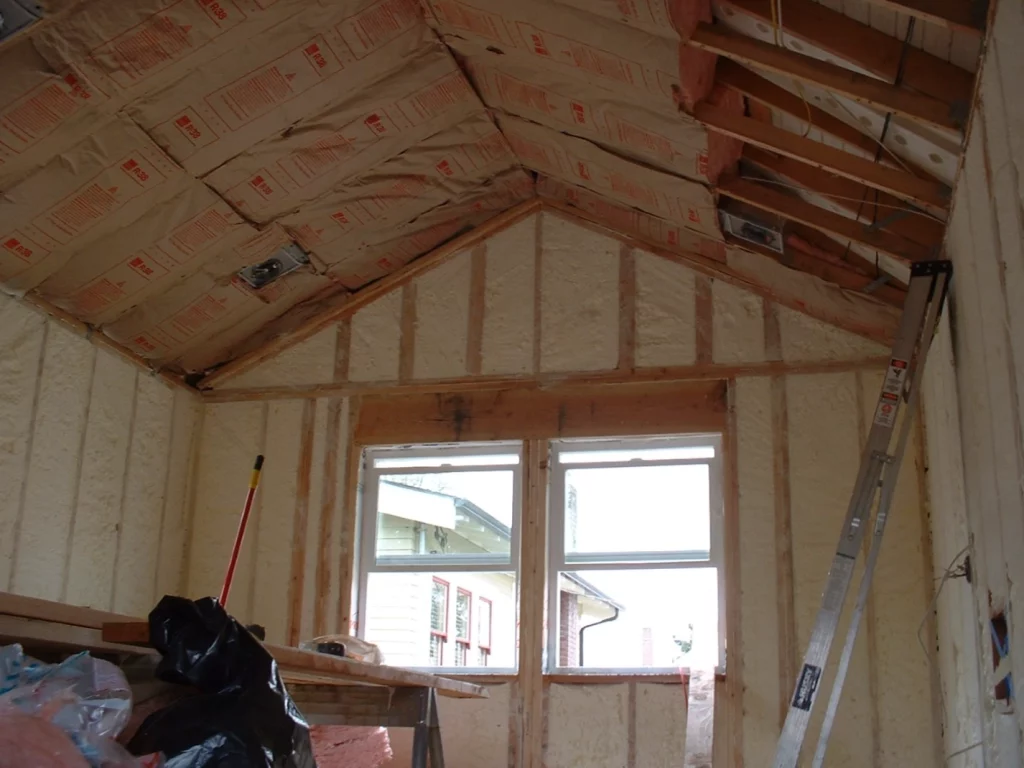
The performance path compares your proposed building’s total energy use against a reference home. This is where spray foam shines, because the airtightness gains from foam reduce the total energy load of the building. The DOE reports that walls and rim joists make up more than 40% of the total envelope area, so sealing those components with spray foam produces measurable energy savings that improve your performance score.
The ERI path scores the home on a 0-100 scale (lower is better). Spray foam’s combined insulation and air sealing performance consistently helps homes achieve better ERI scores. The 2024 IECC updates now reference ANSI 301-2022 for ERI calculations, and the expanded R408 additional efficiency requirements offer over 50 options for earning compliance credits, many of which relate to envelope improvements where spray foam excels.
| Builder / Project Type | Recommended Spray Foam Strategy | Key Considerations |
|---|---|---|
| Production Home Builders | Open-cell at roof deck + closed-cell at rim joists and crawlspace walls | Standardize assemblies across lots; reduces trade coordination and inspection variability |
| Custom Home Builders | Hybrid approach: closed-cell in walls and basement, open-cell in attic cavities | Maximize design flexibility; foam allows unusual geometries without thermal gaps |
| Commercial / Multifamily Builders | Closed-cell throughout for fire-rated assemblies and moisture control | Must also meet ASHRAE 90.1; closed-cell provides a vapor retarder in one step |
| Pole Barn / Post-Frame Builders | Closed-cell spray foam on metal building walls and ceilings | Eliminates condensation on steel; provides continuous insulation without thermal bridging |
| Remodelers / Retrofit | Targeted spray foam in crawlspaces, attics, and rim joists | Focus on the highest-impact areas first; air sealing existing homes yields fast payback |
The right approach shows up in measurable ways. Your blower door test results consistently come in below the ACH50 threshold for your climate zone. Your HERS rater or code inspector passes the building on the first inspection rather than flagging air barrier deficiencies. You are spending less time coordinating multiple trades for air sealing details because the foam handles it. Your HVAC contractor is able to downsize equipment, confirming that the building envelope is performing as designed. And your customers report consistent comfort with fewer hot or cold spots, which is the real-world proof that the envelope is tight.
At Spray-On Foam & Coatings, we work with builders across the Pacific Northwest to design spray foam insulation strategies that meet or exceed current energy code requirements. Whether you are planning new construction, a pole barn build, or a retrofit project, our team helps you choose the right foam type and application method for your climate zone and compliance pathway. We serve residential and commercial projects throughout Washington and Oregon.
Request a Free Quote | Schedule a Code Compliance Consultation
Contact us at [email protected] or call (360) 667-1993 to discuss your next project. Our experienced team is ready to help you build tighter, smarter, and code-compliant from the start.
Closed-cell spray foam delivers approximately R-6.0 to R-7.0 per inch of thickness, which means a standard 2×4 wall cavity filled with closed-cell foam achieves roughly R-21 to R-24 without additional materials.
Yes. Both open-cell and closed-cell spray foam, when installed at sufficient thickness, qualify as air-impermeable materials under the IECC. This means they satisfy air barrier requirements without the need for separate house wrap or tape systems at insulated assemblies.
The Performance and ERI pathways tend to reward spray foam users most directly, because the whole-building energy modeling captures the full benefit of reduced air leakage. However, spray foam also simplifies Prescriptive path compliance by combining insulation and air sealing in a single step.
The 2024 IECC tightened ACH50 requirements in multiple climate zones. Spray foam expands to seal gaps around wiring, plumbing, rim joists, and other penetrations that traditional insulation misses, making it easier to hit the lower ACH50 targets on your blower door test.
According to data from WhySprayFoam.org, HVAC sizing can be reduced by up to 35% in buildings insulated with spray foam, because the tighter envelope reduces the heating and cooling load that the equipment must handle.